Bike to work and still walk in looking pressed
Ride slower, pack smarter, and keep half your wardrobe at the office. The rumpled part of bike commuting is fixable.
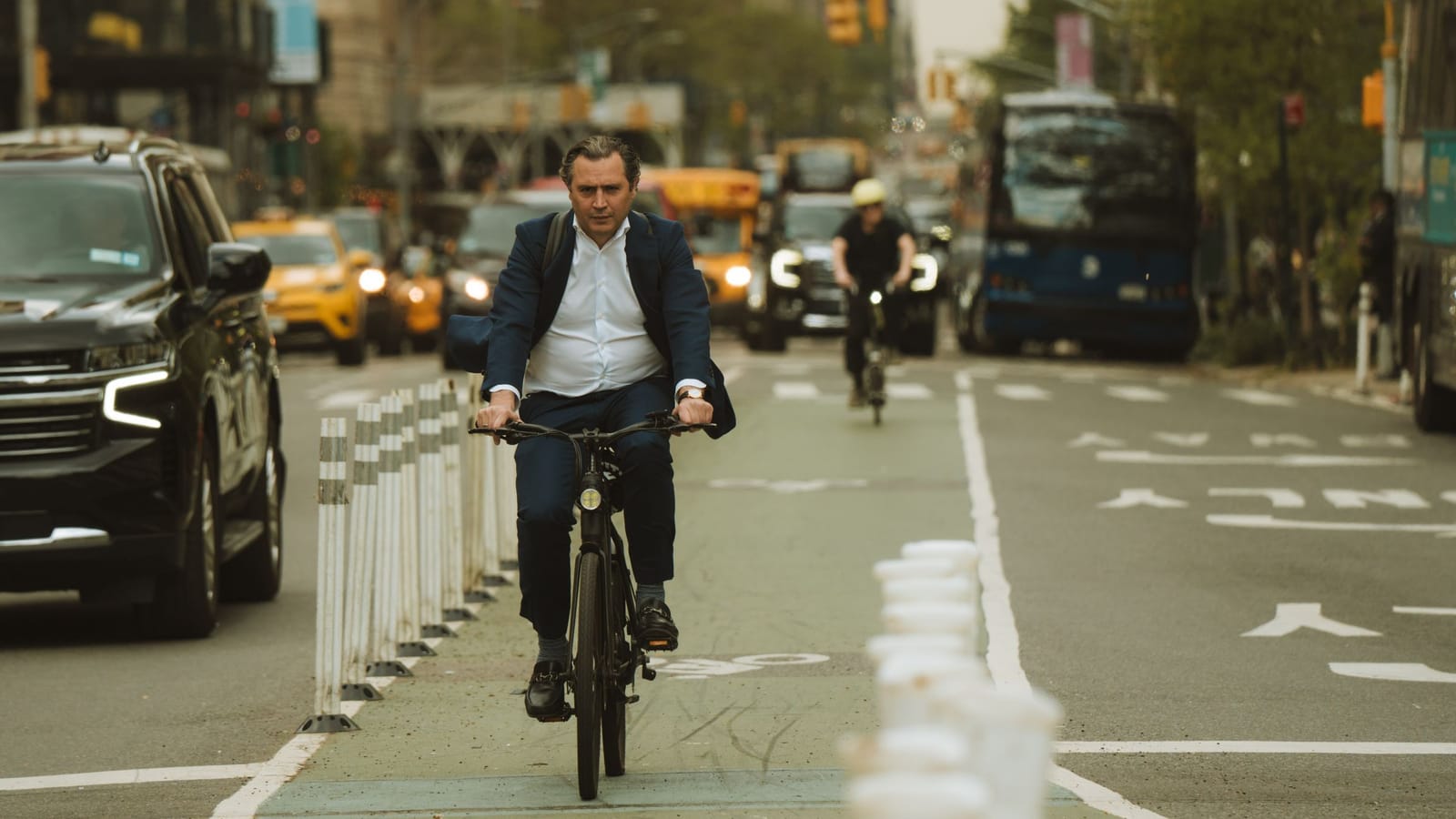
Ride the last mile slow. Not "a bit easier" slow. Dead slow, sitting up, breathing through your nose, the pace you'd use on a boardwalk with a kid on a balance bike beside you. Your body keeps making heat for a good ten minutes after you stop pedaling hard, which is exactly the window when you're standing in a washroom trying to button a shirt. Cool down on the bike and you skip the whole problem.
Everything else in this piece is downstream of that. You can own the best pannier made and a drawer full of merino and it won't save you if you sprinted the last light and then pulled a cotton poplin shirt over a hot back.
Leave the hard stuff at work
The single biggest change is refusing to carry your wardrobe. Your bag should hold almost nothing.
Drive or take the train on Monday with a duffel. In it: two or three shirts on hangers, a jacket, your work shoes, a belt, a spare pair of socks. Hang the jacket on the back of your door or on a real wooden hanger in a cupboard, not the wire thing from the dry cleaner. Shoes live under the desk on cedar trees. The belt stays looped through nothing, coiled in a drawer.
Then ride Tuesday through Friday carrying a shirt, a pair of pants, and your lunch.
If your office has hot-desking and no cupboard, you've still got options. A slim garment bag hung on a coat rack in a corner nobody uses. A locker if the building has them. Failing that, the dry cleaner two blocks from the office will often hold finished shirts for a few days, and you collect two at a time on the walk from the bike rack.
The bag matters more than you think
A backpack puts a wet stripe down your spine and creases the back of whatever's inside it. Every time. The strap pressure also flattens fabric into your body so the sweat has nowhere to go.
Use a pannier. One rack-mounted bag on the side of the bike moves the weight off your body and lets air across your back the entire ride. You'll notice the difference on the first warm day. A rack costs about forty dollars, a decent single pannier maybe a hundred, and the pair of them is the best money you'll spend on looking good at 8:45 a.m.
The trade-off is real. Panniers rattle, they swing off the hook if you hit a pothole wrong, and you have to unclip the bag and carry it by a short handle into the lobby, which looks less sharp than a backpack. Take the deal anyway.
How to fold so it survives
Roll the pants. Lay them flat, match the seams, fold at the knee once, then roll from the cuff. Rolled wool comes out with soft waves that hang out in fifteen minutes. Folded wool comes out with a hard crease across the thigh that stays all day.
Shirts want the opposite treatment. Button the collar, the third button and the bottom one. Face down. Fold the sleeves back along the body, fold each side in about a third, then fold in half from the bottom. If you put it in a gallon zip bag and press the air out, it comes out flatter than it went in and it's immune to a leaking water bottle.
Knit dresses and jersey skirts roll beautifully and don't need any of this. Anything in linen needs a hanger and a car.
The ten minutes that actually fix wrinkles
Get in, hang the shirt up immediately, then go do something else. Fill your water bottle. Say hello to people. The shirt needs to hang before you need to wear it.
A cheap travel steamer, thirty or forty dollars, kept in a desk drawer with a small bottle of water, will beat any folding technique ever invented. Twenty seconds down each front panel and across the shoulders. No ironing board, no burning anything.
Without a steamer: hang the shirt on the back of the washroom door, run the hot tap hard for a minute with the door closed, and go get your coffee. Damp warm air relaxes cotton. Wet your hands and smooth the collar points and the front placket by hand while it's still slightly warm.
Cooling down properly
Cold water on the insides of your wrists and the back of your neck does more than you'd expect, because you're cooling blood close to the surface. Thirty seconds each side.
Then sit down for five minutes in your riding shirt. Not standing in a hot washroom. Sit, with the top undone, by a window or a vent if you've got one. Apply deodorant after you've stopped, never before, because it can't do its job on skin that's still running.
Keep a microfiber face cloth in your bag, the small kind sold for camping. It dries by lunch, it's smaller than a paperback, and it beats paper towels, which shred and leave white flecks on dark wool.
Unscented wipes in the drawer. Pick unscented deliberately. Three sprays of something in a small washroom announces you before you reach your desk, and it mixes with whatever's on your riding shirt into something nobody enjoys.
Helmet hair and the parts nobody warns you about
Helmet hair is a haircut problem more than a helmet problem. Anything over about three inches on top gets a dent from the straps and the pads, and that dent doesn't come out without water. So carry a comb, wet your fingers, run them front to back, comb it into place. Done.
The other thing nobody tells you: your right cuff will get chain grease within a month. The chainring sits exactly at the height of your pants cuff and it will find you at a stoplight. Roll that cuff twice, or use a five-dollar reflective ankle strap. Grease on wool isn't a stain you wash out at home. That one's a trip to the cleaner, and even then it's a coin flip.
Ride in sneakers. Always. Leather soles on flat pedals are slippery, and the welt takes a beating against the pedal cage.
Rain is a fender problem
People buy jackets when what they need is fenders. Rain falling on you is a nuisance. Road water thrown up by your own tires is what puts a brown stripe from your seat to your collar, and full-length fenders with a mudflap on the front wheel kill about ninety percent of it. Get them fitted properly with the stays trimmed, or they'll buzz on every bump until you hate the bike.
Above the fenders, a lightweight shell with pit zips and a dropped tail. Not a ski jacket. You want something that packs into the pannier and doesn't cook you.
Days you shouldn't ride
The big client pitch. The day you're wearing a suit you care about. The day the forecast says gusts over 30 mph. Any day the route involves a hill you can't clear at conversational pace, because that hill will undo the whole system.
And be honest about distance. Three miles is a commute. Nine miles with two climbs and no shower at the other end is a workout you're trying to hide, and it shows on you by 10 a.m. If that's your route, either find a gym near the office that sells day passes, or look seriously at a pedal-assist bike, which costs real money and needs somewhere secure to live but delivers you dry.
The guy who walks in looking sharp isn't riding a better bike than you. He's riding slower and unpacking sooner.
Tobias Reed
Style & Grooming
Spent a decade in menswear retail watching men buy the wrong size. Believes fit is ninety per cent of it and says so weekly.

Watch
Watch how it's done
Picked for this article.
From channels we rate. Plays on YouTube.
Bicycle 2 Work
Tips for Bike Commuting with No Shower
Bike Commuter Hero
8 Tips To Sweat Less When Bike Commuting
Read next