

Most bills die in committee, long before a governor sees them
How a bill moves through your state legislature, when a governor can veto it, and the stage where an ordinary citizen has the most pull.
Quick answer: A bill needs a sponsor, a committee vote, and a majority in both chambers. Then it goes to the governor, who signs it, vetoes it, or in most states lets it become law without a signature. Overriding a veto usually takes two-thirds of each chamber. The details vary by state, so read your own constitution.
Start with the bill number
Every law you live under began as a document with a number on it. A legislator, called the sponsor, files it with the clerk. It gets read in, numbered, and assigned to a committee. In a typical session, far more bills get filed than ever become law.
Nearly every state legislature has two chambers, a House and a Senate, mirroring Congress. Nebraska is the exception. Its legislature has one chamber, and its members are elected without party labels on the ballot.
You can look up any bill yourself. Go to your legislature's website and search by number, sponsor, or keyword. You'll find the text, the amendments, the committee schedule, and the vote record. It takes about five minutes, and it's more than most voters ever do.
Committee is where the real culling happens
The committee chair controls the calendar. If the chair doesn't schedule a hearing, the bill generally sits there until the session ends and dies with it. No vote is ever taken. No headline gets written.
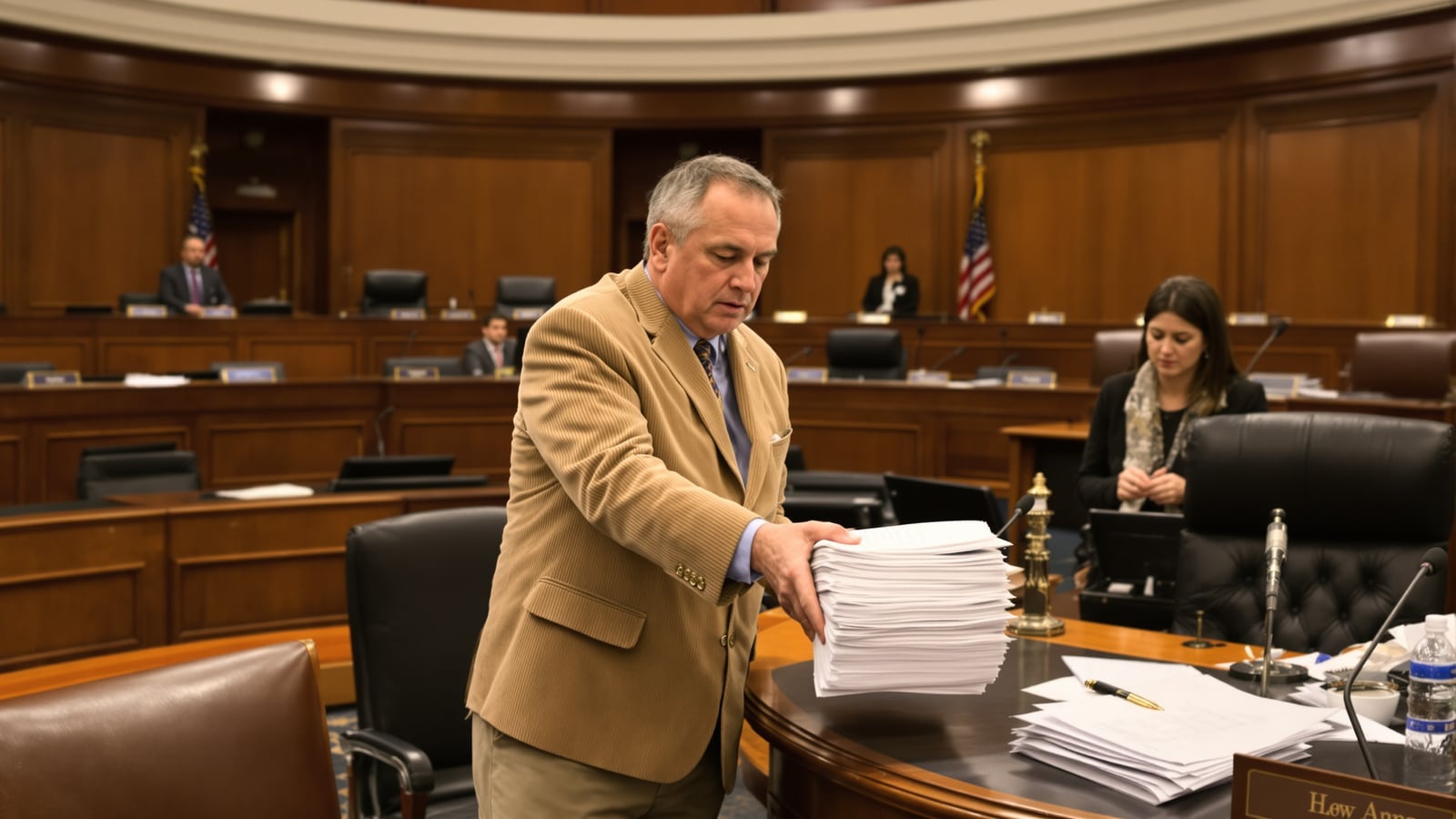
When a hearing is held, the sponsor presents the bill, supporters and opponents testify, and members ask questions and offer amendments. Then the committee votes. A bill that passes goes to the full chamber. One that fails is done, unless a procedure exists to pull it out, and those procedures are hard to use.
This is the stage where one citizen counts for the most. A committee may have nine or fifteen members. A few well-reasoned calls or a short, specific testimony can matter in a room that size in a way it never will on a floor with a hundred voting.
The floor, and the other chamber
After committee, the bill goes to the full chamber for debate, amendment, and a vote. Most states require a bill to be read multiple times and to be voted on in a recorded roll call. Many state constitutions also require a bill to cover a single subject and to have a title that tells the truth about it. That keeps a bill about fishing licenses from carrying a tax increase in its back pocket. It doesn't always work, but the rule exists, and courts have struck laws down for violating it.
Then the whole thing repeats in the other chamber: committee, floor, vote. If the second chamber changes the bill, the first has to agree to the changes. When the two can't agree, they appoint a conference committee, a small group from both sides that negotiates a final version. Both chambers then vote on that version, up or down, with no further amendments.
That's the design, and a good one. The founders built Congress with two chambers so that a bad idea has to survive two separate rooms full of people with different terms and different constituents. States copied the idea. The friction is a feature. It protects you from a legislature in a hurry.
The governor's desk
A passed bill is enrolled, meaning it's prepared in final form, and sent to the governor. Now the governor has three options in most states.
- Sign it. It becomes law, usually on a stated effective date.
- Veto it. The governor returns it to the chamber where it started, with objections.
- Do nothing. In most states, if the governor doesn't act within a set number of days, the bill becomes law without a signature.
The deadline varies. Texas gives its governor 10 days, Sundays excepted, while the legislature is in session. If the legislature adjourns, the governor has 20 days after adjournment to veto, or the bill becomes law. In some states, a bill left unsigned after adjournment dies instead. That's called a pocket veto, and it's the reverse of the Texas rule. Check your state's constitution for the actual language.
The model for all of this is Article I, Section 7 of the U.S. Constitution, which gives the President ten days (Sundays excepted) and requires two-thirds of both houses to override. For a walk through the whole document, see what each of the seven articles of the Constitution actually does.
The line-item veto, and the override
Most states give the governor a power the President doesn't have: the line-item veto. On a spending bill, the governor can strike individual items and sign the rest. The U.S. Supreme Court struck down the federal version in Clinton v. City of New York (1998), but state constitutions can grant it, and most do. The details differ. Some states let a governor reduce an amount as well as eliminate it. Some limit the power to appropriations only.
If the governor vetoes a bill, the legislature can try to override it. In most states that takes two-thirds of each chamber. A few, including Illinois and Maryland, require only three-fifths. A handful, including Kentucky and Tennessee, need only a simple majority, which makes the veto a speed bump there, not a wall.
Timing matters. If the legislature has already gone home when the veto lands, an override is often impractical. Some states allow a special session or a veto session for this reason. Others don't, and the veto stands.
Is the veto a good thing? Here's our view, labeled as such. Commentary: it is. A governor is elected by the whole state. A legislator is elected by one district. The veto forces a second look from the one official who answers to everybody, and that check protects taxpayers from bills written for a narrow interest. It can be abused, and a governor who vetoes everything in sight should hear about it. But a system where any majority of the moment can pass anything it wants is more dangerous than one with a pause button.
Where you come in
You have more leverage than you think, and most of it comes early.
- Know your two legislators. Look up your state House member and state Senator by address on your legislature's site. Save both office numbers in your phone.
- Watch the committee calendar. Hearings are posted days in advance. Most legislatures stream them or record them.
- Be specific when you call. Name the bill number, say whether you want a yes or a no, and give one reason in your own words. Staff tally these. A short call from a constituent beats a long form letter.
- Show up if you can. Most committees take public testimony, often limited to two or three minutes. Bring a written copy. Say who you are and where you live. Be courteous even when you disagree. Legislators remember the people who were reasonable.
- Contact the governor's office when a bill reaches the desk. Veto decisions happen on a clock, and the office counts the calls.
Most of this happens in the open, in rooms a short drive from you. The bills that shape your property tax, your schools, and your right to defend your home are decided there, as we cover in your state legislature runs more of your life than Congress does. Your property tax bill is a good example of a number set well before it reaches your mailbox.
The governor gets the last word. Your legislators get the first. Start with them.
Marcus Vale
Editor-in-Chief
Twenty years in magazines, most of it deciding what to cut. Writes about work, discipline and the decisions that compound.

Watch
Worth an hour of your evening
More from Civics.
From channels we rate. Plays on YouTube.
Read next