

The legislature writes voting rules. The board fills the gaps.
Your state election board doesn't make voting law, but it controls the fine print. Here's who holds which power, and where an ordinary citizen gets a say.
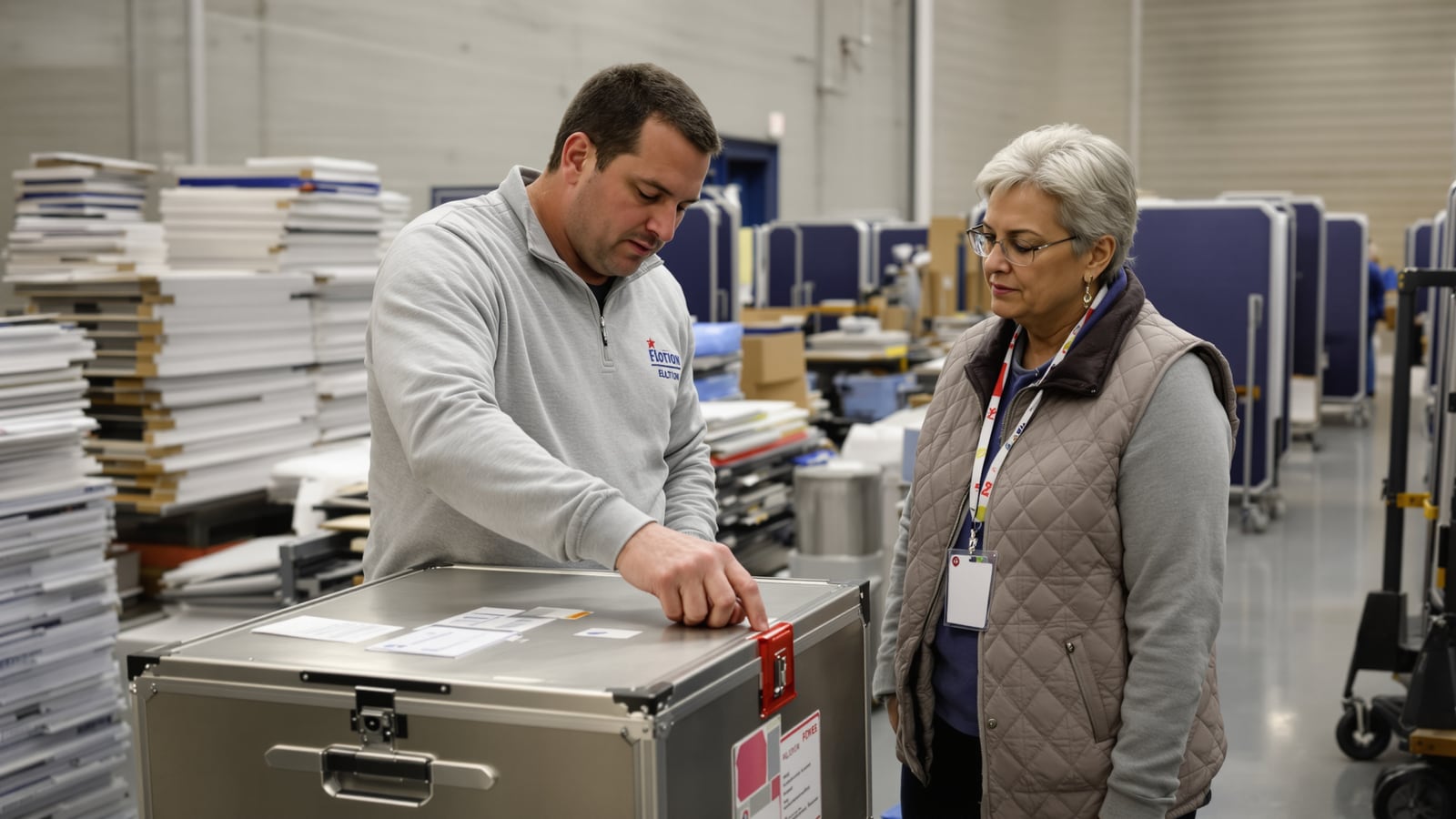
Quick answer: Under the Constitution, your state legislature sets the rules for elections, and Congress can override them for federal races. The board of elections carries those rules out and fills the gaps the legislature left. If a rule changed and no legislator voted on it, ask why.
What the Constitution says
Article I, Section 4 is short. "The Times, Places and Manner of holding Elections for Senators and Representatives, shall be prescribed in each State by the Legislature thereof; but the Congress may at any time by Law make or alter such Regulations."
Read it slowly. The Framers handed the job to the people's elected representatives in each state, not to a bureaucracy and not to a judge. Article II, Section 1 does the same for presidential electors: each state appoints them "in such Manner as the Legislature thereof may direct."
That's the design. Voting rules should come from the branch you can vote out. Congress holds a backstop, and it has used it. The National Voter Registration Act of 1993 and the Help America Vote Act of 2002 are federal laws that every state election office has to work within.
So what does the board actually do?
It depends on your state, and that's the first annoying part. There's no single model.
In some states an elected secretary of state is the chief election officer. In others a bipartisan board or commission runs things, with members appointed by the governor, the legislature or the parties. Many states split the work, with a state office setting procedures and county or city officials running the machines, the poll books and the counting.
Most of the real work happens locally. Your county clerk or county board is the one who mails your ballot, staffs your precinct and tallies the results.
Whatever the structure, the board's job is usually the same:
- Register voters and maintain the rolls
- Certify candidates and ballot measures
- Test and approve voting equipment
- Train poll workers
- Canvass the results and certify them
- Write administrative rules and guidance for all of it
That last item is where the trouble starts.
Where board power gets slippery
A legislature can't write a statute covering every situation. A law might say ballots must be "verified" without saying how, or that polling places must be "accessible" without saying what happens when a school closes the week before the election. The board fills in the details through rules, written procedures and guidance to local officials.
That's legitimate. It's also where a board can drift from administering the law to making it.
The general test is simple. Can the board point to the statute that authorizes the rule? A procedure for how a poll worker checks an ID where the law requires one is administration. A change to who gets to vote, when ballots count or what counts as a valid signature, with no legislative text behind it, is something else. In most states a board that goes beyond its statute can be challenged in court.
This is commentary, and we believe it plainly: the more consequential the rule, the more it belongs in a bill with a public hearing and a recorded vote. Deadlines, eligibility, signature standards and ballot-return methods shouldn't turn on a memo. When a board or a court rewrites them without the legislature, it takes a decision away from voters' representatives and gives it to people nobody can fire.
Courts have had their own say on this. In Moore v. Harper (2023), the Supreme Court rejected the strongest version of the "independent state legislature" argument. It held that state courts can still review a legislature's election laws under their state constitutions, though not without limits. You can think that ruling was too generous to the judiciary, and plenty of conservatives do. But it's the law now, and it's why a state constitution matters as much as a state statute.
The late-change problem
A separate rule applies to courts. In Purcell v. Gonzalez (2006), the Supreme Court said federal courts should be wary of changing election rules close to an election, because confusion keeps people from voting and keeps officials from running a clean contest. Courts since then have often cited it to leave rules alone in the final weeks.
Notice what that principle protects: stable rules, announced early, that everybody can read. A voter who's learned one deadline shouldn't find out in October it moved. The same goes for the clerk who has to explain it to a thousand people.
Certification isn't a veto
When counting ends, the board canvasses and certifies. In most states, the statute treats certification as a duty with a deadline. It isn't an opinion poll on whether the election felt fair.
If you suspect real problems, the law gives you tools: audits, recounts, formal challenges and court petitions. Those are the proper channels. A board member refusing to certify isn't one of them, and courts have generally ordered certification when officials tried it. Check your own state's statute for the exact deadlines and remedies, because they vary.
How to get involved
Boards are public bodies. Most of what they do is easy to watch if you show up.
- Find your board. Search your state's name plus "board of elections" or "secretary of state elections division." Then find your county's office. They're usually two separate websites.
- Read the meeting calendar. Most boards hold regular meetings and post agendas in advance. Open meetings laws generally require it.
- Go to one. Sit in the back for an hour. You'll learn more than from a month of cable news.
- Use public comment. Many boards take it. Two minutes, one specific point, tied to a statute. "Section 12 says X, and this proposed procedure does Y" lands harder than a speech.
- Read proposed rules. If your state uses a formal rulemaking process, there's typically a public notice and comment window. Your state's administrative code or register will list them.
- Write your legislator. If a board's rule bothers you, the fix is often a bill. Your state representative can introduce one. You'll find more on that in Your State Legislature Runs More of Your Life Than Congress Does.
- Work the polls. Poll workers are paid in many places, and every county needs more of them. Training takes a few hours. You'll learn how a precinct actually runs.
- Watch the canvass. Observer rules vary by state, but most let the public see parts of the process. Ask your county office how to observe.
What goes wrong
Expect some friction. Board websites can be badly organized. Meetings are sometimes scheduled at 10 a.m. on a Tuesday, when people with jobs can't go. Staff may be wary of a stranger asking questions.
Be polite and specific, and keep going. Most clerks and board staff are doing a hard job on a tight budget, and the great majority aren't villains. Argue with the rule, not the person who has to apply it.
The Constitution put the pen in the hands of your representatives. They only use it well when somebody's watching the people who carry out what they wrote.
For the bigger picture, what each of the seven articles of the Constitution actually does shows how the Framers divided these powers in the first place.
Marcus Vale
Editor-in-Chief
Twenty years in magazines, most of it deciding what to cut. Writes about work, discipline and the decisions that compound.

Watch
Worth an hour of your evening
More from Civics.
From channels we rate. Plays on YouTube.
Read next