The state budget is settled before the vote you're watching
By the time the full legislature votes, the real decisions are weeks old. Here's when your voice still moves a number.
Quick answer: Your voice carries the most weight early, in agency requests and committee hearings, and at home with the legislator who sits on the committee. By the final floor vote, the deal is made. Each state runs its own calendar, so find yours on your legislature's website.
The night people show up too late
Picture the last night of session. Fluorescent lights, a rotunda full of lobbyists, a few citizens holding hand-lettered signs. The budget bill hits the floor at 11 p.m. Every member has had it for maybe a few hours.
You can't change it now. A final budget bill usually comes out of a conference committee or leadership negotiation, and the floor gets an up-or-down vote with no amendments. The citizens with signs are watching a decision that was made two weeks ago in a room they weren't in.
That isn't a conspiracy. It's the calendar. And once you know the calendar, you can show up when it counts.
Why the legislature writes it
Under the federal Constitution, spending money from the Treasury requires an appropriation made by law (Article I, Section 9). Your state constitution does the same job for your state. The people's elected representatives hold the purse, not the executive and not the agencies. That's the design, and it's a good one. It means somebody you can vote out decides how your tax dollars get spent.
Nearly every state also has some form of balanced budget requirement. The federal government doesn't. So a state legislature can't paper over a gap with endless borrowing the way Washington does. It has to choose.
The calendar, in order
Details vary by state, but the sequence is close to universal.
Agency requests. Over the summer and fall, state agencies send budget requests to the governor's budget office. Most citizens have never heard of this stage. It's where the baseline gets built.
Revenue forecast. Economists, sometimes in a joint panel, estimate how much money will come in. The forecast sets the ceiling. A conservative forecast restrains spending. An optimistic one invites it. Whoever controls that number controls a lot.
The governor's proposal. In most states the governor submits a budget, often in January or February. It's an opening bid. The legislature can ignore every line of it.
Committee work. The appropriations committee (some states call it Ways and Means or Joint Finance) holds hearings, takes testimony from agencies, and then marks up a bill. Chairs hold enormous power here. Often the House and Senate write separate versions.
Reconciling the two. A conference committee or leadership negotiation merges them. This is the part done behind closed doors, and it's the part that gets the least scrutiny.
Floor votes, then the governor. Both chambers pass the final version. In most states the governor then has a line-item veto, which lets him strike individual spending items. The legislature can usually override with a supermajority.
The start of the fiscal year. In 46 states it begins July 1. New York starts April 1, Texas September 1, and Alabama and Michigan October 1. Some states, Texas among them, budget for two years at a time. The Texas legislature meets in regular session for 140 days every other year, which means a missed window waits a long time to come back.
Where most of the money is already spoken for
Here's the annoying part. A large share of any state budget runs on formulas and federal matching rules. Medicaid and K-12 funding are typically the two biggest pieces. Pensions and debt service are owed no matter what.
So the real fight happens at the margins: new programs, growth rates, one-time spending, grants, and the agency line items no one has examined in years. That's still billions in some states. It's just not as much as people assume.
Know this before you speak. A citizen who says "cut everything" gets politely ignored. A citizen who says "this program grew by double digits two years running, and here's the page in the budget document" gets a staff member to write it down.
Your four real windows
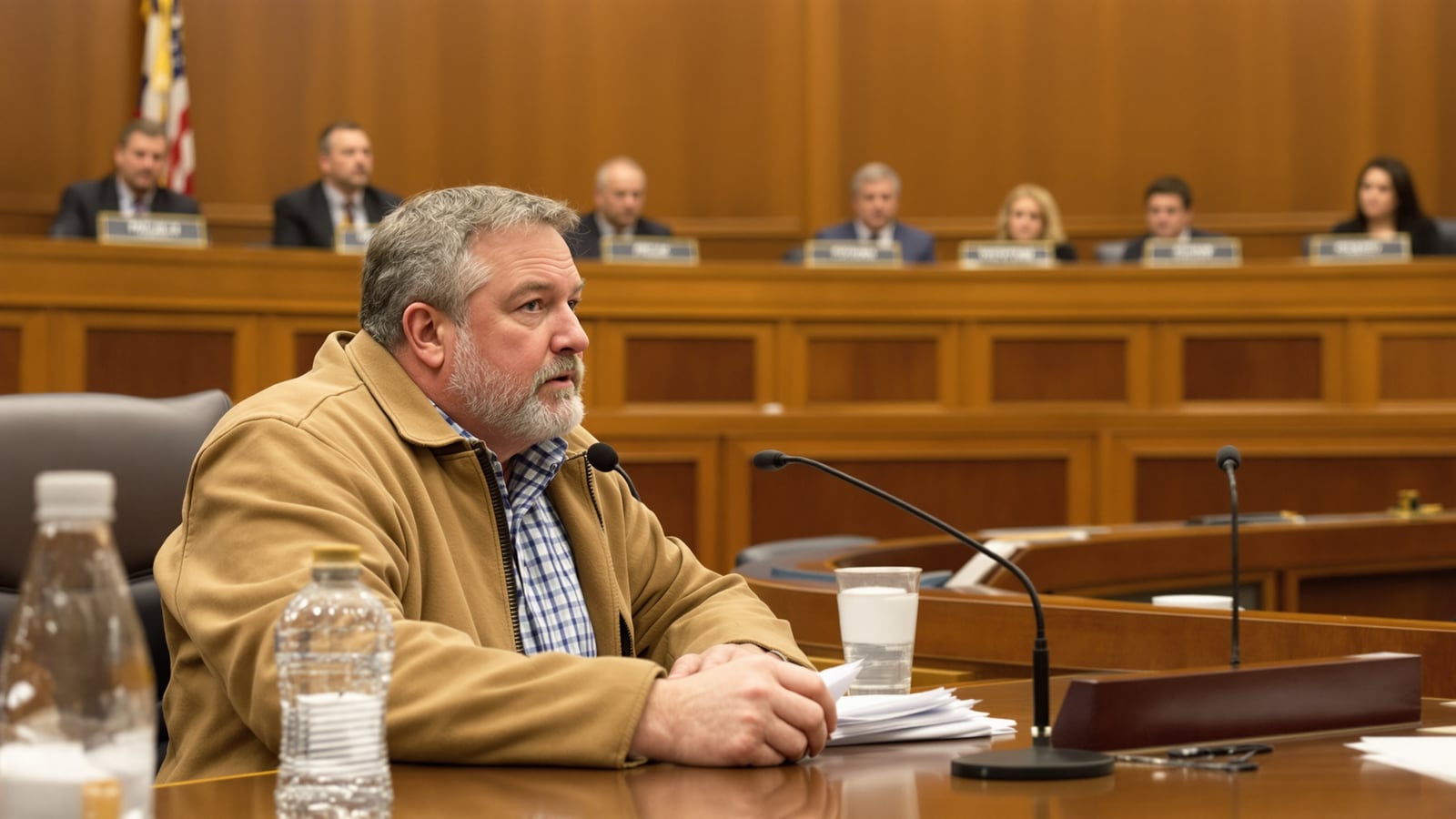
1. Committee hearings, in the opening weeks. This is the best opening you have. Hearings are public, and most states let anyone sign up to testify, in person or in writing. Few people do, so a short, specific statement stands out. Check the committee's schedule on your legislature's site. Notice periods can be as short as a few days.
2. Your own representative and senator. If yours sits on the appropriations committee, you have a direct line to the room that matters. If not, they still vote, and they still talk to the chair. Call the district office or email. Name one line item, say what you want done, and say why. Three sentences will do.
3. The committee staff. Every appropriations committee has professional staff who read everything. Nobody courts them. They shape what members know.
4. Election season. Ask candidates plainly how they'd vote on the next budget. Whether they'd back a spending cap, a rainy-day fund, or a tax increase isn't a vague question. They can answer it.
Your local school board, county commission and city council fall outside the state process, but they set the property tax rate you'll actually feel. Those meetings are smaller, so one citizen counts for more. Our piece on why your property tax is set long before the bill arrives walks through that calendar.
How to testify without wasting your three minutes
- Sign up before the hearing, not at it.
- Give your name, your town, and the bill or line item in the first ten seconds.
- Make one point. Two at most.
- Bring one number from the budget document itself, with the page.
- Say what you'd like the committee to do: reduce, hold flat, or fund.
- Write it down and leave a copy for the clerk.
Dress like you're going to church. Be on time. Thank the chair even if you disagree with him. Members remember who was civil.
Commentary: what we'd push for
This is opinion. We think a state budget should live inside what the state can afford without leaning on tomorrow's taxpayers. That points to a few things worth asking your legislators for.
A spending limit tied to population growth and inflation. A funded rainy-day reserve that gets filled in good years and doesn't become a slush fund. Sunset reviews, so programs have to justify their existence on a schedule instead of surviving by default. And plain-language budget documents posted online, with enough lead time that a working person can read them before the vote.
Those aren't partisan tricks. They're how a household stays solvent. A man who spends what he doesn't have is a fool or a politician, and in this case we'd rather elect the first kind less often.
The other side will argue that more spending buys better schools and safer roads, and plenty of sincere people vote that way. Argue back with the numbers. If the spending works, it should be able to show its results. That's the standard we'd hold every program to.
The first thing to do this week
Look up your state legislature's website and find the appropriations committee. Write down the chair's name, the hearing dates, and whether your own representative sits on it.
Then read our primer on why your state legislature runs more of your life than Congress does so you know what's at stake. Then pick one line item and email your representative before the hearings begin.
The signs on the last night won't change a thing. The email in January might.
Marcus Vale
Editor-in-Chief
Twenty years in magazines, most of it deciding what to cut. Writes about work, discipline and the decisions that compound.

Watch
Worth an hour of your evening
More from Civics.
From channels we rate. Plays on YouTube.
Read next