The vote is only round one for a ballot measure
Initiatives and referendums put the pen in your hands. What happens after the count decides whether the law sticks.
Quick answer: Ballot measures are a state and local tool. There's no national version. When voters approve one, it still has to survive courts, a legislature that may want to change it, and the agencies that carry it out.
Nothing in the U.S. Constitution lets you put a law on the ballot. There's no federal initiative and no federal referendum. Article V sets the only route for amending the Constitution, and it runs through Congress and the states. Ballot measures live in state constitutions and city charters, which is where the Tenth Amendment says most of this power belongs.
South Dakota became the first state to adopt the initiative and referendum, in 1898. About half the states have some version now. Your state may have none, or it may give you only part of the toolkit.
Three tools with confusingly similar names
Citizen initiative. Voters write a proposed law or constitutional amendment, gather signatures, and put it on the ballot. In a direct initiative it goes straight to voters. In an indirect one, the legislature sees it first and gets a chance to pass it or offer something else.
Popular referendum. The legislature passes a law. Citizens gather signatures to force a public vote on whether it stays. In many states, the law is on hold until that vote happens.
Legislative referral. The legislature itself sends a question to voters. Most states require a popular vote to amend the state constitution, so you'll see these every cycle even in states with no citizen initiative at all.
The label changes by state. It might be a proposition, a measure, a question or an amendment. The mechanics matter more than the name.
Getting on the ballot
Signature rules are set by state law. The usual formula is a percentage of the votes cast in a recent election, often the governor's race. California, for example, asks for 5 percent for a statute and 8 percent for a constitutional amendment. Deadlines are strict, and the signatures get checked against voter rolls. Sloppy petitions fail.
Two more hurdles are worth knowing. Many states have a single-subject rule, meaning a measure can't bundle unrelated things together. And someone, often the attorney general or secretary of state, writes the official title and summary you'll see on the ballot. Sponsors and opponents fight over that wording in court all the time, because most voters never read past it.
After the votes are counted
Certification comes first. Election officials confirm the result, and the measure takes effect on the date set by state law or by the measure itself. A governor can't veto an initiative, which is the point of the tool. After that, four things can happen.
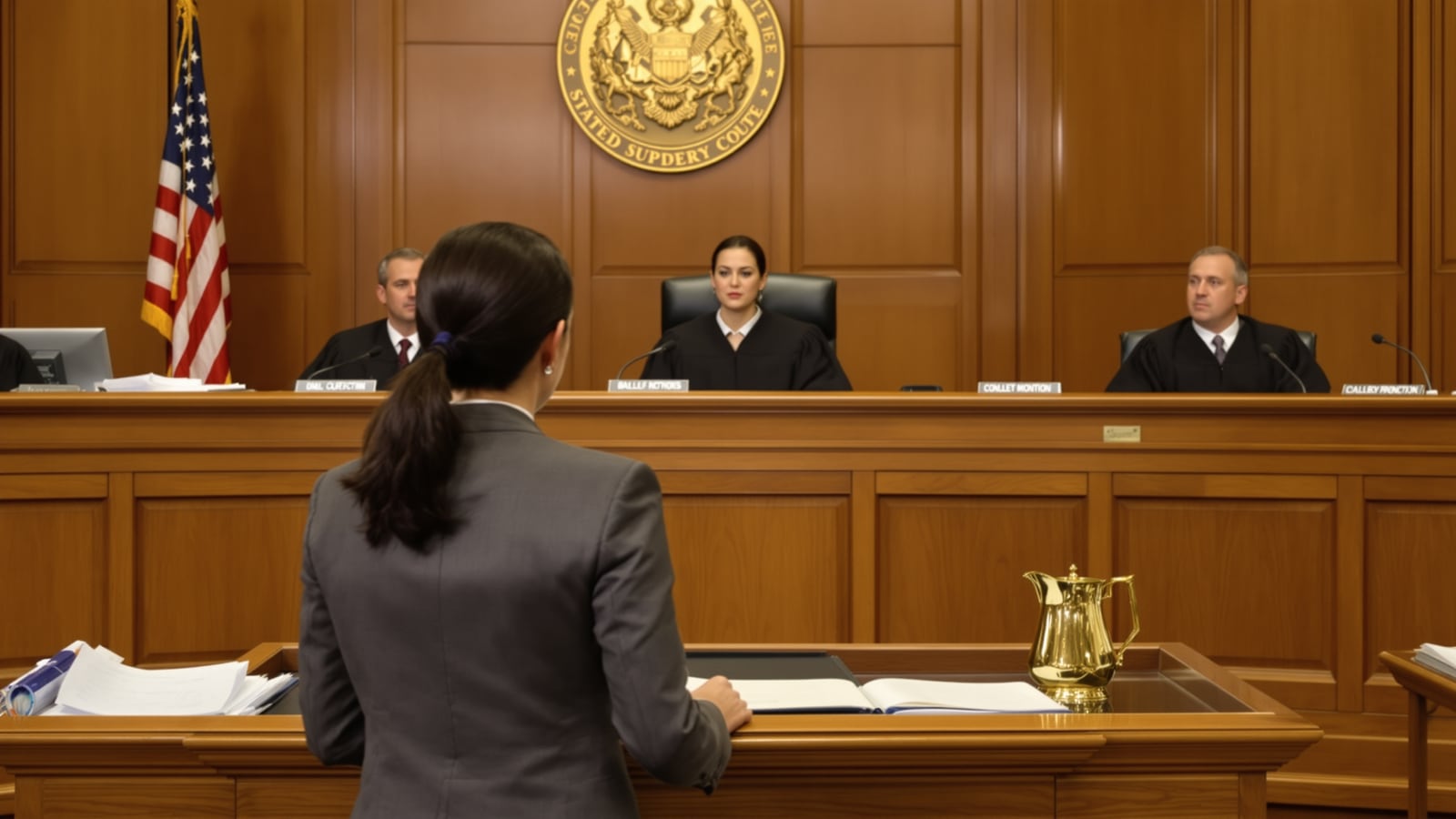
1. A court looks at it. A measure passed by voters is still subject to the state constitution and to the U.S. Constitution. The Supremacy Clause doesn't care how many people voted for something. In 2008, California voters passed Proposition 8, defining marriage as one man and one woman. A federal court struck it down. In 2013 the Supreme Court ruled that the measure's sponsors lacked standing to appeal, which left the lower court's ruling standing. Whatever you think of that outcome, it shows the point. Winning at the ballot box doesn't end the legal fight. For how a case climbs that ladder, see how a case reaches the Supreme Court.
Courts have also been asked whether the initiative itself is legitimate. Article IV, Section 4 says the United States "shall guarantee to every State in this Union a Republican Form of Government." In Pacific States Telephone & Telegraph Co. v. Oregon (1912), the Court treated that challenge as a political question and declined to settle it. Initiatives stayed.
2. The legislature gets a say. This is where states differ most. A measure that changes state law is a statute, and in some states the legislature can amend or repeal it at will. Others restrict that. Arizona's Voter Protection Act of 1998 allows changes only by a three-fourths vote, and only if they further the measure's purpose. California generally lets the legislature change an initiative statute only if the measure itself allows it. Michigan requires a three-fourths vote to amend an initiated law.
Utah voters approved a medical cannabis initiative in 2018. Within weeks, the legislature replaced much of it in a special session. Voters had spoken, and lawmakers rewrote the result. A constitutional amendment is stickier. Only another vote of the people changes it.
3. The money has to show up. A measure can require spending, and the legislature controls the budget. Missouri voters approved Medicaid expansion by constitutional amendment in 2020. The legislature declined to fund it. In 2021 the state supreme court ruled the amendment stood and the state had to carry it out. That fight took a year.
4. Agencies write the details. Even a clean, well-drafted measure leaves gaps. State agencies fill them with rules, and those rules shape what the law does in daily life more than the headline does.
Commentary: our take
This section is opinion.
The initiative has real conservative wins on its record. Colorado's Taxpayer's Bill of Rights, a citizen-initiated constitutional amendment from 1992, makes the state ask voters before keeping tax revenue above a set limit. Term limits spread through the states largely this way. Both involved things legislators have no incentive to do to themselves. That's the best case for the tool. It's a check on a governing class that won't limit its own power.
But the Founders built a republic, not a pure democracy, and they had reasons. Representatives deliberate, amend and compromise. A ballot measure is a yes or no on a text no one can fix at midnight. If it's flawed, you live with the flaw. If it's a constitutional amendment, you live with it for years. Out-of-state money bankrolls petition drives on all sides, and the ballot summary on the page can say less than the fine print does.
So use the tool sparingly. Save it for structural questions, such as limits on taxes, terms and spending. Leave the thousand-detail policy to legislatures you can hold accountable at the next election. And read what you're voting on. You can disagree with us on any of that and still agree on the last point.
How to use it
- Read the full text. Your state or county publishes it, usually with a voter guide. The summary on the ballot isn't the law.
- Follow the money. Your secretary of state's campaign finance database lists who funds the committees for and against.
- Check the fiscal note. Most states publish a nonpartisan estimate of what a measure costs.
- Know the vote threshold. Some states require more than a simple majority for certain measures.
- Sign only what you've read. Make sure you're registered where you're signing, and don't sign twice. Duplicates can get thrown out.
- Don't skip local ballots. Cities, counties and school districts often have their own measures, and they tend to hit your wallet first. A school bond or a property tax levy can pass with a few hundred votes.
- Call your legislator afterward. If a measure passes, ask what the legislature plans to do with it. See why your state legislature matters more than you think.
Want to run one yourself? Start with your secretary of state's office. They'll send you the filing steps, the signature count and the deadline. Then find a lawyer who knows your state's initiative law before you write one word of the text.
A vote is a loud thing. Carrying it out is quiet work, and the people who keep showing up for the quiet part are the ones who decide whether it counts.
Marcus Vale
Editor-in-Chief
Twenty years in magazines, most of it deciding what to cut. Writes about work, discipline and the decisions that compound.

Watch
Worth an hour of your evening
More from Civics.
From channels we rate. Plays on YouTube.
Read next