A blocked law isn't a dead law. Read the order to see why
A judge pauses a state law and the headline sounds final. It usually isn't. Here's how to read the actual order and know what happened.
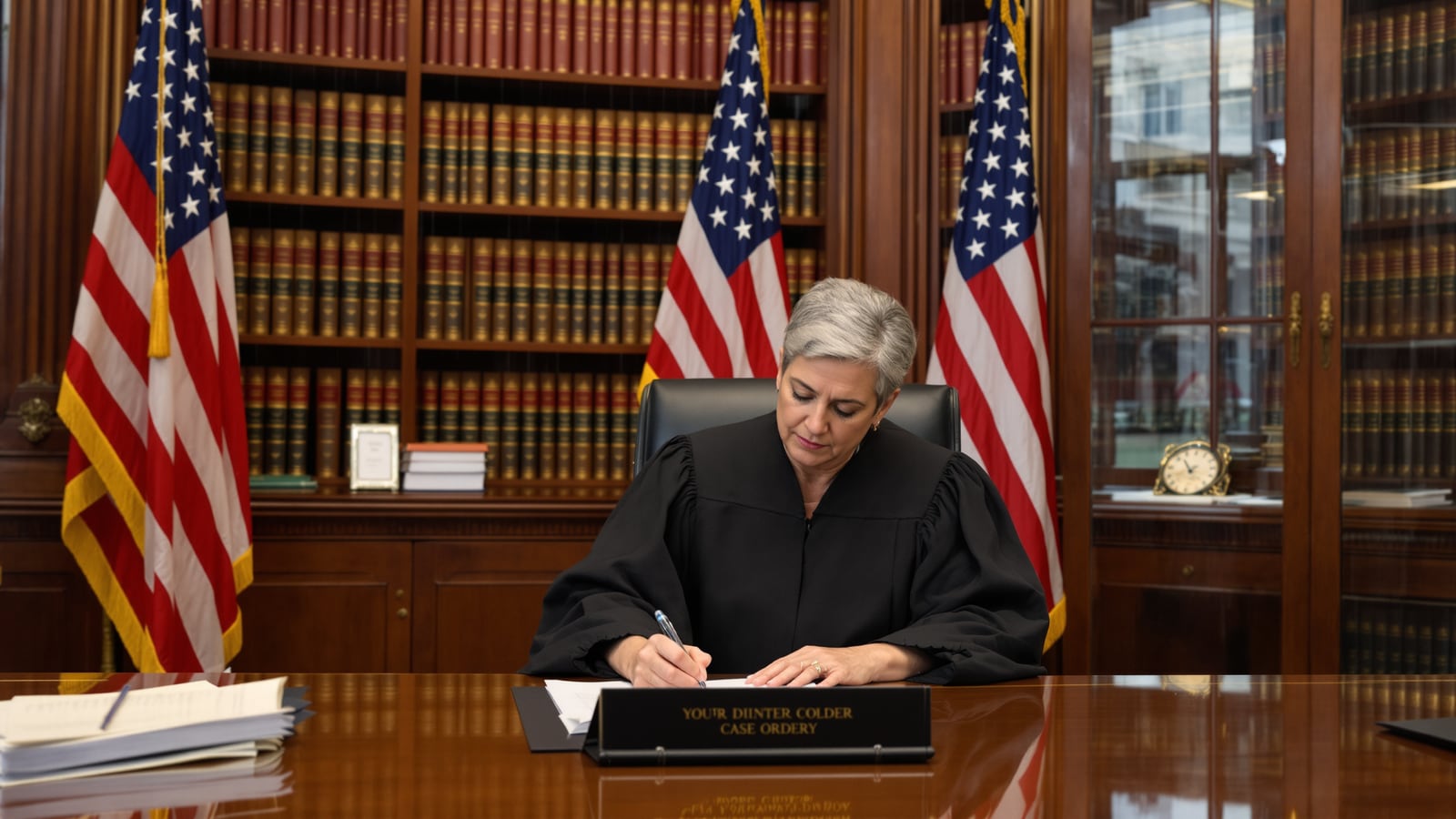
Quick answer: A court blocks a law when the people suing show it likely violates the U.S. Constitution, a federal statute, or the state's own constitution. Often the block is temporary. To read the order, find the court, the procedural posture, the last page, and the legal test the judge applied. In that order.
Three ways a law loses
Your legislature passes a law. A judge says it can't be enforced. By what authority?
The Constitution never uses the words "judicial review." Article III extends the judicial power to cases "arising under this Constitution," and Article VI makes the Constitution and federal law the supreme law of the land, binding on state judges too. Marbury v. Madison (1803) put the two together. If a statute and the Constitution collide, a court deciding a real case has to follow the Constitution. Hamilton, in Federalist 78, said the courts have "neither force nor will, but merely judgment." That's the whole job.
A state law can collide with three things.
The U.S. Constitution. Most of the Bill of Rights now binds the states through the Fourteenth Amendment. That's why a federal judge can review your state's gun law or speech restriction. Heller (2008) struck down D.C.'s handgun ban. Bruen (2022) struck down New York's rule that you had to show "proper cause" before carrying a handgun in public.
A federal statute. Under the Supremacy Clause, a valid federal law beats a conflicting state one. This is called preemption.
The state's own constitution. This is the one people miss. A state supreme court has the last word on what its own constitution means. If it rests its decision squarely on state grounds, the U.S. Supreme Court generally won't touch it.
For the full path a case travels, see how a case reaches the Supreme Court and gets decided.
Blocked is not the same as struck down
This is where headlines mislead you.
Most "judge blocks law" stories describe a preliminary injunction. The plaintiffs ask the court to freeze the law while the case is argued. The judge doesn't decide who wins. Under the standard from Winter v. NRDC (2008), the plaintiffs must show four things: they're likely to win, they'll suffer irreparable harm without relief, the balance of equities favors them, and an injunction serves the public interest.
A temporary restraining order is shorter still. A final judgment, with a permanent injunction or a declaration that the law is unconstitutional, comes later, if at all.
Two more distinctions matter.
- Facial vs. as-applied. A facial challenge says the law is invalid in nearly every use. An as-applied challenge says it's invalid for these plaintiffs in these circumstances. A law can survive the first and lose the second.
- Who's covered. In Trump v. CASA (2025), the Supreme Court held that federal courts likely lack the equitable power to issue universal injunctions broader than needed to give the plaintiffs complete relief. Class actions and state-led suits remain open, so scope is still a live fight. But "blocked everywhere" no longer follows automatically from "blocked."
How to read the order in ten minutes
Download the opinion itself. A news summary or a press release from either side won't do. Then work through it like this.
- Check the court. A federal district judge's ruling binds the parties in that case. It isn't binding on other judges. A circuit court of appeals binds the district courts in its circuit. Your state supreme court binds every state court below it.
- Find the posture. Is this a ruling on a motion to dismiss, a preliminary injunction, summary judgment, or an appeal? The posture tells you how final anything is.
- Go to the last page. Look for the disposition. "Granted" and "denied" are plain. "Affirmed" means the lower court stood. "Reversed" means it didn't. "Vacated and remanded" means the decision was wiped out and sent back to try again. That's not a win for either side yet.
- Find the test. Courts don't weigh every law the same way. Under rational-basis review, the state wins if it has any legitimate reason. Strict scrutiny asks whether the law serves a compelling interest by the narrowest means, and the state rarely survives it. For Second Amendment cases after Bruen, the question is whether the law fits the nation's historical tradition of firearm regulation. Rahimi (2024) added that the law needn't be a "historical twin," only consistent with the principles behind that tradition. Whatever the test is, the opinion should name it early. If you can't find it, the reasoning is probably thin.
- Read the concurrences and dissents. They show you where the fault lines are and what a higher court might do.
Two traps. A Supreme Court syllabus is a headnote written for readers' convenience, and it isn't part of the opinion. And a holding is what was needed to decide the case. Anything wandering beyond that is dicta, interesting but not binding.
Reading it for your state
Ask five questions before you form an opinion.
- Is this a federal or state court?
- Which constitution is the judge applying?
- Who was sued? Usually it's a state official, often the attorney general.
- Has the state appealed? Check the docket.
- What can the legislature do now? It can amend the law, repeal it, or rewrite it to fix the defect. In many states, voters can also amend the state constitution.
Free tools help. CourtListener hosts federal opinions and dockets. The Supreme Court posts every opinion at supremecourt.gov. Your state court system almost certainly has its own opinions page. Look it up once and bookmark it.
Our take (commentary)
A court that blocks an unconstitutional law isn't thwarting the people. It's holding their government to the document the people ratified. Conservatives know this better than anyone. Heller and Bruen happened because plaintiffs went to court and a judge read the text.
But the same power can be abused. A judge who enjoins a law on policy preference, stretches standing so any ideological group can sue, or hands down sweeping relief on a thin record isn't applying law. He's legislating from the bench. That's a real problem, and it deserves a plain answer. We aren't saying the judges are villains. We're saying the Constitution gives them judgment, not a vote.
The cure is not outrage. Read the order. Notice when the reasoning follows the text and when it doesn't. Then use your own tools.
What you can do
- Vote. Depending on your state, you may elect judges, retain them by yes/no vote, or have the governor appoint them. Know which system you live under and who's on the ballot.
- Contact your legislators. If a court struck down a law you liked, ask what the fix is. If it blocked one you didn't, ask the same. Our piece on why your state legislature runs more of your life than Congress does explains who to call.
- Learn the rights at issue. What each amendment in the Bill of Rights says is a good start, because most of these fights turn on a few plain sentences.
- Show up for jury duty. It's the one place an ordinary citizen sits inside the judicial branch.
A headline tells you who won this week. The disposition line tells you whether anybody's finished.
Marcus Vale
Editor-in-Chief
Twenty years in magazines, most of it deciding what to cut. Writes about work, discipline and the decisions that compound.

Watch
Worth an hour of your evening
More from Civics.
From channels we rate. Plays on YouTube.
Read next