Why We Have a Bill of Rights and What Each One Says
George Mason asked for one at the Convention and lost 10 states to nothing. Then he took the fight to the country and won.
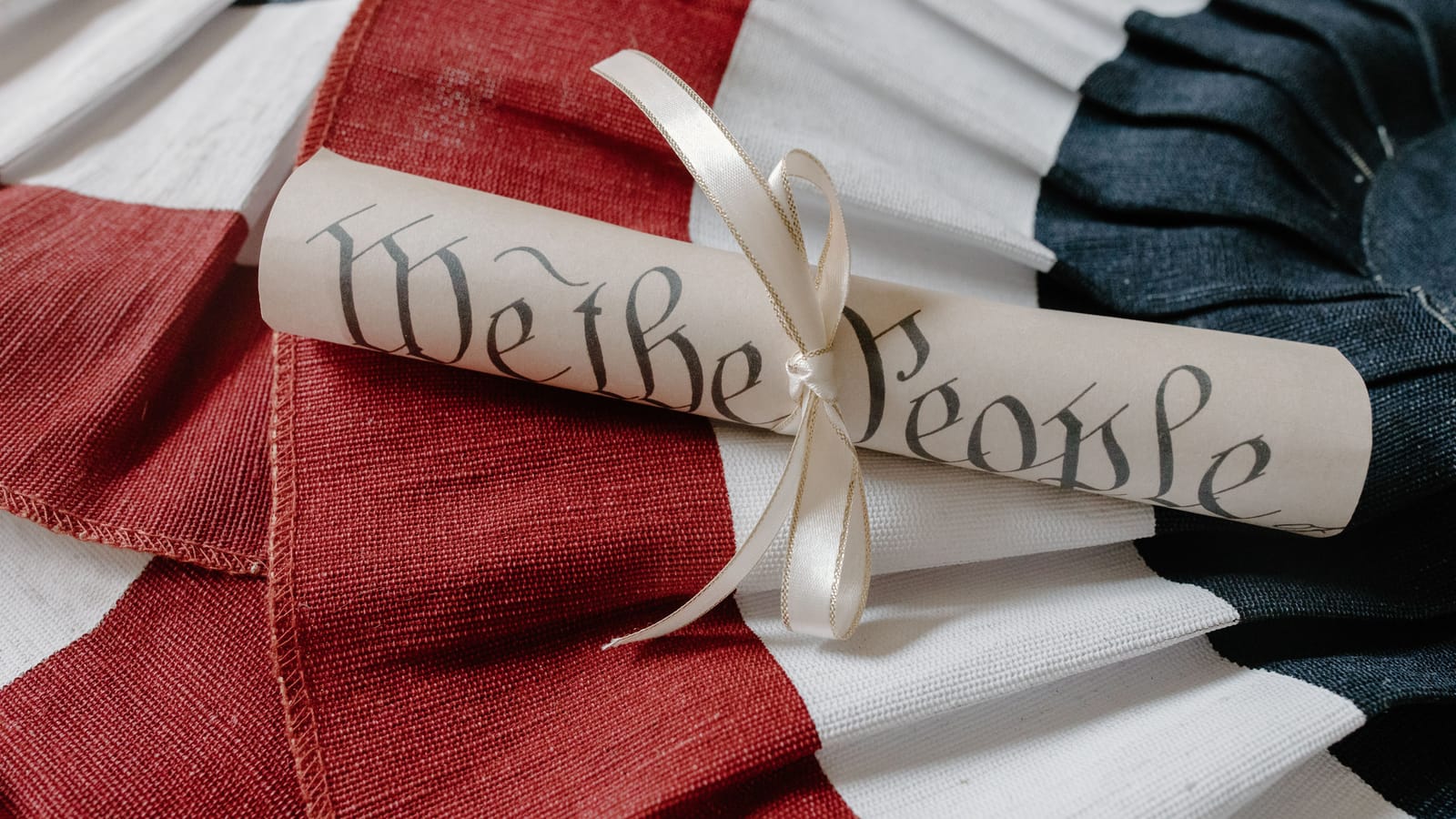
On September 12, 1787, with the Constitutional Convention five days from finishing, George Mason stood up in Philadelphia and said he wished the plan had been prefaced with a bill of rights. He figured it could be drafted in a few hours, since the states already had their own declarations to copy from. Elbridge Gerry moved for a committee. Mason seconded it.
The states voted it down ten to nothing.
Mason refused to sign the finished document. So did Gerry and Edmund Randolph. And then Mason did something more useful than sulking: he took the argument to the ratifying conventions, where the delegates weren't tired, weren't in a hurry, and weren't inclined to trust a new national government on a handshake.
The fight that produced it
The Federalists had a serious answer. Alexander Hamilton made it in Federalist No. 84: a bill of rights belongs in a monarchy, where the people are wringing concessions out of a king. This government has no general power over speech or religion in the first place, so why write down a prohibition on something nobody was given the authority to do? Worse, he warned, listing rights invites the inference that anything left off the list is fair game.
It's a smart argument. It lost anyway, because ordinary Americans had just spent a decade watching a distant government decide what counted as its authority.
Massachusetts found the compromise in February 1788. Ratify now, and send along recommended amendments. Virginia, New York and others followed the same pattern. James Madison, who had privately dismissed such guarantees as "parchment barriers," ran for the First Congress against James Monroe and campaigned on a promise to deliver them. He kept it. On June 8, 1789, he rose in the House and proposed the amendments himself.
Congress sent twelve articles to the states on September 25, 1789. Ten were ratified by Virginia's vote on December 15, 1791. The first, on congressional apportionment, never made it. The second sat around for two centuries and became the 27th Amendment in 1992, which is the single best argument ever made for patience.
First, Second, and the reason they're in that order
The First Amendment doesn't grant anything. Read the opening words: "Congress shall make no law." It's a restraint, aimed at the government, protecting six things in one sentence. No establishment of religion. No prohibition on the free exercise of it. Speech. Press. Peaceable assembly. And the right to petition the government for a redress of grievances, which is the one everybody forgets and the one you're most likely to use this year.
The Second Amendment reads: "A well regulated Militia, being necessary to the security of a free State, the right of the people to keep and bear Arms, shall not be infringed." The Supreme Court held in District of Columbia v. Heller (2008) that this protects an individual right, not a right contingent on militia service. McDonald v. Chicago (2010) applied it against the states. New York State Rifle & Pistol Association v. Bruen (2022) set the standard courts now use: a modern gun regulation has to be consistent with the nation's historical tradition of firearm regulation, not merely justified by a judge as a good idea.
The three about government showing up at your door
The Third forbids quartering soldiers in your house in peacetime without your consent, and in wartime only as prescribed by law. It's the amendment people laugh at. They shouldn't. The Quartering Acts of 1765 and 1774 put British troops in colonial buildings at colonial expense, and the grievance was real enough to make the list. It's also the cleanest statement in the document that your home isn't the government's spare room.
The Fourth protects "persons, houses, papers, and effects" from unreasonable searches and seizures, and requires warrants to be backed by probable cause, sworn, and specific about the place to be searched and the things to be seized. That particularity requirement exists because of the general warrant, which let an officer search anywhere he pleased for anything he liked. In Carpenter v. United States (2018) the Court held that the government generally needs a warrant to obtain your historical cell phone location records. The papers are digital now. The principle didn't move.
The Fifth carries five separate protections: grand jury indictment for serious federal crimes, no double jeopardy, no compelled self-incrimination, no deprivation of life, liberty or property without due process of law, and no taking of private property for public use without just compensation. That last clause got a workout in Kelo v. City of New London (2005), and the public reaction to that ruling pushed a majority of states to tighten their own eminent domain laws. Your state legislature can protect property harder than the federal floor requires. Many did.
The three about what happens in a courtroom
The Sixth is the criminal trial list: speedy and public trial, impartial jury from the district where the crime happened, notice of the charge, the right to confront the witnesses against you, compulsory process to get your own witnesses in the room, and the assistance of counsel. Gideon v. Wainwright (1963) made counsel a reality for defendants who can't pay.
The Seventh guarantees a jury in federal civil suits where the amount in controversy exceeds twenty dollars. Yes, twenty. Nobody ever indexed it, and it's a nice reminder that the text says what it says.
The Eighth bars excessive bail, excessive fines, and cruel and unusual punishments. The excessive fines clause was applied against the states in Timbs v. Indiana (2019), a civil forfeiture case involving a $42,000 Land Rover and a man who'd been convicted of a crime carrying a maximum fine of $10,000.
The two that answer Hamilton
The Ninth: listing some rights here doesn't "deny or disparage others retained by the people." That's Madison writing a direct reply to the objection in Federalist No. 84.
The Tenth: powers not delegated to the United States, and not prohibited to the states, are reserved to the states or to the people. Federal power is enumerated. Everything else stayed home. That's the architecture of the whole thing in twenty-eight words.
One thing to understand clearly: these restraints originally bound the federal government only. It took the Fourteenth Amendment, ratified in 1868, and a long line of cases after it, to apply most of them against the states. Most, not all. The Seventh Amendment's civil jury right still isn't incorporated.
Now go use it
All ten amendments together run shorter than this article. Read them. A pocket Constitution costs a couple dollars, and the text will surprise you in places where you thought you knew it.
Then do the three things that actually exercise it.
Show up for jury duty. The Sixth and Seventh Amendments are worth exactly as much as the quality of the people who answer the summons. When the clerk calls, the honest answer is that it's inconvenient. Go anyway. Everybody who ducks it hands the seat to somebody less careful.
Use the petition clause. Call the district office, not the Washington switchboard. Give your name, your town, the bill number, and one sentence on how it lands on you. Staff count those. A vague email about values gets logged as a tally mark; a specific one about a specific bill gets read out loud in a meeting.
Go to a local board. School board, zoning commission, county supervisors. Public comment is usually three minutes and the room is usually half empty. Three minutes of prepared, sourced, unemotional testimony from a resident who clearly plans to come back next month moves more government than a year of arguing online.
Mason lost the vote in Philadelphia and won the country. That's the whole playbook, and it's still available.
Marcus Vale
Editor-in-Chief
Twenty years in magazines, most of it deciding what to cut. Writes about work, discipline and the decisions that compound.

Watch
Watch how it's done
Picked for this article.
From channels we rate. Plays on YouTube.
TED-Ed
A 3-minute guide to the Bill of Rights - Belinda Stutzman
Civics Review
The Bill of Rights: Every Amendment, Why it's important, and How it limits the government
Read next