Buy the work jacket once and wear it for ten years
What to look for in the fabric, the cut and the stitching so the jacket ages into something you'd hate to lose.
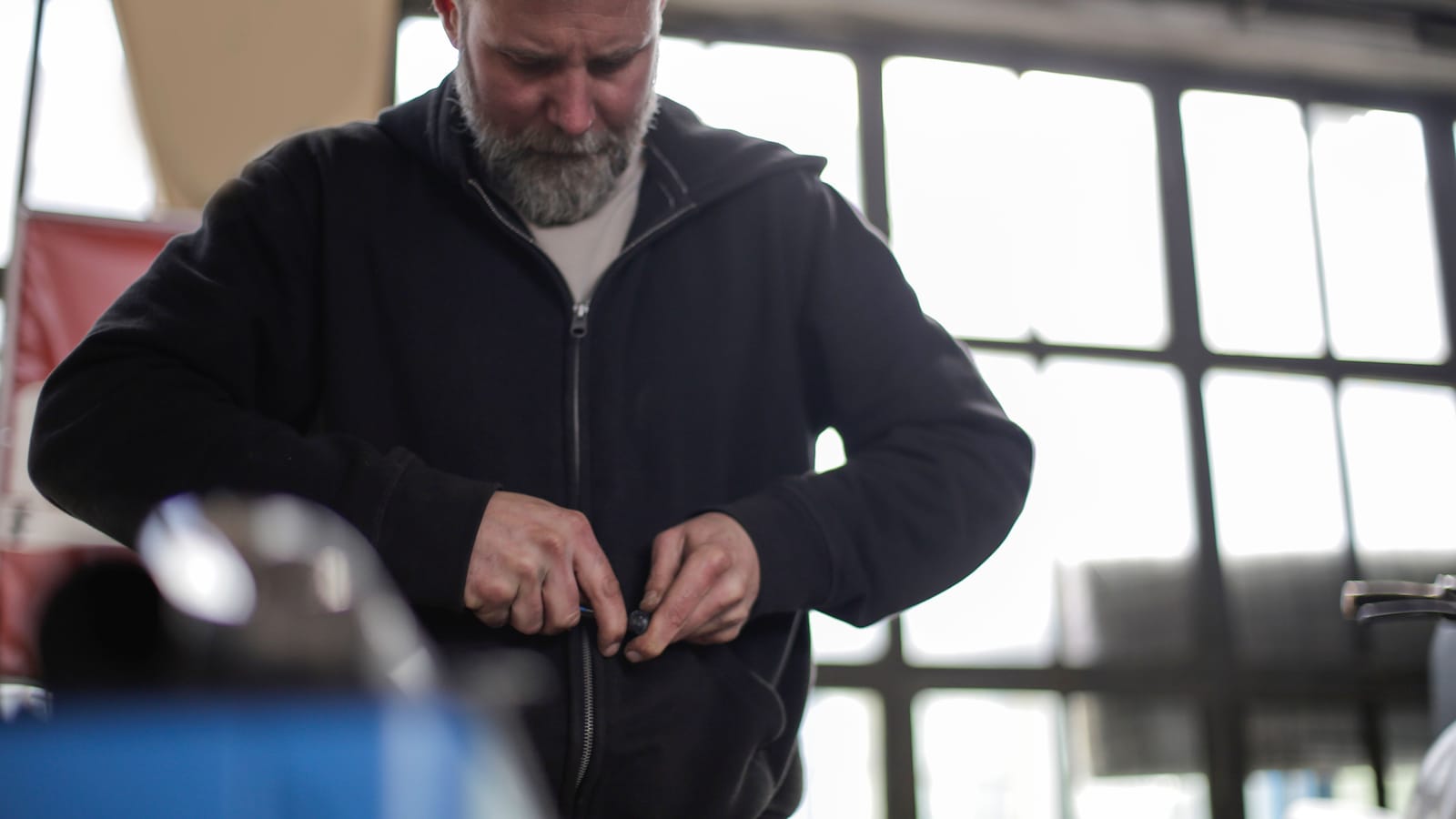
A work jacket that improves with age has three things going for it: a fabric that records wear instead of failing under it, a cut that lets you work in it, and construction where every likely failure can be repaired by somebody with a decent machine. Miss any one of those and you've bought a jacket with an expiry date, no matter what you paid.
Start with the fabric, because it decides almost everything else.
The three fabrics that actually age well
Waxed cotton. The classic country choice, and the one that changes most. New, it's stiff, slightly tacky and smells like a barn floor. After two seasons it's soft, creased where your body creases, and darker at the elbows and cuffs. It sheds rain and wind well. It doesn't breathe much, so you'll notice it walking uphill. And it needs re-waxing, which is either a satisfying hour on a Saturday or a chore you'll resent. Be honest with yourself about which.
Heavy cotton duck. Firm-hand canvas, usually somewhere around 12 ounces or heavier. It arrives like cardboard and goes slowly to something like a soft old sail. Duck doesn't repel water on its own, so most versions are either unlined for spring and fall, blanket-lined for cold, or quilted. It takes patches beautifully. If you want a jacket that looks better dirty, this is the one.
Wool and moleskin. Wool is warm when damp, quiet in cover, and it handles wind better than the weight suggests. Moleskin is brushed cotton with a suede-like face, comfortable from day one, not especially waterproof. Both look more presentable than canvas, which matters if the same jacket has to go to town.
Synthetics can be excellent jackets. They just don't get better. They get thinner, shinier at the wear points, and eventually they go in the bin. That's a different purchase.
Weight, and what it costs you
Heavier fabric lasts longer and moves less. That's the trade. A 14-ounce duck chore coat will outlive a 9-ounce one by years, but it'll fight you for the first month and it'll be too much jacket in October.
A useful rule: buy the weight that suits the temperature range you'll wear it in most, not the coldest day you can imagine. You solve cold days with layers underneath. You can't solve a too-hot jacket with anything.
If you only buy one, an unlined or lightly lined mid-weight in the 10 to 12 ounce range covers the widest span of the year. Add insulation with a wool shirt or a vest.
Fit is where most people go wrong
Try it on the way you'll wear it. Sweatshirt or wool shirt underneath, then do this:
- Put both arms straight out in front, like you're gripping a steering wheel or reaching into an engine bay. If the shoulders pull hard or the hem lifts to your ribs, it's wrong.
- Reach straight up. Some hem lift is normal. If the cuffs slide halfway up your forearms, size up or find a different cut.
- Swing your arms across your chest. You want room across the back without a tent of fabric at the sides.
Look for an action back or bi-swing pleats — the folded panels behind each shoulder that expand when you reach. Underarm gussets do the same job in a different way. Either one turns a stiff jacket into one you forget you're wearing.
Sleeve length should cover your wrist bone with arms hanging, not swallow your hands. Hem should sit at or just below your belt line for a chore coat, lower for a barn coat. Too long and you'll sit on it in the truck for a decade and wonder why the back is worn through first.
Wear the jacket around the house for a full evening before you cut the tags. A shop floor tells you nothing.
The details that decide year seven
Turn it inside out. You're looking for a few specific things.
Stitch density and seam type. Flat-felled or double-needle seams at the shoulders and side body, with no raw edges flapping. Loose, wide stitching is the first thing to go.
Bar tacks. Short, dense reinforcement stitches at pocket corners, belt loops and the base of plackets. Count them. Pocket corners without bar tacks will tear within two winters if you're a hands-in-pockets person, and you are.
Hardware. Metal snaps or a two-way metal zip with a pull you can operate in gloves. Zips are the single most common reason a good jacket gets retired, and a heavy metal zip can be replaced by a tailor for far less than a new coat. Painted snaps chip; solid brass just goes dull.
Pocket bags. Deep, sewn from the same cloth or something close to it. Thin lining fabric in the pockets means you'll be carrying keys and shells in a hole by year three.
Lining. A blanket lining is warm and repairable. Quilted nylon is warmer per ounce and much harder to fix when it splits at the armhole. Unlined is the easiest of all to patch, which is part of the appeal.
What goes wrong, roughly in order
Cuffs fray first, from the outer edge inward. Elbows thin next, especially if you lean on a truck bed or a bench. Then pocket edges. Then the collar fold, where it rubs on your neck and takes your sweat. The main body fabric is usually the last thing standing.
Every one of those is a small repair if you do it early and a write-off if you wait.
The maintenance that keeps it alive
Brush it. A stiff clothes brush after dusty or muddy work removes the grit that acts like sandpaper on the inside of the weave. This is the highest-value thing you can do, and it takes two minutes.
Wash rarely, and cold. Frequent hot washing is what turns good canvas into limp canvas. Spot-clean instead. Hang it to dry over a broad hanger or a chair back, never a wire hanger, and never near a radiator.
For waxed cotton: cold water and a rag, no detergent, no machine, no dryer. Re-wax when water stops beading and the fabric starts looking pale and dry at the shoulders. For most people that's every year or two. Warm the jacket, warm the wax, work it in thin with a cloth, get into the seams, then hang it somewhere warm overnight so it soaks in.
Empty the pockets before you hang it up. A jacket stored with a pound of gear in one side will hang crooked forever.
Repair before there's a hole
The moment you can see the weave going translucent at an elbow, put a patch on it. Canvas or leather elbow patches, sewn not glued, stop a thin spot from becoming a tear. Cuffs can be re-bound with twill tape. Pocket bags can be replaced entirely. A tailor with a walking-foot machine, or a shoe repair shop that does canvas, will do most of this quickly and cheaply.
A patched jacket doesn't look poor. It looks used, which is the entire point.
On buying secondhand
An older jacket that's been worn and cared for is often the better buy, because the fabric is already broken in and the construction is visible. Check the armpits, the collar fold and the zip. Sun-faded shoulders are cosmetic. Rotten stitching at the armhole isn't.
Ten years from now, that jacket will hang by the back door with a story attached to every mark on it. Somebody in your house will start borrowing it. Let them.
Tobias Reed
Style & Grooming
Spent a decade in menswear retail watching men buy the wrong size. Believes fit is ninety per cent of it and says so weekly.

Watch
Watch how it's done
Picked for this article.
From channels we rate. Plays on YouTube.
Carl Murawski
I Tested 8 "Cheap" Work Jackets to Find a Winner
Read next