Where you put it matters as much as what you carry
A phone in the wrong pocket ends up in a stock tank. Here's how to load your workwear so nothing falls out, digs in, or swings into the ladder.
Quick answer: Carry what you grab constantly in the front pockets. Put anything that can't get wet or crushed up high behind a button. Keep weight on your belt, not swinging on your thigh. Do a squat before you trust any pocket.
The tank test
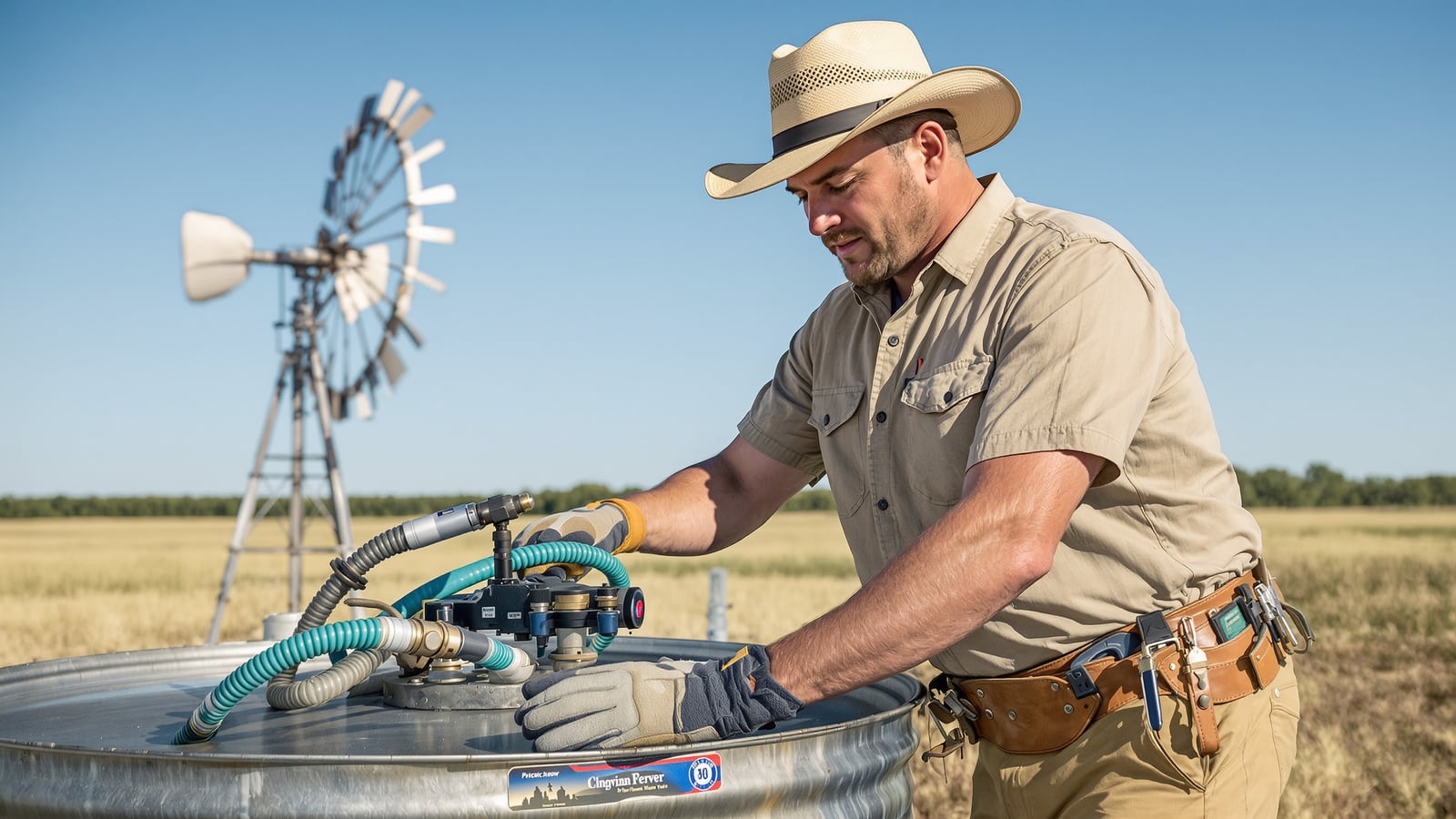
Every man who's worked outside has a version of this story. You lean over a stock tank to check the float, and the phone in your shirt pocket slides out and goes to the bottom. It's the pocket's fault as much as yours. A shirt pocket with no flap is a shelf, not a pocket, and gravity doesn't care how careful you are.
That's the whole subject in one small disaster. A pocket has a job based on where it sits on your body and what your body is about to do. Reaching, bending, climbing, crouching, sitting in a truck for an hour. Load it for the motion, not for habit.
Front pockets are for the things you grab thirty times a day
Your front pockets are the only ones you can reach with a glove on and your eyes somewhere else. So they get the tools of constant use.
Right front, if you're right-handed: the knife. Clip it so it rides at the top edge, where your thumb finds it without digging. Flip all of this if you're left-handed. Check your state and city for blade-length rules before you pick one, because they vary and "it's a work knife" won't settle it with an officer.
Left front: keys, ideally on a short loop so they don't tangle with the knife. A big ring of keys in the front pocket will print through the denim and bruise your thigh every time you climb into a combine or a bucket truck. Take off the keys you don't use. Most men carry six they haven't touched in a year.
That's it for the front. Resist the urge to add a third item. A pocket that holds three things is a pocket where you fish around, and fishing is how things come out on the ground.
The back pocket is a bad place for a wallet
You sit on it. You sweat through it. And when you squat to look at a mower deck, it rides up and slips out the top.
Move the wallet to a front pocket, or to an inside jacket pocket when it's cold. If it has to live in the back, get pants with a button or snap flap on that pocket. That one fix saves more wallets than anything else on this list. And a thick wallet in the back pocket, combined with long hours behind the wheel, makes for a sore hip by the end of the day. Slim it down. Take out the receipts from last spring.
The back pocket does have one perfect tenant: a bandana or shop rag, hanging half out. Wipe your hands, wipe your forehead, tie off a cut, plug a hose. It's the one thing you want to lose a little of the time, because it's cheap and it comes back.
The chest pocket holds what can't take a beating
High, flat, and buttoned. That's where the pencil goes, the small notebook, the folded cut list, the phone if the pocket has a flap or a zipper.
A flat carpenter's pencil, point down, sharpened with that knife you already have. Point up, it'll find your chin on the first bad stumble. A pocket notebook beats a phone for measurements because it doesn't need unlocking with dirty fingers, and it still works at ten degrees when a battery gets sluggish.
If your work shirt or jacket doesn't have a closing chest pocket, the phone belongs in a front pocket with nothing else, or on the belt in a holster that covers it. Not loose. Not in the open shirt pocket. Remember the tank.
The thigh pocket is for light, flat things
Cargo pockets and thigh pockets look like they can take a pound of stuff. They can't, not comfortably. Weight hanging at the thigh swings when you walk, bangs a ladder rung every time you step, and drags the pants down on one side by lunch.
Use them for gloves, zip ties, a small tin of staples, a folded pair of earplugs. Light and rarely needed. If the pocket swings when you walk, empty it by half.
The tape measure, the pliers, the heavier stuff belong on the belt, where the weight rides on your hip bone and the belt takes the load. That means the belt matters, and it needs to be a real one. Buy the strap right and the buckle takes care of itself covers what to look for.
Coat pockets: leave the hand-warmers empty
The two big side pockets on a work jacket exist so your hands have somewhere to go at six in the morning. Fill them with a tape and a roll of electrical tape and you've turned a heated pocket into a toolbox.
Put the phone and wallet in the inside chest pocket, closest to your body. They stay warm, they stay dry, and they don't fall out when you lean into an engine bay. If you're shopping, buy the work jacket once and wear it for ten years and make sure it has that inside pocket with a closure before you do anything else.
Do the squat before you pay
Pockets that look fine on a hanger fail in motion. In the store, put your usual items in the pockets and run the test:
- Squat all the way down and hold it for five seconds.
- Sit on a bench or a stool with your knees bent past ninety degrees.
- Lift a knee as if you were stepping onto a tailgate.
- Reach overhead with both hands.
If anything shifts, pokes you, or starts to slide out, that pocket isn't for that item. It's a quick test and it works on any pair of pants, which is why it belongs in any plan for buying jeans you can actually work in.
Check the pocket bags once a year
A knife that lives in the same pocket for twelve months will eventually wear through the cotton bag at the bottom. You won't notice until your keys hit the ground, or until you find them down your pant leg come evening. Turn each pocket inside out when you do laundry. A hole the size of a dime is a five-minute fix with a needle and thread, and it's a lot cheaper than a new pair.
And empty every pocket before the wash. A loose screw rattling around a dryer drum is an annoying afternoon. A handful of them is a repair bill.
The nightly dump
Here's the habit that fixes everything else. When you get home, empty your pockets onto the bench by the door and look at what's there.
Whatever you didn't touch all day shouldn't go back in tomorrow. That's your pocket system, built by the one honest expert in the house: you.
Tobias Reed
Style & Grooming
Spent a decade in menswear retail watching men buy the wrong size. Believes fit is ninety per cent of it and says so weekly.

Watch
Worth an hour of your evening
More from Country Style.
From channels we rate. Plays on YouTube.
Read next