How to Buy a Barn Coat That Actually Works Outside
Canvas weight, lining, sleeve length and the four details that separate a real barn coat from a mall version of one.
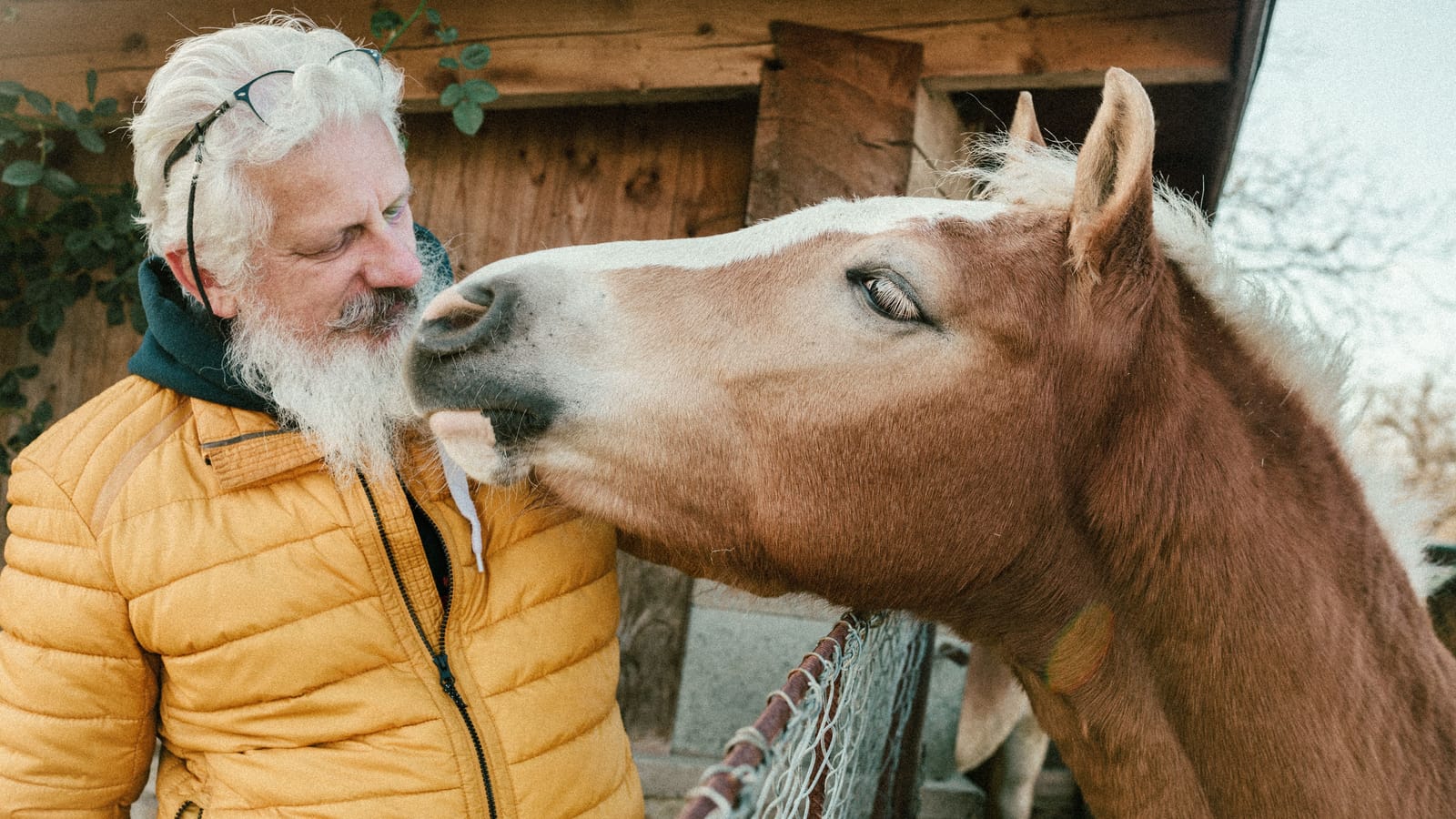
Put the coat on in the store, then reach straight up like you're grabbing the top rail of a gate. If the cuffs slide halfway to your elbows and the hem lifts off your belt, put it back. That one motion kills about half the barn coats on the rack, and it takes four seconds.
A barn coat has a job. It goes over a flannel and a hoodie, it takes a hit from barbed wire and a bale hook and the corner of a tailgate, and it still hangs by the back door looking like something a grown man owns. Anything that can't do all three is a jacket with a corduroy collar sewn on for decoration.
Know which coat you're actually buying
Three things get sold under the same word. The chore coat is hip length, button or snap front, usually unlined or flannel lined, cut straight and roomy. The barn coat is the same idea with more weather in mind: heavier shell, warmer lining, a zipper with a snap storm flap over it, and often a corduroy collar. The field coat is longer, lighter, built around shooting and walking, with bellows pockets and a game bag some people never use.
Buy by the job, not the name on the tag. If you're doing chores at 20 degrees with wind, you want the barn coat. If you're mostly driving, walking to the shop and back, and want one coat for October through Thanksgiving, the chore coat in flannel is more comfortable more often.
The mistake is buying the warmest one and wearing it in 45-degree weather with the front hanging open. You end up soaked in sweat with cold arms. Two coats at different weights beat one coat that only works ten days a year.
The shell: weight is the whole story
Cotton duck is measured in ounces per square yard. Twelve ounce duck is the classic. It's stiff out of the bag, it stands up on its own for the first month, and it's still going after a decade. Eight to ten ounce washed duck is softer immediately, packs down better, and gives up a little abrasion resistance. Below eight ounces you're in shirt jacket territory. That's fine, it's just not a barn coat.
Waxed cotton is the other honest answer. It sheds rain the way duck never will, it takes a scrape well, and it costs you in weight and in upkeep. If you'd rather not think about reproofing, don't buy waxed.
Watch the fiber content. A shell that reads 60 percent cotton, 40 percent polyester is usually there to save money and keep wrinkles down, not to help you. Poly melts if a spark from the burn barrel lands on it. Cotton scorches and moves on. If you're near a welder, a stove or a fire, that difference matters more than the price tag.
Linings, and what each one is good for
- Blanket or flannel lining. Comfortable, quiet, breathes, dries slowly. Good from about 55 degrees down to 35 if you're moving.
- Quilted nylon with poly fill. The warmest per ounce and the cheapest to make. Slick, so it slides over layers easily. Rustles a little. Good into the teens with a hoodie under it.
- Sherpa or pile. Warm, heavy, wonderful in the collar and hood, and a pain to layer over anything bulky. Great at 25 degrees standing still, miserable at 45 stacking wood.
Check that the lining goes all the way down the sleeves. Plenty of coats are quilted in the body and unlined in the arm, and you'll notice the second you're holding a wrench in the wind. Run your hand inside the cuff and feel for it.
Fit: build it around the third layer
Try the coat on over what you'll actually wear. A base layer, a flannel, a hoodie. If it fits perfectly over a t-shirt in a heated store, it's too small for February.
What you want:
- Sleeves that reach the base of your thumb with your arms down, so they still cover your wrists with your arms up.
- A hem that sits at your belt or just below. Long enough to cover your kidneys when you bend, short enough that it isn't riding up over the seat of a tractor or a truck.
- A bi-swing back or action pleat. Those folded panels across the shoulder blades are the reason you can swing a splitting maul without the coat pulling across your chest.
- Room through the chest without a tent through the waist. Two fingers of slack over your layers is about right.
Sizing up one is the usual advice, and it's usually wrong in the shoulders. A coat that's too big drops the armhole seam onto your bicep and now you can't lift your arms at all. Find the one that fits your shoulders and has room in the body.
The details worth paying for
A two-way zipper that opens from the bottom. Sounds like a gimmick until you sit down in a truck or swing a leg over a fence and the coat isn't binding across your hips. Once you've had one you won't buy anything else.
A storm flap with snaps over the zipper. It blocks the wind channel that every zipper has, and it saves the zipper from mud and ice.
Handwarmer pockets set high, above the cargo pockets, angled, and lined with something soft. Low pockets are useless when you're wearing gloves and a tool belt. And at least one inside chest pocket big enough for a phone, because nothing turns a phone screen into a spiderweb faster than a hip pocket and a hay bale.
Triple-stitched main seams and bar tacks at the pocket corners. Pull a pocket corner hard in the store. If it flexes, it'll tear.
What to skip
- Faux leather trim on the collar or cuffs. It cracks in one winter and peels like sunburn.
- Drawstring waists. They bunch under a belt and they turn a work coat into a jacket for standing in a parking lot.
- Slim or "tailored" barn coats. The cut is the point. If it's cut close, it can't go over a hoodie, and if it can't go over a hoodie it's not a barn coat.
- Fixed hoods on a coat you'll wear in a truck. Hoods bunch behind your neck and push your hat forward. Buy one with a snap-off hood, or go without and wear a cap and a neck gaiter.
- Big chest logos and contrast stitching in a color that doesn't exist in nature. Ten years from now the coat will still be good and the branding will look like a date stamp.
- Anything sold as "distressed." You can do that yourself, for free, doing something useful.
Price, honestly
The useful middle is roughly $150 to $300. Under a hundred you're generally getting thinner duck, a shorter zipper and a lining that stops at the elbow. Over three hundred you're buying waxed cotton, better hardware and a warranty you'll probably never use, and some of that's worth it if you're outside every day.
Whatever you spend, wash it cold and hang it to dry. Hot water and a dryer shrink cotton duck hard, and a barn coat that shrank an inch in the sleeve is a barn coat you gave to your son.
The good ones get better looking as they get worse looking. Mine has a bleach spot on the left cuff from a calf pen and a patch on the elbow my wife sewed on a Sunday afternoon, and I'd take it over anything on a rack right now.
Tobias Reed
Style & Grooming
Spent a decade in menswear retail watching men buy the wrong size. Believes fit is ninety per cent of it and says so weekly.

Watch
Watch how it's done
Picked for this article.
From channels we rate. Plays on YouTube.
Coat Culture
J Crew Barbour Barn jacket review - why you should NOT buy the Barbour J Crew Barn Jacket
Boots, Jeans and the Odd Watch
Flint and Tinder Review: Mason Canvas Barn Jacket
Read next