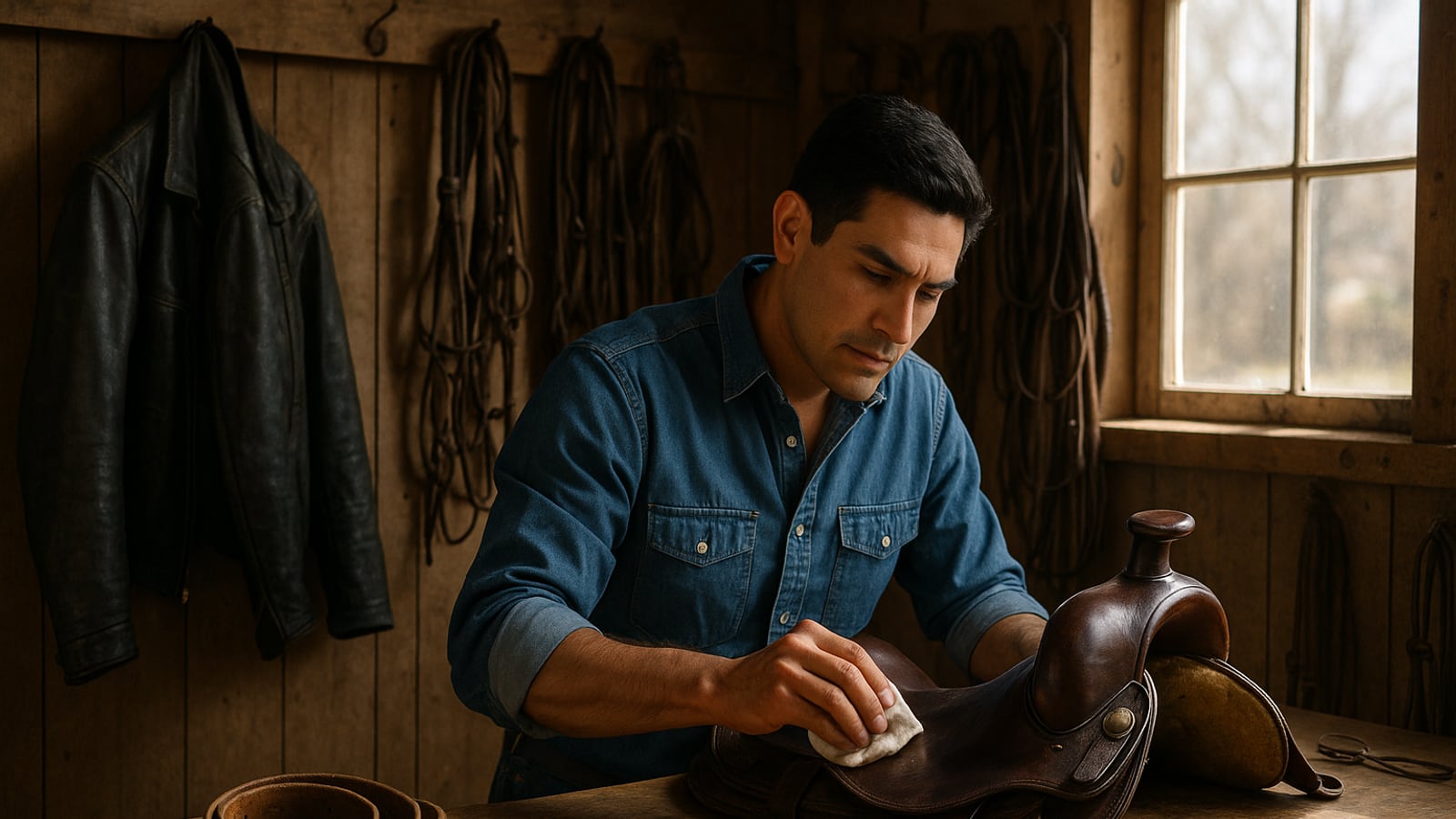
Wipe it, let it dry away from heat, feed it a thin coat of something fatty, and put it somewhere with air. That's the whole job. Do it three or four times a year and a good belt, jacket, saddle or bag will outlast the person who bought it.
Almost everything else written about leather care is either a product advert or a way of making a simple task feel technical.
The useful part is knowing what actually destroys leather, because it isn't wear. It's heat, neglect, and over-enthusiasm.
What's really going on inside the hide
Leather is a mat of collagen fibres held apart by fats and oils that were put there during tanning. Those fibres slide over each other. That sliding is what makes leather flex instead of crack.
Lose the fats and the fibres lock together. Then every bend grinds them against one another. You get surface crazing first, then cracks that go all the way through, and at that point nothing brings it back. Conditioner on cracked leather is a cosmetic, not a repair.
Water doesn't destroy leather on its own. Water that carries the oils out on the way back through, and then dries too fast, does. That's why a soaked jacket left on a radiator overnight comes back stiff as cardboard and stays that way.
Heat is the single worst thing you can do. Radiators, wood burners, car dashboards, hair dryers, airing cupboards. All of them cook the fat out and shrink the fibres.
The test that tells you when to act
Put a drop of water on the leather. If it beads and sits there, the finish and the fats are doing their job. If it soaks in and leaves a dark patch that slowly fades, the leather is thirsty and you should feed it.
The other test is your thumb. Press hard into the flesh of the leather and release. It should give slightly and spring back. If it feels dry and papery, or if it stays dented, it needs attention.
Don't work to a calendar. Work to those two tests, and check everything at the turn of each season.
Cleaning, properly and rarely
Dirt is abrasive and it holds moisture against the surface. Get it off before you feed anything, or you'll seal grit into the grain.
Brush loose dust with a soft brush. Then a cloth wrung out in warm water, worked over the surface in small circles. For anything greasy or salt-stained, a light lather of glycerine saddle soap on a damp cloth, wiped on, wiped off. Saddle soap is a cleaner, not a conditioner, which trips up more people than any other point in this.
Never submerge leather. Never put it under a tap. Never use washing-up liquid, which strips fats you're about to spend money replacing.
White tide marks on boots and jackets in winter are road salt or dried sweat. A cloth dipped in a mix of one part white vinegar to two parts water will lift them. Dab, don't scrub, then wipe with clean water and let it dry.
Feeding it without ruining it
This is where good gear gets killed with kindness.
Conditioner should go on in thin coats, warmed slightly by your hands, and left overnight. Two thin coats a day apart beat one thick one every time. A thick coat sits on the surface, attracts dust, and never absorbs evenly.
Know what you're reaching for:
- Cream conditioners and lanolin-based dressings. The safe default for most things. Restore suppleness, minimal darkening, won't soften structure much.
- Neatsfoot oil. Penetrates deep and softens a lot. Good for old, dry tack you're bringing back. Bad for anything that needs to hold a shape. It darkens permanently.
- Beeswax dressings and dubbin. More about waterproofing than feeding. They stiffen the surface slightly and leave a matte finish. Excellent on work gear, wrong on a dress belt.
- Silicone sprays. They repel water and they also shut the leather up so nothing else can get in. Fine on a cheap pair of site boots. Don't put it on something you intend to keep.
Over-oiling is real and it's irreversible. Saturated leather goes spongy, the fibres lose grip on each other, and the stitching holes stretch until the thread has nothing to bite. You see it on saddles somebody oiled every month for years thinking they were being diligent. The leather feels lovely and it's structurally finished.
Twice to four times a year, for most things in regular use. More if it gets wet often. Less if it lives indoors.
Wet leather
Get it out of the rain, shake it off, blot it with a towel. Then let it dry slowly at room temperature, away from every heat source in the building.
Give it shape while it dries. Stuff boots with newspaper, changed once. Hang a jacket on a broad wooden hanger, not a wire one that'll crease the shoulders. Lay a saddle over a proper rack, not a fence rail.
Condition when it's dry to the touch but not bone dry. That's the moment it takes the fats in best. If you leave it a week it'll still work, just less well.
Storage is where most of the damage happens
More leather is ruined sitting still than in use.
Never store it in a plastic bag or a sealed box. Leather needs to breathe, and trapped damp means mold. A cotton dust bag or an old pillowcase is all you need.
Hang belts from the buckle rather than coiling them tight. Stuff bags loosely with paper so the sides don't collapse. Keep anything with a shape off the floor and out of direct sun, which fades and dries in equal measure.
If mold does appear, take it outside, brush it off, wipe with the vinegar solution, dry it in moving air, then condition. Deal with the damp in the room too, or you'll be doing it again in a month.
The thread goes before the leather
On a well-kept piece, the stitching fails first. Thread sits proud of the surface and takes all the abrasion.
Check seams every time you clean. A single broken stitch isn't urgent. Three in a row means the seam is unzipping and it wants restitching now, not after the season. A hand saddle-stitch is two needles locked through the same hole, so it doesn't unravel when one strand breaks. Machine lockstitch does. Worth knowing which you've got.
Check hardware as well. Rub a candle stub down a stiff zip. Watch for rivets working loose and buckle tongues wearing thin at the pivot.
What to hand over
Anything that holds weight or holds a person. Stirrup leathers, billets, girth straps, harness. If a strap under load fails, someone hits the ground. Have a saddler check your tack annually and take their word over yours.
Resoling, reshaping, zip replacement and edge rebuilding are all cobbler and leatherworker territory. A good one will tell you honestly when a piece isn't worth the work, and that answer is worth the visit on its own.
The mark of leather that's been looked after isn't that it looks new. It's that the creases sit where somebody's body put them, the color has gone deep and uneven, and the buckle has worn a shallow dish where a thumb went a thousand times. Someone will inherit that. Make it worth having.
Tobias Reed
Style & Grooming
Spent a decade in menswear retail watching men buy the wrong size. Believes fit is ninety per cent of it and says so weekly.

Watch
Worth an hour of your evening
More from Country Style.
From channels we rate. Plays on YouTube.
Read next