Sit on your hands while your teenager learns to drive
The shouting isn't a discipline problem. It's a fear problem, and there are practical ways to keep it out of the car.
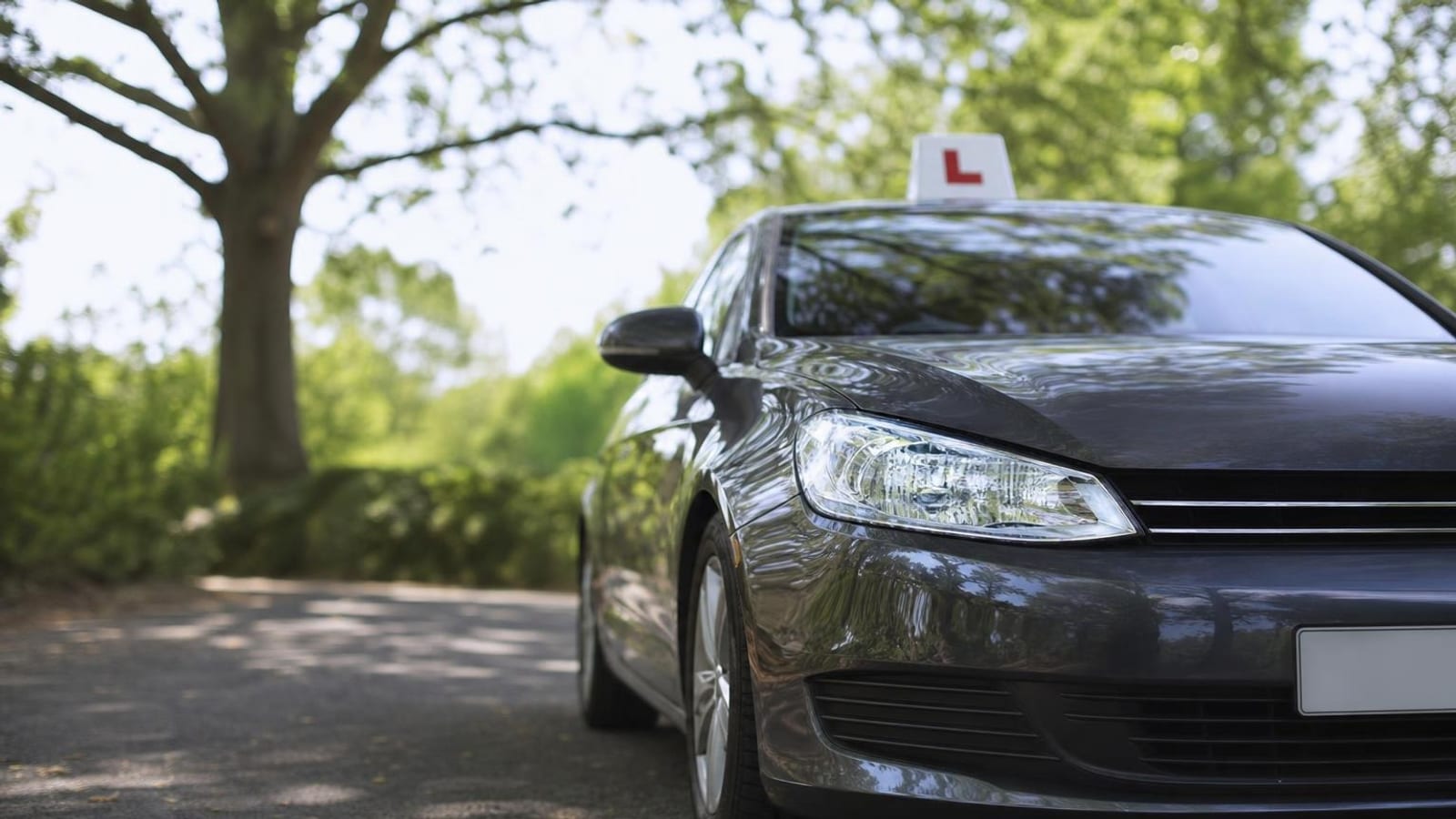
Tuck your hands under your thighs before your kid puts the car in drive, and leave them there. You can't grab the wheel from that position. You can't brace against the dash. And your teenager can't watch your right hand twitch every time a parked car goes by at 30.
That twitch is the whole problem. They're reading your body, not your instructions. A kid who's being watched by a nervous man drives worse, not better, because half their attention is on you instead of the road. Take your hands out of the conversation and you've fixed a surprising amount of it before anyone says a word.
The shouting isn't really about their driving. It's that you're sitting in a fast-moving object with no controls, next to someone with six hours of experience, and your body keeps filing that under "emergency." Name it to yourself. It's easier to manage a fear you've admitted to than one you're calling "just being clear with him."
Give directions ten seconds early, in the same words every time
Most of the yelling in a learner car is logistical. "Turn here. HERE. No, here—" That's not a driving error. That's you giving a navigation instruction one second before it's needed.
Decide on a format and stick to it. "At the second light, we're turning right." Say it while the light is still a quarter mile out. Then be quiet. If they miss it, you drive around the block. Nothing happened.
Keep one word for genuine emergencies, and use nothing else for them. "Brake." Not "look out," not "whoa," not a sharp intake of breath. If "brake" is the only thing you ever shout, it works instantly the one time you need it. If you've been yelling the whole lesson, it's just more noise.
And no commentary on other drivers. You cut someone up in your head, your kid hears the tone and learns that driving is a contest.
Build up in this order, and don't skip
An empty commercial lot on a Sunday morning. Half an hour of nothing but starting, stopping smoothly, and getting used to how much steering input the car actually wants. Most beginners oversteer badly. Let them discover that against a curb, not a car.
Then residential streets early on a weekend. Stop signs, kids' bikes, driveways. Then four-way intersections. Then an arterial with a 45 limit where they have to hold a lane at speed for more than a minute.
Left turns across traffic come next, because that's where the real fear lives, for both of you. Park somewhere and just watch a busy intersection for five minutes first. Talk about gap judgment while stationary. Then do twenty of them in a row.
Highway merging after that. Night after that. Rain whenever it rains, deliberately, with you in the car rather than accidentally without you.
Parallel parking last. It's the thing every parent obsesses over and it's the thing least likely to hurt anybody. A bad merge kills people. A bad parallel park scuffs a wheel.
Thirty minutes, one note
End the session before either of you is tired. Thirty to forty minutes is plenty. Concentration collapses after that and the last ten minutes poison the whole drive in their memory.
Don't debrief in the car. The car is where they were just under pressure, and a post-mortem in the driver's seat turns the vehicle into a place where they get corrected. Wait until you're inside, and until neither of you is holding the keys.
Then give one note. One. "Next time, I want you looking further down the road. Not at the car in front, at the one three ahead." That's it. Not the six other things you noticed. A teenager can carry one correction into the next session. Six turns into "I'm bad at this."
The thing you noticed that they did well goes first, and it has to be specific, or it reads as a management technique and they'll spot it.
Make them talk
Commentary driving is the single most useful thing in the whole process and almost nobody does it with their kids. Have them say out loud what they're seeing.
"Kid on the sidewalk on the right. Car at the stop sign wants to pull out. Light's been green a while, might change."
It sounds awkward for about four minutes. Then it stops being awkward and starts being diagnostic, because you can hear exactly what they're not seeing. If they never once mention the car behind them, you know their mirror habit is decorative. If every hazard they name is within thirty feet of the hood, you know they're staring at the pavement.
You can't see attention. You can hear it.
Teach the car too
Before the license, on a dry Saturday in the driveway: find the sticker in the driver's door jamb, read the tire pressures off it, and have them do all four with a gauge. Show them the oil dipstick. Pop the spare and the jack out and let them change a front wheel while it's light and warm and nothing is wrong.
Jumper cables, in the right order, connected to a car with the engine off, explained slowly.
Then the one nobody teaches: what to do at the roadside. Hazards on, get off the traveled surface if the car will move, everybody out the passenger side and behind the barrier, not standing next to the driver's door on a highway shoulder. That's a five-minute conversation that matters more than parallel parking ever will.
Pay someone else for the parts you'll fight about
Some fathers and some teenagers should not be in a car together learning this, and there's no shame in the pairing being wrong. If three sessions in you're both dreading it, hire a professional instructor for the core skills and keep the drives that are just drives.
It isn't cheap. It's cheaper than six months of tension in your house.
The trade-off is real: an instructor teaches to the test, and the test doesn't cover an icy on-ramp, a tire blowout, or what to do when your friend in the passenger seat won't stop messing with the radio. That part stays yours either way.
They've been watching you for fifteen years
The curriculum started long before the permit. If you tailgate, they'll tailgate. If you check your phone at a red light, they will too, and every rule you write down afterward is worth nothing against fifteen years of evidence.
So put your phone in the glovebox when they're driving. Yours, not just theirs. If they see you do it, the rule survives contact with their friends.
Write down the rules for the first year and keep them boring. Who's allowed in the car. What time it comes home. What happens in snow. Add privileges back on a schedule they can see, so good driving buys something.
And then the one deal you make and never break: if they're ever somewhere they shouldn't be, or the driver has been drinking, or they just feel wrong about getting in a car, they call you. Any hour. You come. No interrogation that night, no consequences attached to the call itself.
You'll have the harder conversation on Sunday. What you're buying is the phone call.
Cal Brennan
Fitness
Strength coach. Trains fathers, tradesmen and desk workers, which means programs that survive a bad week.

Watch
Worth an hour of your evening
More from Dads.
From channels we rate. Plays on YouTube.
Read next