Band of Brothers Still Sets the Bar for War on Television
Twenty-plus years on, nothing has topped it. But eight other series come close, and here's exactly what's in each one before you press play.
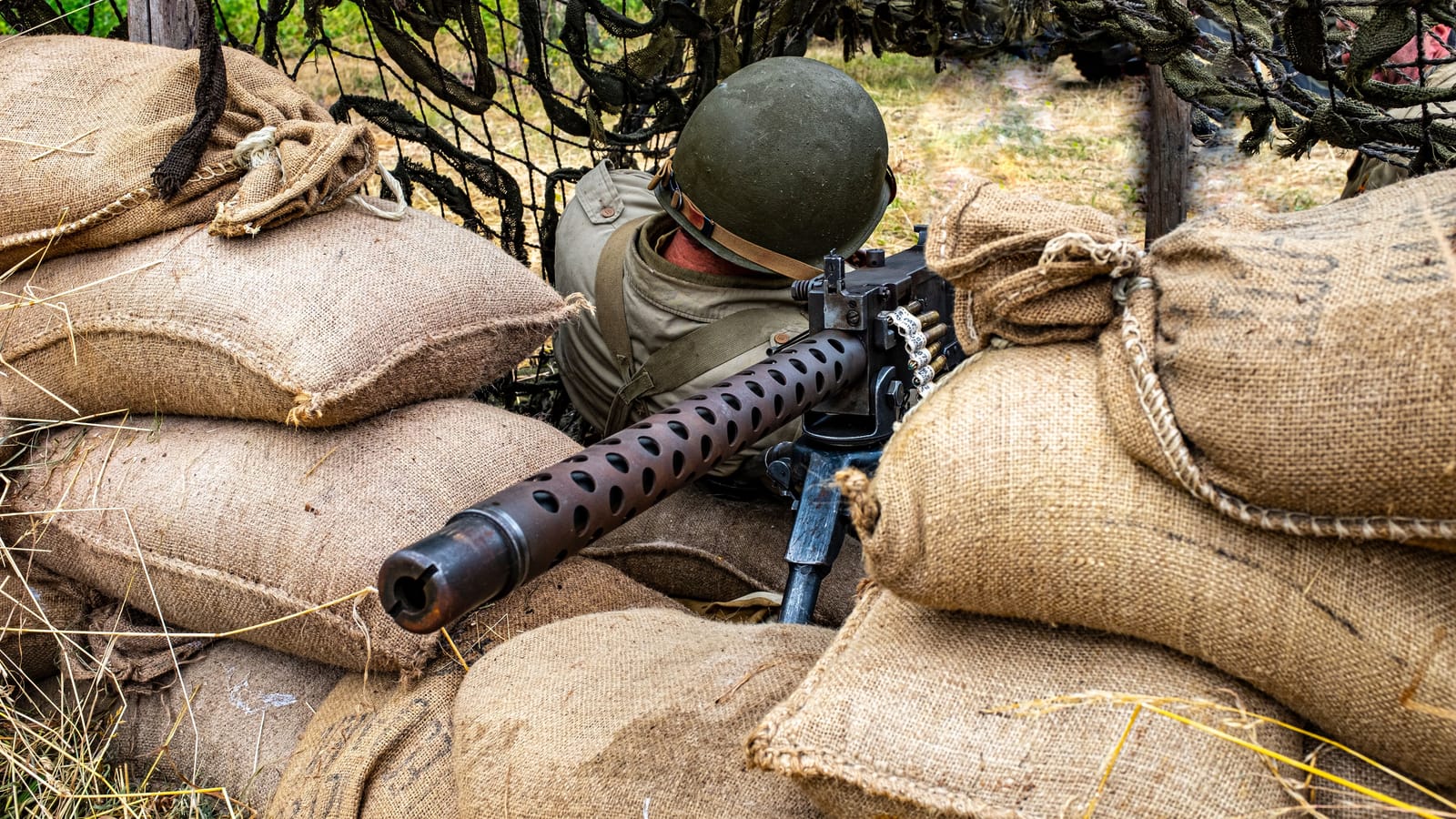
Thirteen men took out a battery of four German 105mm guns at Brécourt Manor on the morning of June 6, 1944. Dick Winters ran the assault. It's still studied as a model of how a small unit takes a fixed position, and Band of Brothers puts the whole thing on screen in about eight minutes without a single line of speechmaking.
That's the tell. HBO spent a reported $125 million on ten episodes and then declined to use any of it on inspirational monologues.
The series premiered September 9, 2001. Two days later the country had other things on its mind, and the show found its audience slowly, on DVD, passed between men who kept saying the same sentence: you have to watch this. Twenty-plus years later that's still how it spreads.
Why the format wins
Television's advantage over film is arithmetic. Ten hours to earn what a movie has to fake in two.
Saving Private Ryan has to make you care about Caparzo in about nine minutes. Band of Brothers has the room to let you spend a year with Easy Company, 506th Parachute Infantry Regiment, 101st Airborne, from jump training at Toccoa to the Eagle's Nest. By the time Bull Randleman goes missing in Holland you already know how he takes his coffee. That's not sentiment. That's structure.
The other thing the series does, and almost nobody copies, is open every episode with the real veterans on camera. Old men in cardigans, in front of a gray backdrop, talking plainly. You don't learn their names until the last episode, at which point the whole thing lands on you at once. Whoever made that call deserved a raise.
Content concerns, plainly: pervasive profanity, including the harshest words, throughout. Combat violence is extremely graphic — amputations, men burning, a leg taken off at the Foy tree line. There's brief nudity in a couple of episodes. Episode nine, "Why We Fight," covers the discovery of a Kaufering concentration camp and it's exactly as hard as that sounds. This isn't a show for children. For a son of about sixteen who's read some history, watched with his father and talked about afterward, it's close to essential.
The Pacific, and why it's harder
HBO's 2010 follow-up gets dismissed as the lesser one. It isn't lesser. It's just worse company.
Band of Brothers gives you a unit. The Pacific gives you three men — Robert Leckie, Eugene Sledge, John Basilone — and scatters them across islands where the fighting was more savage and the war made less obvious sense to the men doing it. Sledge's arc, drawn from his memoir With the Old Breed, is the most honest portrait of what combat does to a decent young man that television has managed.
It's grimmer and more fragmented, and that's the point.
Content concerns: everything above, plus more. Two episodes contain sexual content and nudity you'll want to skip outright. The violence is worse than Band of Brothers, particularly the Peleliu episodes. Adults only, and not the night you want something easy.
Masters of the Air
The 2024 Apple TV+ entry follows the 100th Bomb Group, the "Bloody Hundredth," out of Thorpe Abbotts. Nine episodes. It's the cleanest of the three HBO-lineage shows by a wide margin — less profanity, no sexual content to speak of, and violence that's mostly aerial: flak, fire, men falling out of the sky.
It's also the weakest dramatically. The ground-level character work never quite catches. But if you want your fourteen-year-old to understand what a B-17 crew signed up for, and you don't want to pre-screen for surprises, this is the one.
Combat!
Five seasons on ABC from 1962 to 1967, Vic Morrow as Sergeant Saunders, a squad working across France after Normandy. Black and white for the first four years. No blood, no profanity, and half the episodes are genuinely good drama, because the writers had to make the moral problem carry the hour instead of the squibs.
This is the war series you can watch with a ten-year-old. Start with "A Day in June" and see if the kid bites.
Foyle's War
Wartime England, the home front, a detective chief superintendent who keeps investigating murders while everyone tells him there's a bigger war on. Michael Kitchen plays Christopher Foyle with an economy that's almost rude — he'll end a scene by looking at somebody for four seconds and leaving.
It's the rare series your wife will finish with you and then ask for another. Almost entirely clean: murder, occasional brief violence, adult subject matter handled without wallowing. If you've run out of things to watch together after the kids are down, start at series one.
Das Boot
The 1981 German miniseries, the long version, subtitled. Forty-odd men in a steel tube, the depth-charge sequences, the gauges cracking. Nothing else has ever made you feel the pressure of the ocean the way this does.
One warning: the opening sequence in the Saint-Nazaire bar is loud, drunk and crude, and includes nudity. Skip the first ten minutes or so and you lose nothing. After that it's a study of men doing an impossible job for a cause the film has no interest in flattering.
The big Wouk adaptations
The Winds of War (1983) and War and Remembrance (1988) together run about thirty hours of network television, with Robert Mitchum anchoring both. They're stately, sometimes slow, and occasionally stagey in a way 1980s TV was. They also cover the entire war from Berlin to Midway, and War and Remembrance filmed at Auschwitz itself. The camp material is unflinching and includes documentary-level horror. Watch it before you decide whether a teenager sees it.
Two you should know about before you start
Generation Kill (HBO, 2008) follows 1st Recon Battalion into Iraq in 2003, and it's the most accurate rendering of how young Marines actually talk that's ever been broadcast. That accuracy is the whole problem. The profanity is relentless and the humor is crude. Clearly labeled, genuinely excellent, and not for most households.
Sharpe, the ITV Napoleonic series with Sean Bean, is a great time and largely watchable, but a handful of the films include sexual content and some bawdy business. Vet the episode, not the series.
How to start
Don't binge Band of Brothers. It doesn't reward it.
Watch one episode a week with your oldest son, and afterward pull up the Wikipedia page for the real men in it. Find out what Lipton did after the war. Find out that Winters went home to Hershey, Pennsylvania, and ran a feed business and mostly wouldn't talk about it. That last part is the lesson the show is actually teaching, and it isn't in the combat scenes.
The men who did the hardest thing of the twentieth century came home and got quiet about it. Then they worked.
Marcus Vale
Editor-in-Chief
Twenty years in magazines, most of it deciding what to cut. Writes about work, discipline and the decisions that compound.

Watch
Worth an hour of your evening
Picked for this article.
From channels we rate. Plays on YouTube.
Action SocietyFeb 24
Masters of the Air Clip - “Battle of Münster” (2024)
Read next