Watch these courtroom films and you'll follow any trial
Each one teaches a single real idea about how trials work. Start with 12 Angry Men and finish knowing what a jury is actually for.
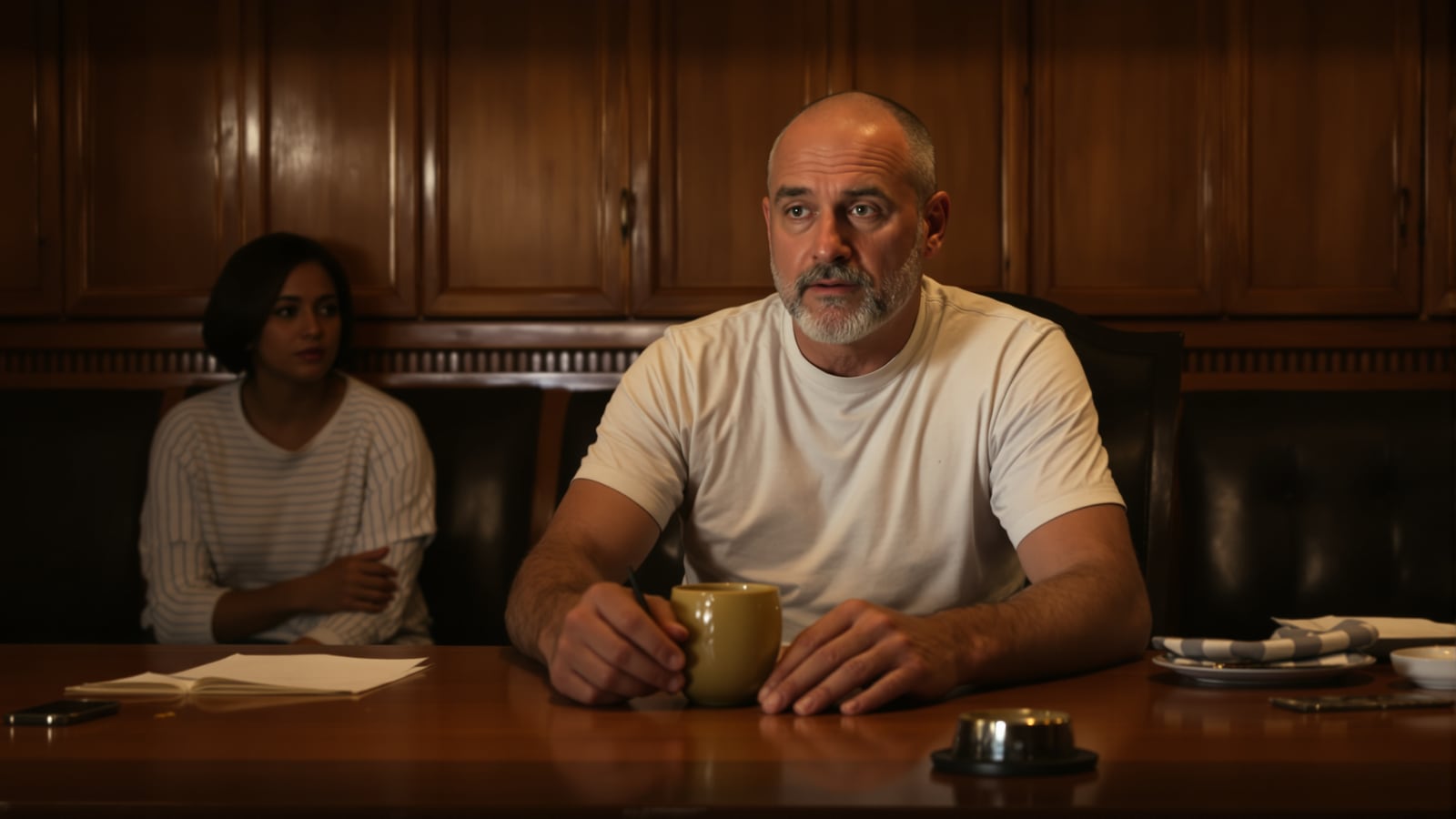
Quick answer: Start with 12 Angry Men for reasonable doubt, then To Kill a Mockingbird for burden of proof. Add Witness for the Prosecution for cross-examination. Content flags for every title are below, because a few of these aren't for the kids.
Most courtroom movies teach you one thing: how to say "Objection!" with your chin up. A handful teach you something better. They hand you a single piece of how a trial works, make you feel it, and let you walk out able to explain it at dinner.
Watch these in order and you'll pick up the rules the way you pick up a card game, by playing along.
Reasonable doubt: 12 Angry Men (1957)
Ninety-six minutes, one room, twelve jurors, a teenager accused of killing his father. Eleven want to convict in five minutes. One doesn't.
The lesson is the one every juror gets told and few understand. The state has to prove guilt. The defendant doesn't have to prove anything. Juror 8 never claims the boy is innocent. He only asks whether the case has been proven, and then he starts pulling at it, a thread at a time: a knife, a timeline, an old man's walk to his door, the marks on a witness's nose.
It also shows why a criminal verdict has to be unanimous. One steady voice can force a room to actually think.
Content concerns: A killing sits at the center of the story, but nothing graphic is shown. One juror's bigotry is on open display, and the film treats it as the ugly thing it is. Black and white. Fine for teens, and a good one to watch with them.
Burden of proof: To Kill a Mockingbird (1962)
Atticus Finch defends a man accused of a crime he couldn't have committed. The film's real teaching is in how Atticus does it. He doesn't make speeches about the accusers. He walks the jury through the physical evidence and lets it point the wrong way.
Watch the cross-examination of the Ewells. Atticus asks short questions with plain answers, and the story falls apart under its own weight. That's how it's done.
The film is also honest about the other thing a trial can't fix: a jury is made of people, and people carry what they came in with. Atticus does the right thing knowing it may not win.
Content concerns: Racial slurs are spoken in dialogue. The trial rests on a serious criminal charge that parents will want to talk through first, though nothing is shown. There's a frightening night attack on two children and a tense scene with a rabid dog. Good for about twelve and up, with a parent in the room.
Cross-examination, two ways
Young Mr. Lincoln (1939) has Henry Fonda as a young Illinois lawyer defending two brothers accused of murder. It's loosely built on a real 1858 case, and the key moment is one every lawyer knows. A witness swears he saw the killing by moonlight. Lincoln produces an almanac showing the moon wasn't where the witness said it was.
The lesson: a witness who's certain isn't necessarily right. Cross-examination doesn't call people liars. It tests what they say they saw against what could actually have been seen.
Witness for the Prosecution (1957) is the other side of it. Charles Laughton plays an aging barrister who's been ordered to rest and can't stay out of a murder case. This one is a masterclass in impeaching a witness, which means showing the jury why they shouldn't trust what they just heard. It also teaches a rule about whether spouses can be made to testify against each other, and I'll leave the rest alone. The ending is the point, and the film itself asked audiences not to give it away.
Content concerns: Both are clean. Lincoln has a mob scene and a killing. Witness has a murder at its center and one violent moment near the end, mild by modern standards. A good pair for a family with teens.
How a trial really runs: My Cousin Vinny (1992)
Lawyers have been praising this comedy for decades, and they're right to. A brand-new attorney from Brooklyn gets lost in an Alabama courtroom, and in the process the film walks through real procedure.
You see discovery, the rule that the prosecution has to hand over its evidence. You see a judge make a witness prove she's an expert before the jury hears her opinion. You see a cross-examination built on tire marks, with no theatrics at all, just detail.
Content concerns: This one is rated R, mainly for strong language throughout, along with some crude humor. It's an adults' night, not a family one. If you want the procedure without the vocabulary, the other films on this list cover most of it.
The right to a lawyer: Gideon's Trumpet (1980)
This TV movie stars Henry Fonda as Clarence Earl Gideon, a drifter charged with breaking into a pool hall in Florida. He couldn't afford a lawyer, and the state wouldn't give him one. He wrote his appeal by hand in pencil from prison and mailed it to the Supreme Court.
The Court took it up, and in 1963 ruled unanimously that a state has to provide a lawyer to a poor defendant facing a serious charge. Tried again with a lawyer at his side, Gideon was acquitted.
It matters more than it looks. Most criminal cases never reach a jury. They end in plea deals, and a man who can't afford counsel makes that deal alone. This is a quiet film about an ordinary man who held the whole system to what the Constitution says.
Content concerns: It was made for television in 1980. I'm aware of nothing in it that should trouble a family, but check the rating where you watch it.
History in the dock: Judgment at Nuremberg (1961)
Three hours, a fictionalized trial of German judges, and Spencer Tracy as the American who has to decide their case. The legal question is enormous. Can a man who followed the law of his own country be held to answer for what that law did? "I was following orders" is an argument, and the film shows exactly why a court said it wasn't enough.
It's long. It asks a lot of you. It's worth the three hours.
Content concerns: Real archival footage of concentration camp atrocities is shown, and the subject matter is heavy throughout. Adults, and mature teens with a parent beside them.
Family night: Miracle on 34th Street (1947)
A kind old man says he's Santa Claus, and a New York court has to decide whether he's insane. The legal question is a sly one: how does a court rule on something nobody can prove in a lab? Watch the judge. He's worried about the next election, and he's looking for a way out. The answer he reaches comes down to what counts as evidence, and who's allowed to say so.
It's clean and warm, and it's one for the whole house. It also belongs on the Christmas list worth rewatching every December.
What the movies get wrong
Real trials are slower, and the surprises are rare. Discovery means each side usually knows what the other has before the jury sits down. Nobody confesses from the witness stand. A good trial lawyer is mostly a person who prepared for a month and then asked boring questions in the right order.
Hollywood also skips jury selection, the endless motions, and the fact that a lot of what a lawyer does is persuade a client to take a deal. The films above get the principles right even when they speed up the clock.
How to watch them
Pause after the verdict. Ask whoever's next to you one question: what did the state have to prove, and did it? That's the whole course in a sentence.
If you're picking for kids, run each title through an eight-minute vet before family night. For younger children, these classics to see before thirteen are a better first shelf than anything on this list.
And if a jury summons ever lands in your mailbox, don't groan. Go. You'll know exactly what the quiet man in seat eight was doing.
Marcus Vale
Editor-in-Chief
Twenty years in magazines, most of it deciding what to cut. Writes about work, discipline and the decisions that compound.

Watch
Worth an hour of your evening
More from Movies & TV.
From channels we rate. Plays on YouTube.
Read next