Insure the day that could end the business, skip the rest
Your homeowner's policy stops at the edge of your side hustle. Here's what a small service business should cover first, and what can wait.
Quick answer: If you work on other people's property or around their stuff, buy general liability before your first paid job. Add commercial auto if you drive to jobs, and equipment coverage if your tools are your income. Get quotes from an independent agent who writes policies for your specific trade.
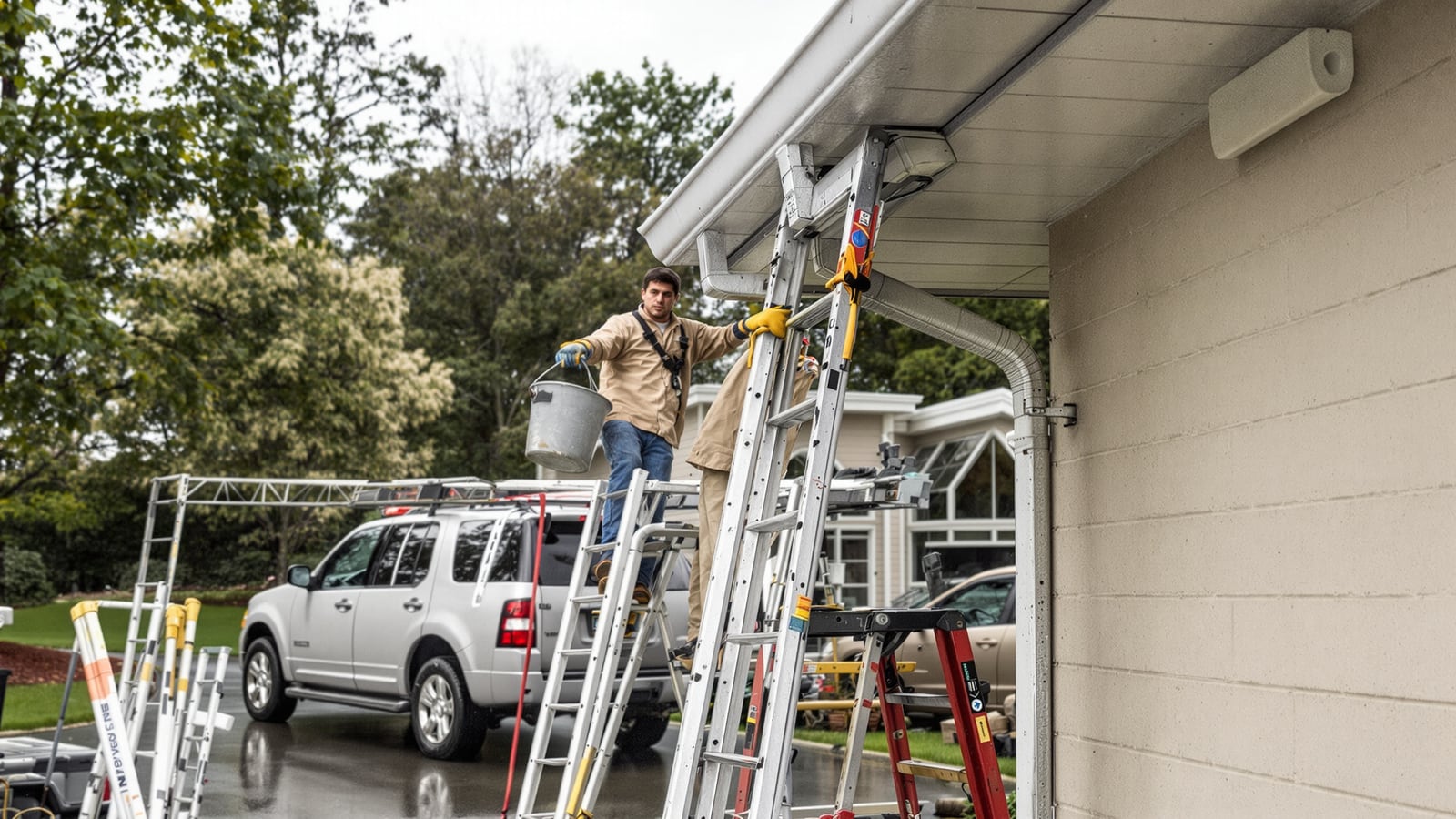
Picture a gutter-cleaning job on a Saturday. Your ladder shifts on wet grass, slides sideways, and cracks the customer's sunroom glass on the way down. It also dents the roof of the SUV in the driveway. Nobody's hurt, thank goodness. You still just created a bill with four figures in it, and the customer is standing there looking at you.
Without a business policy, that bill comes out of your checking account. If the number is bigger than your checking account, it comes out of whatever else you own.
Your personal policies stop at the business line
Most men assume the homeowner's policy and the truck insurance cover them everywhere. They don't. Personal policies typically exclude business activity, or cover it only in small amounts. Read the exclusions yourself, or ask your agent to point to the section.
Three gaps catch people over and over:
- Liability from your work. Injuring a customer or damaging their property while working is exactly what a personal policy is written to leave out.
- Your truck. A personal auto policy may deny a claim if you were hauling tools and materials to a job. Some cover light business use and some don't. Ask before you find out.
- Your tools. The mower trailer, the compressor, the camera gear. A homeowner's policy usually caps business property at a low figure, and theft from a work truck is a common exclusion.
The LLC isn't a force field
A lot of new owners file an LLC and figure the insurance question is settled. It's not. An LLC generally protects your personal assets from the business's debts and contracts. It generally does not shield you from the consequences of your own negligence. If you cause the injury, you can be named personally.
Ask an attorney in your state how that works for your situation. The point for now is that the entity and the policy do different jobs. You want both. The paperwork you can't skip in your first year covers the entity side.
What to buy first
General liability. It covers bodily injury and property damage you cause to other people. It's the policy clients will ask about. A common structure is a per-occurrence limit with a higher annual aggregate, and many contracts name a minimum, so find out what your clients expect before you pick a number.
A business owner's policy (BOP). Many insurers bundle general liability with coverage for business property at a better rate than buying each separately. For a small shop, ask for a BOP quote alongside the standalone one.
Commercial auto, if you drive for work. Cheaper than a denied claim.
Equipment coverage, sometimes sold as inland marine. If a stolen trailer would put you out of work for a month, this one earns its place.
Professional liability (errors and omissions), if what you sell is advice, design, bookkeeping, inspections, or anything where the damage is a mistake in your work rather than a broken window. General liability usually won't touch that. Ask whether the policy is "claims-made" or "occurrence," because they pay out very differently once you've closed the business or switched carriers.
Workers' compensation. Rules vary by state, but once you have employees it's generally required. Sole proprietors are often exempt, though some clients will still demand it. Check your state's rules, and don't hire your first helper until you have.
What can wait
Skip the extras you can't connect to a real loss. Cyber coverage matters more once you're holding customer payment data or sensitive records. Umbrella coverage makes sense once the business has real assets to protect. Key-person and fancy add-ons can come later.
Be honest about what you're buying. You're not insuring against slow sales, a client who stops paying, or a price you set too low. Those are what actually close most small shops, and no policy touches them. Raise your rates, collect deposits, and read the first ten thousand dollars teaches you everything else for the cash side. Insurance takes one kind of death off the table: the sudden one.
The contract will force the issue anyway
Sooner or later a bigger client, a property manager, or a general contractor will say, "Send me your certificate of insurance." Sometimes they'll want to be named as an additional insured. If you don't have a policy, you lose the job. Buying one in a hurry, mid-negotiation, is the most expensive way to do it.
Do it the other way around. Get covered first. Then send the certificate before they ask. Showing up early and ready is how you stay on the vendor list, and it signals you're someone worth hiring.
The reverse holds too. Hiring a sub who has no insurance puts the exposure back on you and your customer. Ask to see theirs. Say no to the cheap bid that comes with no paper behind it.
How to buy it without getting burned
- Use an independent agent who writes policies for your trade. A roofer's risks aren't a web designer's. Ask which of their clients look like you.
- Describe the work accurately. Understating what you do to shave the premium is how claims get denied. If you start doing something new, call and add it.
- Take a higher deductible. You want protection from the big loss, not a refund on the scratch. Make sure the deductible is an amount you can write a check for on the same day.
- Read the exclusions page before the price page. Ask about the three claims you're most afraid of and make the agent show you where each one lands.
- Know your limits and don't cross them. If a job falls outside what your policy covers, either add coverage or turn it down. Saying no to work you're not covered for is part of running this like a grown man.
- Pay on time. A lapsed policy is the same as no policy, and you won't learn it lapsed until you need it.
Insurance isn't legal or financial advice, and your state and trade change the details. Talk to a licensed agent for the coverage and an attorney for how your entity and contracts fit together. If you're a one-man operation stretched thin, the one-man business piece is worth a read after this.
You'll pay for this policy every year and probably never use it. That's how it's supposed to go. The man who didn't buy one gets to find out the other way, with a customer on the lawn and a ladder in the sunroom.
Ray Okonkwo
Money & Business
Former commercial banker turned small-business owner. Covers salary, credit, margins and the arithmetic nobody does before signing.

Watch
Worth an hour of your evening
More from Startups.
From channels we rate. Plays on YouTube.
Read next