
BRO Take. This is commentary.
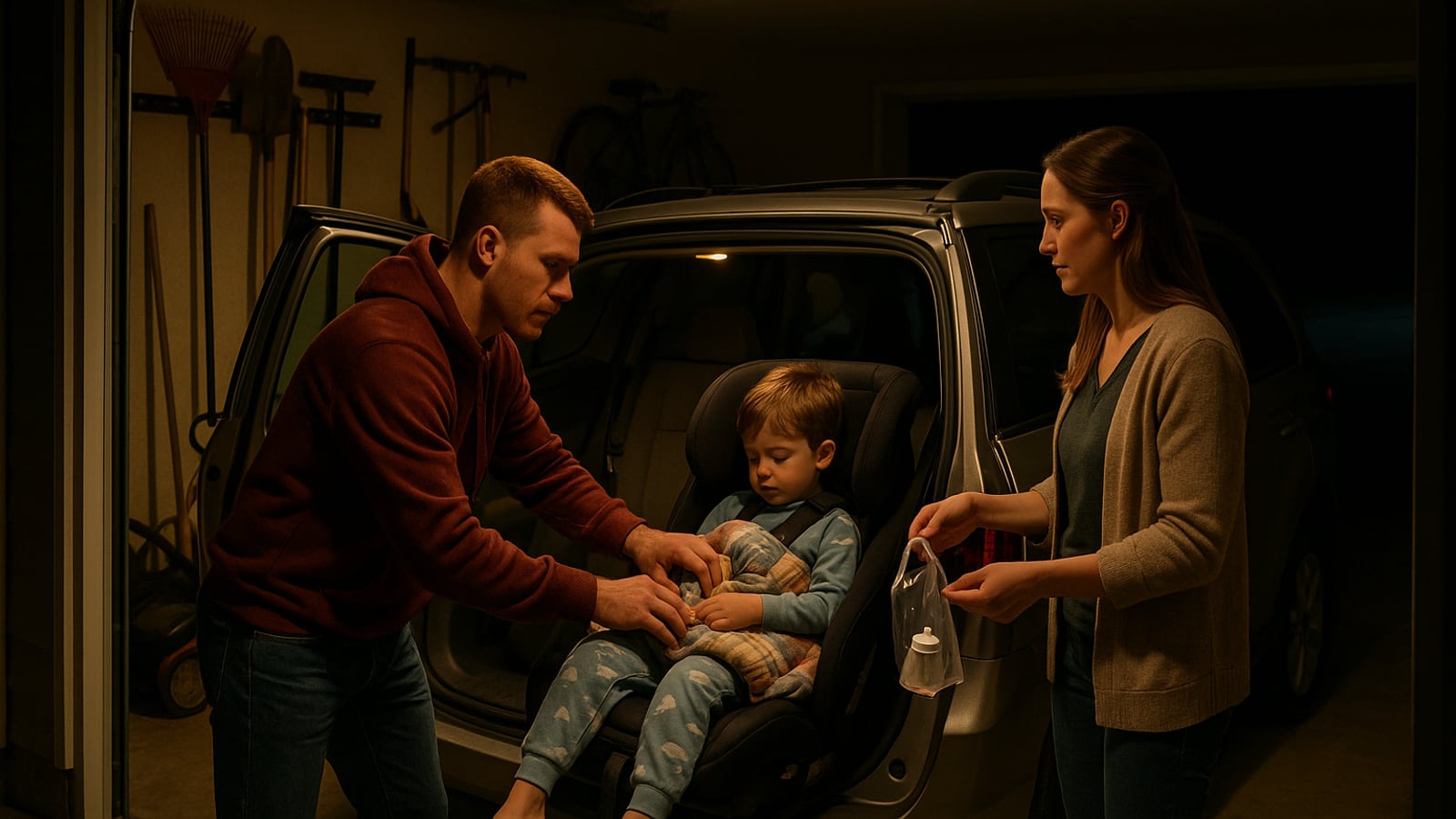
It's 2:40 in the morning and a four-year-old is running 103 degrees. Mom already knows the dose by weight and is counting the hours since the last one. Dad is warming up the car in case this turns into an urgent care run, and he's found the insurance card, which nobody else could find. Neither of them discussed who does what. They just did it.
Point to the oppressor in that house. Take your time.
That's the problem with the phrase "dismantle the patriarchy" when it gets aimed at the ordinary family. It describes a power struggle that most married parents would find baffling. They aren't fighting over a throne. They're fighting over who forgot to buy milk.
The word doesn't fit a Tuesday
In the classroom, "patriarchy" is a theory about power. Men built the system, the story goes, and the family is where boys learn to run it and girls learn to accept it. Pull that thread and the conclusion writes itself: the family is a problem to be solved.
This isn't a straw man. For years the Black Lives Matter organization's official website pledged to "disrupt the Western-prescribed nuclear family structure requirement." The line quietly came down in 2020, after enough people noticed it. The idea didn't come down with it. It's still in syllabi, in think pieces, in the casual assumption that a man who wants to lead his household must want to control it.
But walk into an actual home and watch what the father does with his supposed power. He works the job he doesn't love because the family needs the health plan. He takes the cold side of the bed and the worst slice of pizza. He drives to the other side of town at 11 p.m. because his teenager's car won't start. If that's tyranny, it's the least rewarding tyranny ever invented.
Leadership in a good family looks mostly like going first into whatever's hard. That was always the deal.
Who pays when you tear it down
The people who push hardest on "deconstructing" the family tend to be educated, comfortable and, notably, married. They make the argument at dinner parties and then go home to a two-parent household. The cost of the idea lands on someone else.
It lands on kids with less of a safety net.
You don't have to take a conservative's word for that. Melissa Kearney, an economist at the University of Maryland and nobody's idea of a right-wing firebrand, wrote a whole book on it in 2023, The Two-Parent Privilege. Her argument is that the decline of two-parent homes is a major driver of the gap between kids who get ahead and kids who don't. She was surprised by how uncomfortable her own colleagues were hearing it.
Raj Chetty's team at Opportunity Insights found something sharper in 2018. Looking at upward mobility for Black boys, one of the strongest predictors wasn't a program or a school budget. It was how many fathers were present in the neighborhood. Not just in the boy's own house. On his block.
Fathers, it turns out, work like a streetlight. They help the kids who aren't even theirs. We cover that in more detail in the arithmetic changes when dad is in the house.
So when someone tells you the family is an oppressive structure, ask who gets freed if it's dismantled. It isn't the twelve-year-old with no father at home and nobody to call when the car won't start.
Mothers and fathers aren't interchangeable parts
The softer version of the argument goes like this: fine, kids need two loving adults, but it doesn't matter which two. Parents are parents. Roles are social constructs. Swap freely.
Anyone who's raised kids knows better.
Watch a dad at the park. He lets the kid climb higher than Mom would like. He throws the toddler in the air and the toddler shrieks with joy. He roughhouses, then stops the game the second it tips into meanness, and the boy learns where the line is by bumping into it. Fathers tend to push kids out toward risk.
Mothers tend to be the ones the kid runs back to. She reads the mood before a word is said. She knows the kid's been off for three days and why. She's the one who asks the question that gets the whole story out.
Those are tendencies, not laws. Plenty of dads are gentle and plenty of moms are the family daredevil. But a kid raised by both gets both lessons: go try it, and come home when it hurts. A kid missing one of them usually learns half the lesson, and it shows up years later in ways nobody traces back. What a father in the house is actually doing is a good read on the half that gets left out.
Men and women are different. Kids benefit from the difference. That used to be common sense, and it's still true even though it's gone out of fashion to say it.
The part of the complaint that's fair
Some fathers were tyrants. Some still are. Plenty of women in your grandmother's generation were stuck in marriages with men who drank the paycheck and ruled by temper, and nobody asked what they thought.
That happened, and it was wrong. Say so plainly.
But the answer to a bad father has never been no father. It's a better one. A man who leads his family and a man who bullies it are opposites, not two versions of the same thing. The first one serves. The second one takes. Throwing out fatherhood because some men abused it's like shutting down every hospital because some doctors were quacks.
If you're worried about becoming the wrong kind, that worry is a good sign. Read holding a standard at home without becoming the tyrant and take it seriously.
And to the single mom reading this who's doing both jobs on four hours of sleep: none of this is aimed at you. You're holding up a roof built for two people. That's heroic, and it's also exactly why the roof should be built for two in the first place.
What to actually do with this
Winning the argument online isn't the point. Building the thing is. A few ways to do that this month:
- Let your kids see the partnership. Not the fights, the teamwork. Kids learn what marriage is by watching two people solve a problem together without keeping score.
- Dads, take the risk lessons seriously. Teach the kid to use a pocketknife, change a tire, talk to an adult at the hardware counter. That's your department, so own it.
- Moms, don't let anyone shame you for the work at home. Raising a human being isn't a waste of your talent. It's the hardest use of it.
- Show up for other people's kids. Coach the team. Invite the fatherless kid down the street to the fishing trip. The Chetty research says your presence counts on the whole block, so act like it.
- Say what you believe when it comes up. Calmly, at the barbecue, with the relative who disagrees. You don't have to win. You just have to stop pretending the other view is the neutral default.
The fever breaks around 5 a.m. Mom falls asleep in the chair. Dad makes the coffee, cancels his first meeting and starts the pancakes, because the kid's going to wake up hungry.
Nobody dismantled anything that night. They held it up. That's what families do, and it's why every serious attempt to replace them has ended with kids worse off.
Cal Brennan
Fitness
Strength coach. Trains fathers, tradesmen and desk workers, which means programmes that survive a bad week.
Watch
Watch how it's done
Picked for this article.
From channels we rate. Plays on YouTube.
TEDx Talks
The real effects of single-parent households | Stephanie Gonzalez | TEDxCarverMilitaryAcademy
BGS IBMOR
Do children in two-parent families do better?
Read next