

Your Deadbolt Is Stiff. Check the Door Before the Lock
Most hard-turning deadbolts aren't broken locks. Here's how to tell the difference in five minutes, and what to spend when it really is the cylinder.
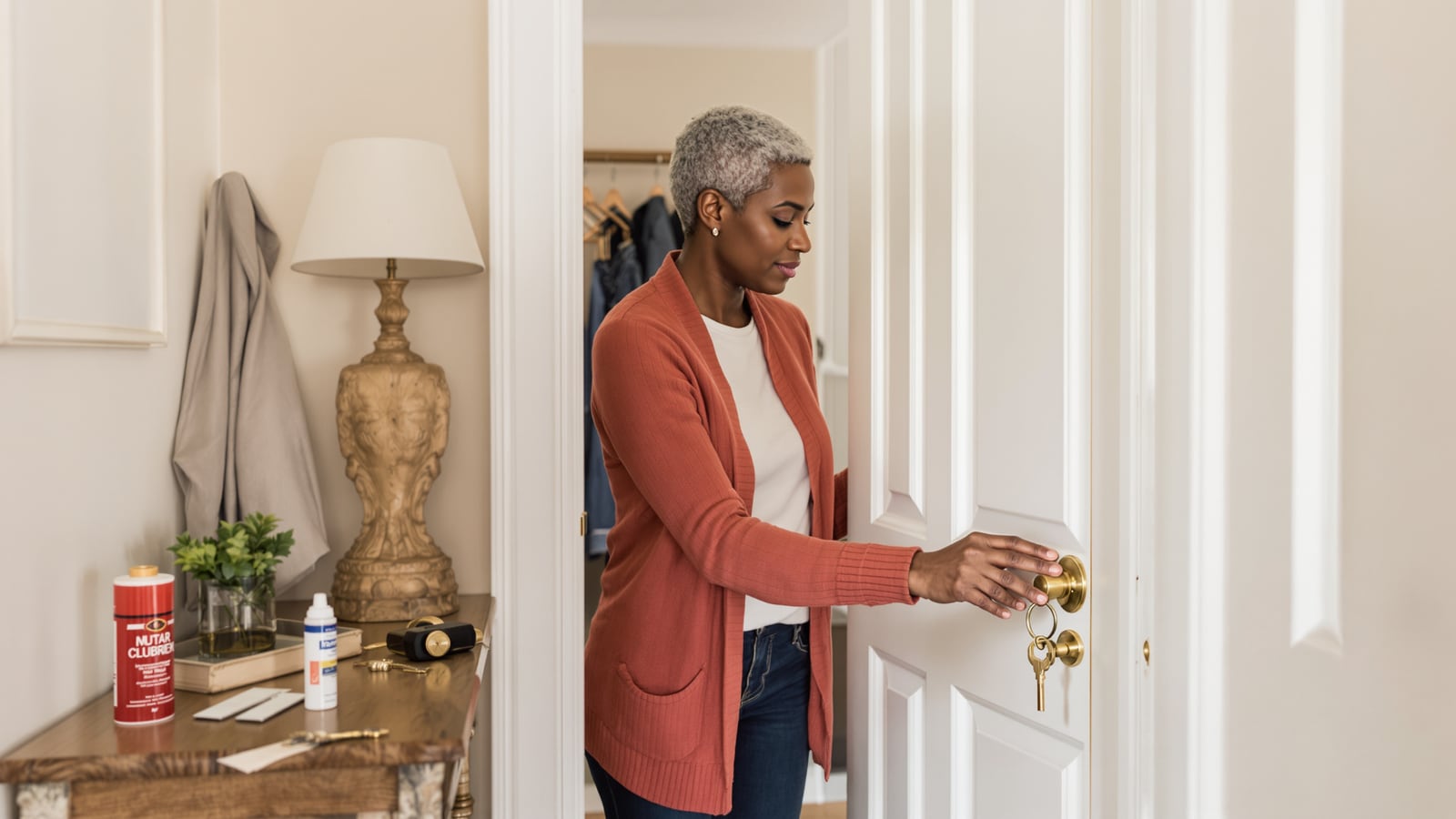
Quick answer: Open the door and turn the key. If it turns easily with the door open, the lock is fine and the problem is alignment, so fix the door or the strike plate. If it's stiff with the door open, clean the keyway, add dry lubricant, and replace the cylinder if that doesn't cure it. Don't spray oil in there.
Two minutes before you touch a screwdriver
Stand inside with the door open and the spare key in your pocket. That's rule one. Never work on the only lock between your family and the street without a second way in, and never leave the house overnight with the lock in pieces. Have it back together before dark.
Safety notes, since this section always asks. A plain mechanical deadbolt has no power, water or gas to shut off, so there's nothing to isolate. If you've got a keypad or smart lock, pull the batteries before you open it up.
Now grab your spare key. A key copy that's been copied from a copy wears down fast, and a worn key is the most common cause of a lock that feels gritty. Try the original, then the spare. If one works smoothly and the other fights you, you've just saved yourself a trip to the hardware store. Have a new key cut from the good one. A few dollars.
The open-door test
This is the step most people skip, and it's the one that decides everything.
With the door wide open, turn the key and watch the bolt. Throw it out, pull it back, five times.
- Bolt moves freely: the lock is healthy. The bolt is hitting the frame when the door is closed. Go to the next section.
- Bolt drags, key feels rough, thumb turn is stiff: the trouble is inside the lock. Skip to cleaning.
Houses move. Wood swells in humid summers and shrinks in winter, hinge screws loosen, and a door that closed perfectly in March rubs in August. The lock gets blamed because it's the part you're turning.
If it's the door
Close the door and look at where the bolt lands. Rub a little lipstick or chalk on the end of the bolt, throw it, and see where the mark transfers on the strike plate or the hole in the jamb. If the mark is above or below the hole, there's your answer.
Start with the hinges. Check the top one first, because that's the one that sags. If a screw spins without biting, swap it for a 3-inch screw that reaches through the jamb into the framing. It pulls the door back up and costs a couple of dollars.
If the hinges are tight and the bolt still lands a hair off, you've got two options:
- Enlarge the hole in the jamb. Take the strike plate off, then use a small round file, or a drill bit slightly larger than the bolt, to open it up a sixteenth of an inch toward the miss. Chisel the mortise a touch if the plate needs to move.
- Move the strike plate. Fill the old screw holes with a few wood toothpicks and glue, let it set, and reposition.
The bolt should slide into the hole without the door being lifted or pushed. If you have to lean on the door to lock it, the job isn't done.
While you've got the screwdriver out, tighten every hinge screw on that door. Leave it better than you found it.
If the door itself has warped badly or the frame has shifted, that's carpentry. The same find-the-binding-point thinking applies as in why a garage door stops halfway, but a warped entry door is worth a call to a carpenter.
If it's the lock: clean first
Door open, key out. Put on safety glasses.
Blow the keyway out with a can of compressed air, the kind sold for keyboards, about five dollars. Pet hair, dust and bits of pocket lint pack into these.
Next, use a spray made for locks or electronics, called contact cleaner, usually six to ten dollars a can. Give the keyway a short squirt, work the key in and out a dozen times, and wipe the key on a rag. The rag will come away gray. That's what was grinding.
Let it dry for ten minutes.
Then lubricate, but not with oil
This is where most people make it worse.
Penetrating oil and general-purpose sprays work in the short term and gum up in the long term. They collect dust and grit, thicken in cold weather, and a lock that turned fine for two weeks starts sticking again, harder.
Use a dry lubricant instead:
- Powdered graphite, a small tube runs about five dollars. One light puff into the keyway, not a pile.
- A dry PTFE lock lubricant, sold in a small spray, for people who don't want black dust on their hands.
Insert the key, turn it back and forth, pull it out and wipe it. Wipe any graphite off the door too, since it stains. A tube of graphite lasts for years.
Now the bolt itself. Fully extend it and put a single drop of light machine oil on the edge where it slides into the door. That's the one place a little oil belongs. Retract it a few times and wipe off the extra.
Opening the lock up
If the key is smooth now but the thumb turn on the inside is stiff, or the bolt still drags, take the lock apart and test the pieces separately.
Remove the two screws on the inside housing, pull the inside half away, and slide the bolt assembly out of the door edge. Turn the mechanism by hand outside the door. If it moves freely there, the door bore or the alignment is pinching it. Look for paint on the bolt, a jammed screw tip, or a bore that's slightly out of round.
If it's stiff by hand, check for a bent tailpiece (the flat bar that links the key side to the bolt) or a cracked housing. Both are part replacements.
When the cylinder is done
Give up on cleaning and replace the lock if any of these are true:
- The key turns hard even after cleaning, with a fresh copy
- The key spins without moving the bolt
- The lock sticks only when it's cold, and cleaning didn't help
- The thumb turn is loose or the bolt won't fully retract
- You've lost a key and don't know who has it
Your choices, roughly:
- Rekey the existing lock to a new key with a kit for around ten to twenty dollars. This fixes lost keys, not worn guts.
- Replace the deadbolt with a new one. A basic Kwikset or Schlage runs about twenty to fifty dollars. Spend more for a Grade 1 lock if it's the front door, since it's built for heavier use.
- Call a locksmith for the whole thing. Expect a service call fee plus the hardware. Prices vary a lot by region.
Measure before you buy. Most U.S. doors take a 2-1/8 inch hole in the face and a 1-inch hole in the edge. The backset, the distance from the door edge to the center of the hole, is almost always 2-3/8 or 2-3/4 inches. A new deadbolt swap is two screws and a Phillips screwdriver.
If you have several locks on the house, buy ones that share a key. Carrying one key is better than carrying a ring.
When to call a professional
Call a locksmith if the key is broken off in the cylinder, if you're locked out, if the door has a multi-point or high-security lock, or if it's the only door and you can't leave it unsecured while you work.
Codes vary by area. Many places restrict double-cylinder deadbolts, the kind that need a key on both sides, because they can trap people in a fire. Fire-rated doors, apartments, and homeowners associations can have their own rules about hardware. Rentals usually need the landlord's okay. Check locally before swapping anything on an exit door.
Work through it in order, the way you would a mower that won't start. Test the door, then the key, then the lock. You'll usually find the problem before you spend a dime.
And once it's turning smoothly, hand a spare key to a neighbor you trust. It's the cheapest security upgrade there is.
Wes Dunbar
Country & Skills
Grew up on an acreage and never quite left. Covers trucks, trades, land, and how to do the thing yourself.

Watch
Worth an hour of your evening
More from Can You Fix It.
From channels we rate. Plays on YouTube.
Read next