Cook one thing that sits, and host six people properly
The braise goes in the day before, the oven stays free, and you're out of the kitchen before the doorbell goes.
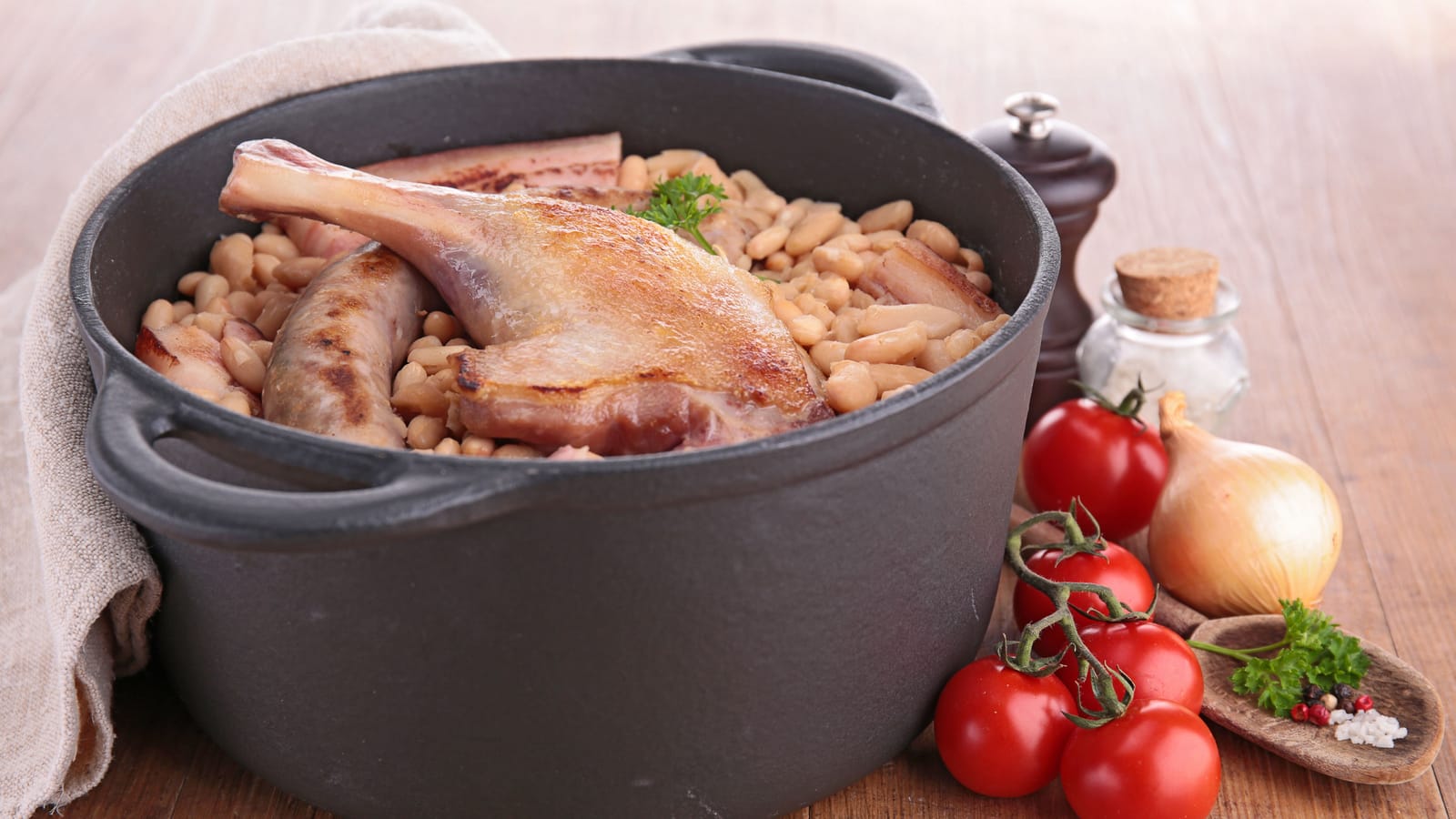
Pick a dish that gets better sitting still. Beef shin at 150°C for three and a half hours, cooled overnight in its own liquid, reheated the next evening while you're pouring drinks. That single decision removes about eighty percent of the panic from a dinner party, because the thing everyone came to eat is already finished before anybody arrives.
Six is the right number. You can cook for six in a normal kitchen, seat six at a normal table, and hold one conversation across six people without splitting the room. Eight is possible if you've done it before. Ten means you're catering, not hosting, and you'll spend the evening standing up.
The menu has a shape, and it's always the same
One thing that's been cooked already. One thing that's cold and needs no oven. One thing you bought.
That's the whole template. The braise, a stew, a ragù, a dal, a pot roast, a tagine. Then something cold on the table when people sit down: a plate of radishes and good butter, whipped ricotta with lemon zest, a bowl of olives, sliced tomatoes in August with salt and oil. Then pudding, which you buy, because nobody has ever gone home disappointed by a bought tart and a bowl of cream.
The moment you plan three hot courses in a single domestic oven you've designed a bad evening for yourself. Your oven is one box. If the braise is in it at 150°C, you can't roast potatoes at 220°C. That's not a skills problem. It's physics, and the recipe writers who cheerfully suggest both at once are working in test kitchens with four ovens.
So the starch gets decided by the oven. Mash, made at six, held in a pan over the lowest heat with a lid and a splash of milk. Or bread, warmed for eight minutes at the end. Or a grain salad made at five and left on the counter. Roast potatoes and a braise on the same night is the classic trap, and it's the reason someone ends up carving in a coat at half past nine.
Work backwards from the time you sit down
Say people arrive at 7:30. You sit at 8:15. Write the schedule in reverse on an actual piece of paper and stick it inside a cupboard door.
- Day before: braise cooked, cooled, in the fridge. Fat sets on top, which you lift off in one sheet the next day. This is better than skimming and takes ten seconds.
- 5:00: everything chopped. Table laid. Wine out of the box and into the fridge or onto the counter.
- 6:15: braise out of the fridge, into a low oven at 140°C, lid on. It needs about an hour to come back to temperature, and it can't overcook, which is the point.
- 6:45: cold starter assembled, covered, left in a cool spot.
- 7:10: you shower and change. Kitchen tidy. One sink of washing-up done.
- 7:30: door.
The rule that matters: by the time the doorbell goes, you should have exactly one task left, and it should take under ten minutes. Dressing a salad. Warming bread. Nothing that requires you to stop listening.
Fridge space and ice, the two things nobody warns you about
Your fridge is already full. Now you want to chill four bottles, keep a pudding cold and store a starter for six. It doesn't fit. Clear a shelf the night before and be ruthless about it. Half-finished jars can live on the counter for one evening.
Ice is worse. A domestic tray makes about fourteen cubes, and six people drinking anything over ice on a warm night will go through four times that. Buy a bag. It costs almost nothing and it's the difference between a drink and a warm drink.
Count your plates before you plan the menu, not after. If you've got six dinner plates and four pudding bowls, serve pudding in the dinner plates or serve something that eats from a spoon. Mismatched cutlery is genuinely invisible to guests. I've never once been to someone's house and thought about their forks.
Ask about food once, at the invitation
"Anything you don't eat?" in the invitation message. Then build the menu around the answer rather than producing a separate plate for one person at the table.
If someone's vegetarian, cook a vegetarian main for everyone and put a good cheese out afterwards. If someone can't have gluten, the braise and the mash were never going to contain any. A dairy allergy is the awkward one, because butter is in everything, so ask early enough that you can choose a dish built on oil instead.
The thing to avoid is the martyr's plate: five people with the good dinner and one person with a sad bowl of steamed vegetables, being told repeatedly that it was no trouble.
The bit where it goes wrong anyway
Someone will arrive twenty minutes early. Someone else will arrive forty minutes late, and the food will be waiting.
Feed the early one a job. Not "make yourself at home", which leaves them hovering. Give them a specific task: open this, light those, put that on the table. People are far more comfortable with a task than with being an audience while you cook.
For the late one, decide in advance. If they're more than twenty minutes past the sit-down time, start without them. The braise doesn't care. Everyone else does.
And when someone offers to help, say yes to one concrete thing and no to everything else. "You can take the plates through." Not "oh don't worry". Refusing all help makes the evening feel like a performance, and it makes guests feel like spectators rather than people in your house.
The washing-up can wait, but the counters can't
Don't do the dishes during dinner. Do put pans in the sink with hot water and soap while the braise reheats, so you're not scrubbing burnt sugar at midnight.
The one thing worth doing before you sit down is clearing a single flat surface. A clear counter makes the whole kitchen read as under control, even when the oven's full and there's a colander in the sink.
When to ignore all of this
If you love cooking, actually love it, then some of this is the wrong advice. There are hosts who are happiest searing scallops to order with a house full of people leaning on the counter, and their parties are brilliant precisely because the cooking is the entertainment. If that's you, do that. Just don't do it the first time you have these particular people round, and don't do it if you've had a long week and secretly want the evening to be over.
There's also the case for cooking nothing. A roast chicken from a good shop, three salads, bread, cheese, and a table with candles on it's a real dinner party. The candles do more work than you'd think, and low flowers or none, so people can see each other across the table.
Seat the couples apart
Small thing, big effect. Married people talk to each other all week. Put them at opposite corners and the conversation stops splitting into pairs.
Decide where people sit before they walk in, even if you don't write name cards. "You there, you next to him" as people drift toward the table is faster than four adults doing a polite standoff over six chairs.
My best evening hosting last year involved a shin that had sat in the fridge for two days, a shop-bought lemon tart, and a six-year-old who came down at nine in her pajamas and was passed around the table like a parcel. Nobody mentioned the food afterwards. They mentioned the argument about football and the fact that nobody wanted to leave.
That's the measure. Not the meal. Whether people stay past the point where they meant to go home.
Nina Castellan
BRO for Her
Runs the women-facing desk. Same standard, same tools, written for a different reader — not a softer one.

Watch
Worth an hour of your evening
More from BRO for Her.
From channels we rate. Plays on YouTube.
Read next