If only you know where the money is, that's a problem
Old 401(k)s, a quiet savings account, a phone that unlocks everything. Here's how to make sure your family can find it all in an afternoon.
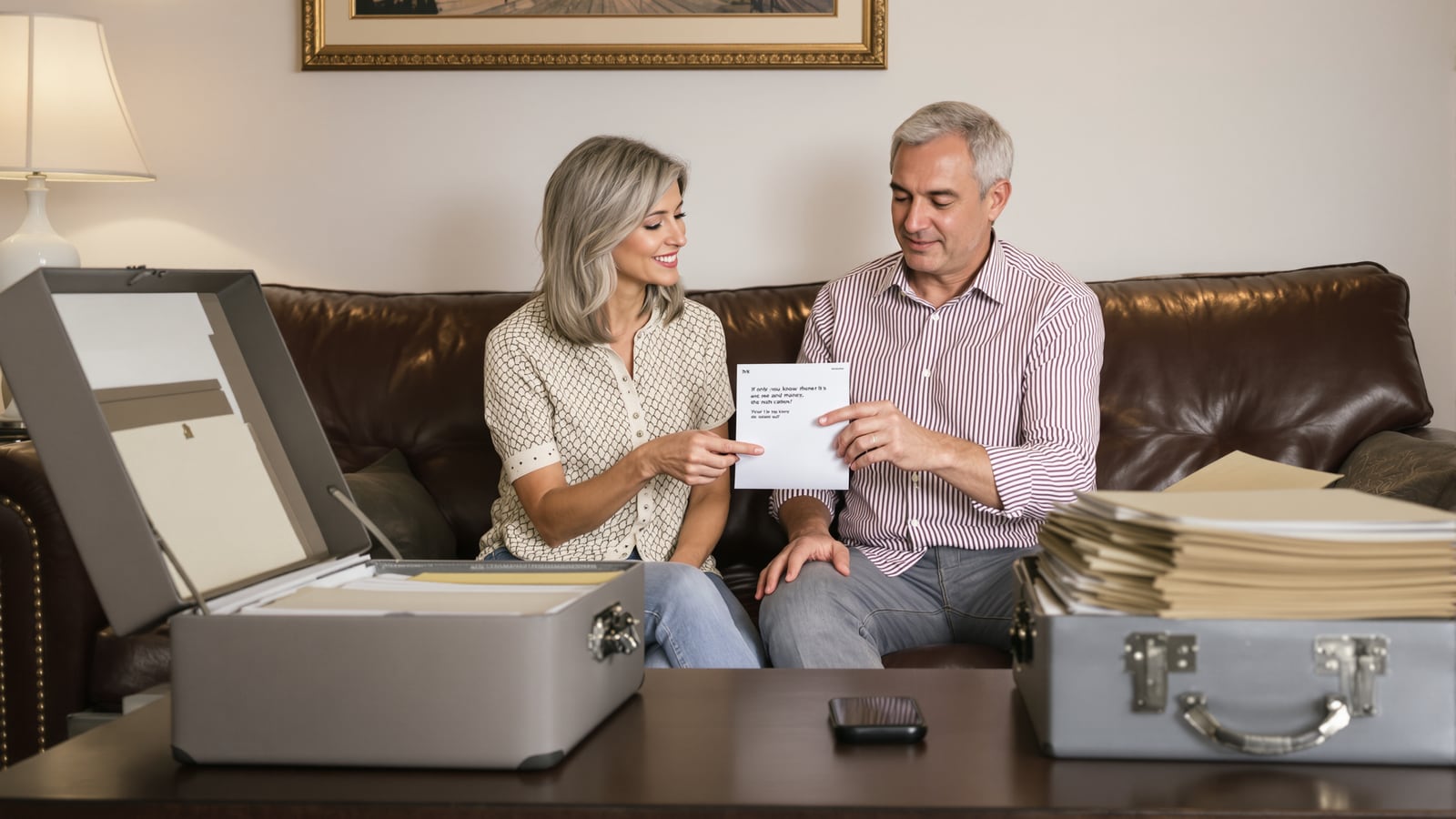
Quick answer: Write one page listing every account you hold, where the logins live and who the money goes to. Walk the one person who'd have to deal with it through the page. It takes about forty-five minutes. Do it this month.
You opened the savings account at the credit union in 2014. You rolled the old 401(k) into an IRA when you changed jobs. You pay the bills, so the bank logins are in your head, and the codes go to your phone.
You know all of it. Nobody else does.
That's not a character flaw. It's what happens when one person in a house is competent and the other is busy. But if you're in the hospital for three weeks, or gone, your family inherits a locked house with no key.
What actually goes wrong
It's rarely dramatic. It's small and expensive.
Say you're laid up for a month. Your husband tries to pay the mortgage and can't get into the account, because the verification code goes to your phone, and your phone is in a hospital bag. A card expires and an autopay fails. An insurance premium lapses because the notice went to your email.
The permanent version is worse. Retirement accounts and life insurance policies pay whoever is named as beneficiary. That's the name on the form, not what your will says. If you filled that form out at 24 and named your mother, or a former fiancé, or nobody, the money goes where the paper says. Check every one.
And old accounts get lost. When a bank or brokerage can't reach you, it eventually turns the money over to the state as unclaimed property. Your state treasurer's website will search for it, as will missingmoney.com. Your family shouldn't have to be doing that search in grief.
The kind of secret that costs you more
Some of what you hold is only unknown by habit. Some is kept quiet on purpose.
Our take, and it's an opinion: a private account your husband doesn't know about is a crack in the marriage, even if the balance is $800 and the reason sounds fair. It doesn't have to be a scandal to do damage. It only has to be found.
A marriage is one household with one set of books. That doesn't mean every dollar needs a committee meeting. Agree on a monthly amount that each of you spends however you like, no questions asked, and both of you know it exists. That's a budget line, not a secret. You get the freedom, and you keep the trust.
There's one exception, and it's serious. If you're hiding money because you're afraid of how he'd react, that's a different problem and not a filing problem. Talk to someone you trust in real life. If you ever feel unsafe, the National Domestic Violence Hotline is 1-800-799-7233. Don't let anybody walk over you or your children, including with money.
For everyone else, the fix is boring and it's yours to start.
The forty-five-minute walkthrough
Do this at the kitchen table with coffee, not in a crisis.
1. Make the list. One page, on paper. Every checking and savings account, retirement account (including the ones at jobs you left), health savings account, brokerage account, life insurance policy, 529 plan, and anything with a balance and a login. Add the safe deposit box, the storage unit, and the autopays that run on a card.
2. Decide where the logins live. A password manager your husband also has access to works well. A binder in a fireproof box works too. Whichever you pick, solve the phone problem. If your phone is the second step to get into the bank, he needs a way in that doesn't depend on you holding it. Most banks let you add a trusted contact or a second authorized person. Ask them.
3. Check every beneficiary. Pull up the retirement accounts and the insurance policies one by one. Is the name current? Is there a backup name? This single step is the one most likely to matter, and it takes about ten minutes.
4. Walk him through it. Don't lecture. Show him. Log in to the main bank account together. Point to the folder where the insurance policies are. Tell him who prepares your taxes and who your attorney is, if you have one. If you don't, put that on the list.
5. Get the legal papers in order. A will, a durable power of attorney and a health care directive are the standard set. The rules differ by state, so this is a job for an estate attorney where you live. Not a downloaded form, and not us. A one-hour consultation costs far less than sorting out a missing document later.
6. Put a date on the calendar. Once a year, same week as your taxes. Update the list, check that nothing changed, and walk through any new account. Ten minutes.
When he says he doesn't want to think about it
He may say it. Plenty of husbands do, and it usually comes from love, not laziness. Nobody wants to picture the day.
Hold the line anyway, gently. Tell him it isn't morbid. It's the same instinct that makes you put a spare tire in the truck. You're not predicting a flat. You're making sure the person standing on the shoulder in the rain knows where the jack is.
If the situation runs the other way and he's the one who handles everything while you've never seen a statement, the same rules apply to you, and it's your job to ask. You don't need a fight to do it. "I'd like us to sit down with the accounts this weekend" is a complete sentence.
Single women get a version of the same task. Pick the person who'd have to step in, whether that's a sister, an adult child or a close friend, and give them the list. Name them in the legal papers, too.
It's a habit you already have
If you've ever built a spreadsheet to prepare for a salary conversation, as in the raise conversation goes better with a spreadsheet, you already know the muscle. It's the same one. Get the facts on one page, then use them.
And if you're not married yet, treat this as part of the vetting. Money openness is one of the things to watch before you marry him. He should hold himself to the same standard you're holding yourself to here.
The old code applies: leave it better than you found it. You'd wash a borrowed truck before returning it. You'd leave a campsite cleaner than you arrived. Leave your family's finances the same way, in order, labeled and easy to find.
Someday somebody will open that folder. Make it a short, boring afternoon for them.
Nina Castellan
BRO for Her
Runs the women-facing desk. Same standard, same tools, written for a different reader — not a softer one.

Watch
Worth an hour of your evening
More from BRO for Her.
From channels we rate. Plays on YouTube.
Read next