Try this out loud, alone in the car. Three true sentences about who you're, and none of them containing another person. No kids in them. No husband, no boss, no mother, no team, no committee.
The first one comes easy. The second is where it gets quiet.
That silence isn't a character flaw. It's what happens when a life gets built out of other people's needs, which is, by the way, how most of the good ones get built. Roles are how love gets organized. Somebody has to be the one who knows where the insurance card is. But a role is a noun you're holding on loan, and the loan has terms.
The arithmetic nobody puts on the fridge
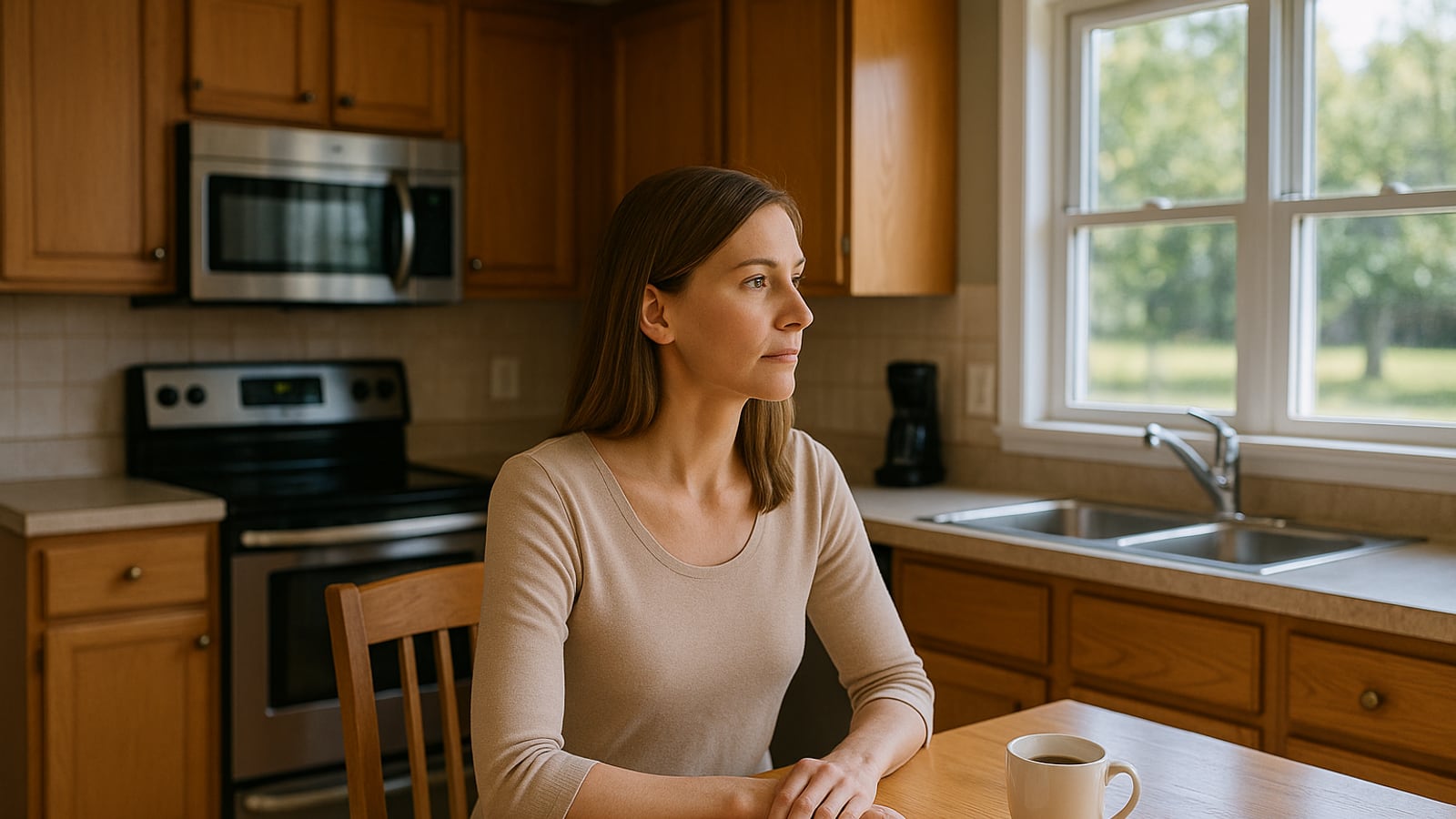
Kids leave. That's the goal. You spend eighteen years making a person who doesn't need you, and if you do it well, the reward is a quiet kitchen in October.
Jobs end. Restructure, relocation, retirement party with a sheet cake.
The caregiving role ends too, and it ends fast. Four years of Tuesdays at your mother's house, a hospital bag by the door, a pill schedule you could recite backward. Then one morning the schedule is gone and so is she, and the job you'd organized your whole week around has no hours left in it.
Marriage ends in death for one of the two people. That's not morbid. It's a fact you already know and have agreed not to look at directly.
None of this is an argument for holding back. Pour yourself into the roles. Be all the way in. It's an argument for having something underneath them that doesn't evaporate when the role does.
Purpose isn't a mood you wait for
The standard advice is to sit with a journal and a candle until clarity arrives. Clarity doesn't arrive. What arrives is 9:40 p.m. and a load of laundry you forgot in the washer.
Purpose shows up as a verb, on a specific day, in a specific hour. So skip the feeling and answer a factual question instead: what did you do last Saturday for ninety minutes that nobody asked for, nobody thanked you for, and nobody else in your house benefits from?
If the answer is nothing, you don't have a purpose problem. You have a calendar problem, which is much easier to fix.
Pick something with levels
Here's the mistake I made for years. I picked hobbies. Hobbies plateau and then quietly die, because nothing tells you what to do next and eventually the pottery wheel becomes a place to set mail.
Pick something with ranks, tests, distances or a finished object. Something that can tell you you're not good yet.
- A distance with a date. Not "start running." The 10K on the second Saturday in April, registered and paid for.
- A qualification. Master gardener program. Ham radio technician license, which is a real exam with a real question pool. EMT-Basic. Notary commission. Substitute teaching credential.
- A skill that ends in an object. Not "learn to sew." A lined wool jacket, drafted to your own measurements, with welt pockets that don't pucker. You will make one bad jacket first. That's part of the curriculum.
- A course of fire. A pistol fundamentals class, then your carry permit, then a defensive class with movement and reloads under a timer. Carrying is a right, and a right you exercise on behalf of the people who live in your house comes with a duty to actually be good at it. Proficiency is measurable. Bring a notebook and write down your times.
- A language with a test date on it, not an app streak.
The reason levels matter is Tuesday. On the Tuesday you don't feel like it, a measure tells you what to do, and your motivation gets to sit this one out. Feelings are a terrible foreman.
One thing for people who can't pay you back
Then add something that routes nowhere near your own family's benefit.
Sit with hospice patients. Tutor adult literacy at the library. Coach the 4-H kids nobody else volunteered for. Teach the twenty-four-year-old on your street to drive a stick shift. Take the casserole and then stay the extra forty minutes and do the dishes while she talks.
This part isn't charity garnish. It's insurance against the specific hazard of a life made entirely of roles, which is needing your people to need you. A woman who requires her children to be helpless will find a way to keep them helpless. She'll do it lovingly and she'll do it for twenty years. Service outside the walls drains that pressure off, because somebody else is getting the help and no one in your family has to stay small to give you a job.
Say the useful version out loud: there's a kind of helping that's actually recruiting.
The two ways this goes sideways
The first one you've seen. "Finding myself" gets used as an exit, and it ends with a woman walking away from three people who counted on her, with a caption about growth. Purpose that costs other people their home isn't purpose. It's appetite with good branding. What I'm describing goes on top of your obligations, not instead of them. If you can't make the block without somebody else paying for it in chaos, make the block smaller, not the family looser.
The second failure is sneakier. You get good at the thing, and then you monetize it. The jacket becomes an Etsy shop. The bread becomes six standing orders and a 4 a.m. alarm. Now it's a job with worse hours and no benefits, and the one hour a week that belonged to nobody has a customer in it.
Some things should stay unprofitable on purpose. Protect that.
Do this in the next seven days
- Write the three sentences down. Actually write them. The ones that don't mention another human being.
- Pick one thing with levels and a date inside the next twelve weeks. Pay the entry fee tonight. Money is what turns an intention into an appointment.
- Tell one person the deadline. Not for encouragement. Pick somebody who'll ask you how it went and notice if you dodge.
- Put the first session on the shared calendar under its real name. "Trap range, 6 a.m." Not "Mom time." Vague entries get overwritten by dentist appointments.
- Name what you're dropping to pay for it, because something has to go and it's probably ninety minutes of scrolling you won't miss by Thursday.
Your kids won't remember that you held everything together. Holding things together is what a shelf bracket does, and nobody names a bracket.
What they'll remember is the winter you were forty-three and bad at something in public. The first jacket with the crooked collar, hanging in the closet next to the second one, which is beautiful. That's the part they'll tell their own kids about, and it's the only inheritance that nobody has to probate.
Nina Castellan
BRO for Her
Runs the women-facing desk. Same standard, same tools, written for a different reader — not a softer one.

Watch
Worth an hour of your evening
More from BRO for Her.
From channels we rate. Plays on YouTube.
Read next