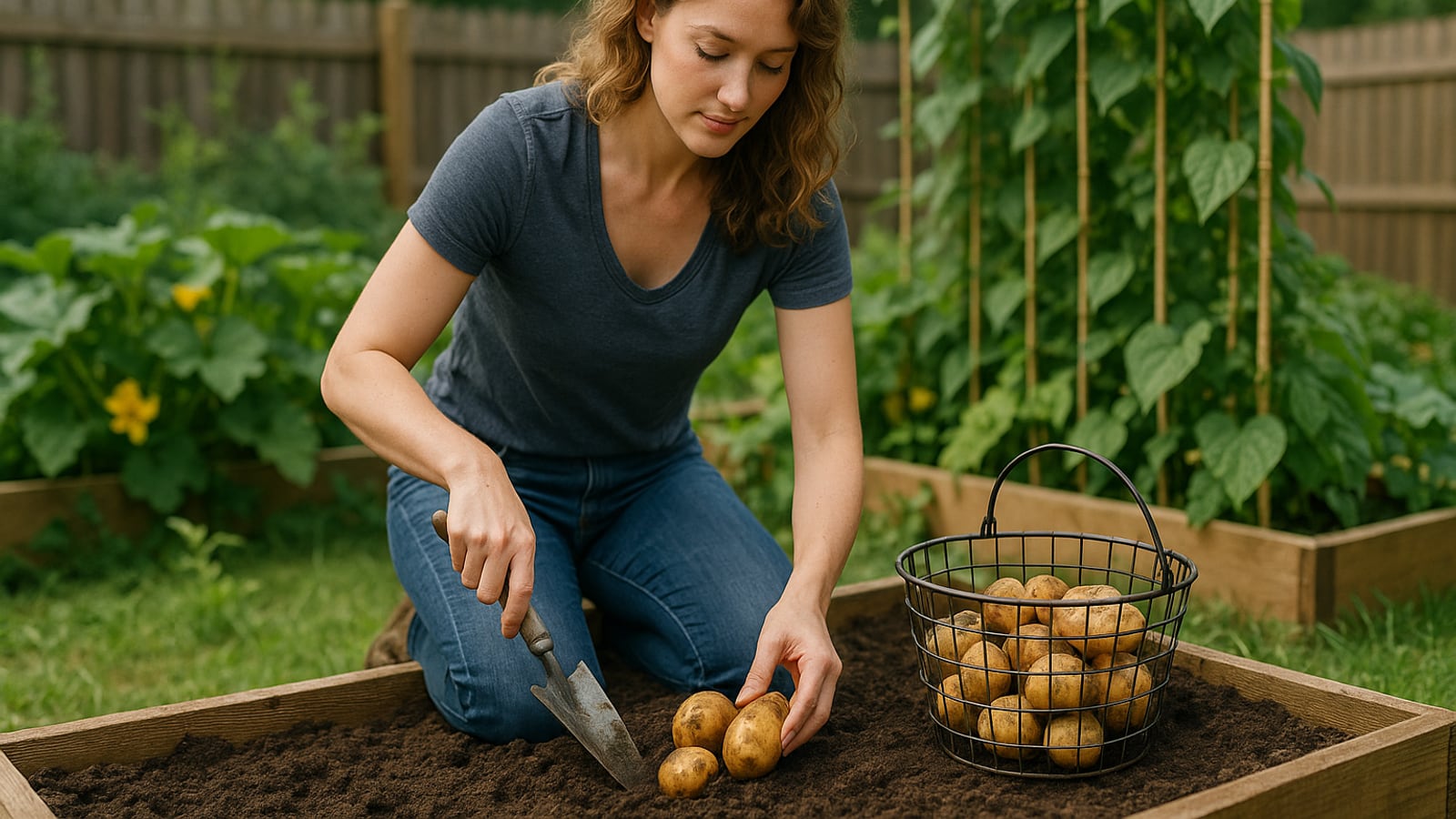
A 4-by-8 raised bed planted in lettuce, basil and a few cherry tomatoes will give you six good weeks and then quit. The same bed in potatoes gives you a sack in the garage you're still eating at Christmas. Both are gardening. Only one of them is food.
That's the split worth understanding before you order a single seed packet. Most beginner gardens are flavor gardens. They produce things you put on dinner. A garden that feeds the family produces things dinner is made of, and those crops are dull, heavy, and store well.
The crops that carry the weight
Potatoes. Highest return on effort of anything you can put in dirt. Seed potatoes go in 12 inches apart, rows about 30 inches, four inches deep, and you hill soil up around the stems as they grow. They ask almost nothing after that. Harvest when the tops die back, let them cure a week somewhere dark and dry, and store them cool. Don't wash them until you cook them.
Winter squash. Butternut especially. It sprawls, which is the price, but one good vine feeds you into February. Cure them ten days at room temperature so the skins harden, then keep them somewhere around 50 to 55 degrees. A spare bedroom closet works better than a damp basement.
Dry beans and pole beans. Pole beans out-yield bush beans per square foot because they keep producing for weeks instead of dumping everything in ten days. Dry beans are a real staple crop, but be honest with yourself about space. A meaningful supply of dry beans takes more row than most suburban yards have.
Garlic. Planted in October, pulled in July. Cloves six inches apart, two inches deep, pointy end up, mulched over for winter. It's the single easiest crop on this list and it sits in the ground through the months when nothing else is happening.
Paste tomatoes. Not slicers. Romas and other paste types have less water and more flesh, which matters enormously when you're reducing them. Choose a determinate variety if canning is the goal, because determinates ripen in a concentrated window. That's a nuisance for a salad and a gift on canning day.
What to stop growing
Sweet corn, unless you have real room. It needs to be planted in a block for pollination, it's greedy for nitrogen, and each stalk gives you one or two ears. The math is brutal.
Head lettuce, celery, cauliflower, Brussels sprouts. Long seasons, fussy conditions, cheap at the store.
And however many cucumbers you were planning, plant fewer. Two healthy plants will hand you more than you want.
The part nobody photographs
Soil is the whole job. Everything else is decoration.
If you're starting a new bed, the best thing you can do in year one is add several inches of finished compost and stop there. Not fertilizer. Compost. It fixes drainage in clay and water retention in sand, which are opposite problems solved by the same material, and that still seems slightly unfair to me.
Get a soil test through your county extension office. They're inexpensive and they'll tell you your pH and what you're actually short of, instead of you guessing and dumping a bag of 10-10-10 on ground that didn't need it. Extension is the single most underused resource in American gardening.
Then mulch. Straw, shredded leaves, grass clippings from a lawn you haven't sprayed. Two or three inches. It holds moisture, suppresses weeds, and keeps rain from splashing soil onto your tomato leaves, which is how early blight gets started.
Water is where gardens die
Not in May. In August.
May gardening is a pleasure. August gardening is a chore you do at 6 a.m. in humidity, and that's exactly when tomatoes are setting fruit and squash is bulking up. A garden that gets inconsistent water in August gives you blossom end rot, split fruit and bitter cucumbers.
Water deeply and less often. A long soak twice a week beats a sprinkle every evening, because shallow water grows shallow roots. Water the soil, not the leaves. If you can afford one upgrade, make it drip line or soaker hose on a simple timer. It removes the decision from the equation, and the decision is what you'll skip when you're tired.
Three things that will go wrong
Squash vine borer. Your zucchini looks magnificent, then wilts and dies in two days. The grub is inside the stem. You can slit the vine, dig it out and bury the stem to re-root, and sometimes that works. Easier route: grow butternut and other moschata types, which have solid stems the borer struggles with.
Deer. There's no repellent that works all season. An eight-foot fence works. Four feet doesn't, because a deer clears four feet without thinking about it. Decide early whether you're fencing or accepting losses, and don't spend two summers pretending soap on a string is a plan.
The seed catalog in January. You will order purple carrots and three kinds of eggplant because the photographs are beautiful and it's dark outside. Set a rule now: two-thirds of your space goes to the staples above, one-third to whatever you want to try.
The harvest isn't food until it's stored
This is where most people fall down. Forty pounds of tomatoes on the counter is a problem, not a win, and if you haven't planned for it you'll watch a third of it spoil.
Freezing is the easiest entry point and the least intimidating. Beans blanch and freeze fine. Tomatoes can go into the freezer whole, skins and all, in a zip bag, and the skins slip off under warm water when you're ready to make sauce in November.
Canning is worth learning, and worth learning correctly. Tomatoes need added acid, usually bottled lemon juice or citric acid, because modern varieties aren't reliably acidic enough for water bath processing. Green beans are low-acid and require a pressure canner, full stop. Use current tested recipes from the USDA guide or your extension service rather than a handwritten card from 1974. The science on processing times has changed and the stakes aren't worth improvising over.
What it actually saves you
Less than you think, if you count the fencing, the seed, the compost and your hours. A home garden rarely replaces a grocery bill.
What it does is shift what's in the house. You eat differently when there are four pounds of green beans in the fridge that somebody has to deal with. And the quality gap between a garden tomato and a February store tomato isn't a matter of degree.
The other return is one you can't put a number on. A six-year-old can plant a pole bean, and she'll check it every day. Potato harvest is the best afternoon of the year for kids because it's digging for treasure that happens to be dinner. That's an hour outside, with dirt, working toward something that takes months. There aren't many of those left.
So put the catalog down and get out the calendar. The first thing you'll plant is garlic, in cold ground, in October, for food you won't eat until the following July.
Nina Castellan
BRO for Her
Runs the women-facing desk. Same standard, same tools, written for a different reader — not a softer one.

Watch
Worth an hour of your evening
More from BRO for Her.
From channels we rate. Plays on YouTube.
Read next