Test the swimsuit wet before you pack it
Most swimwear fails in the water, not the fitting room. Do the shower test three weeks out, while you can still return it.
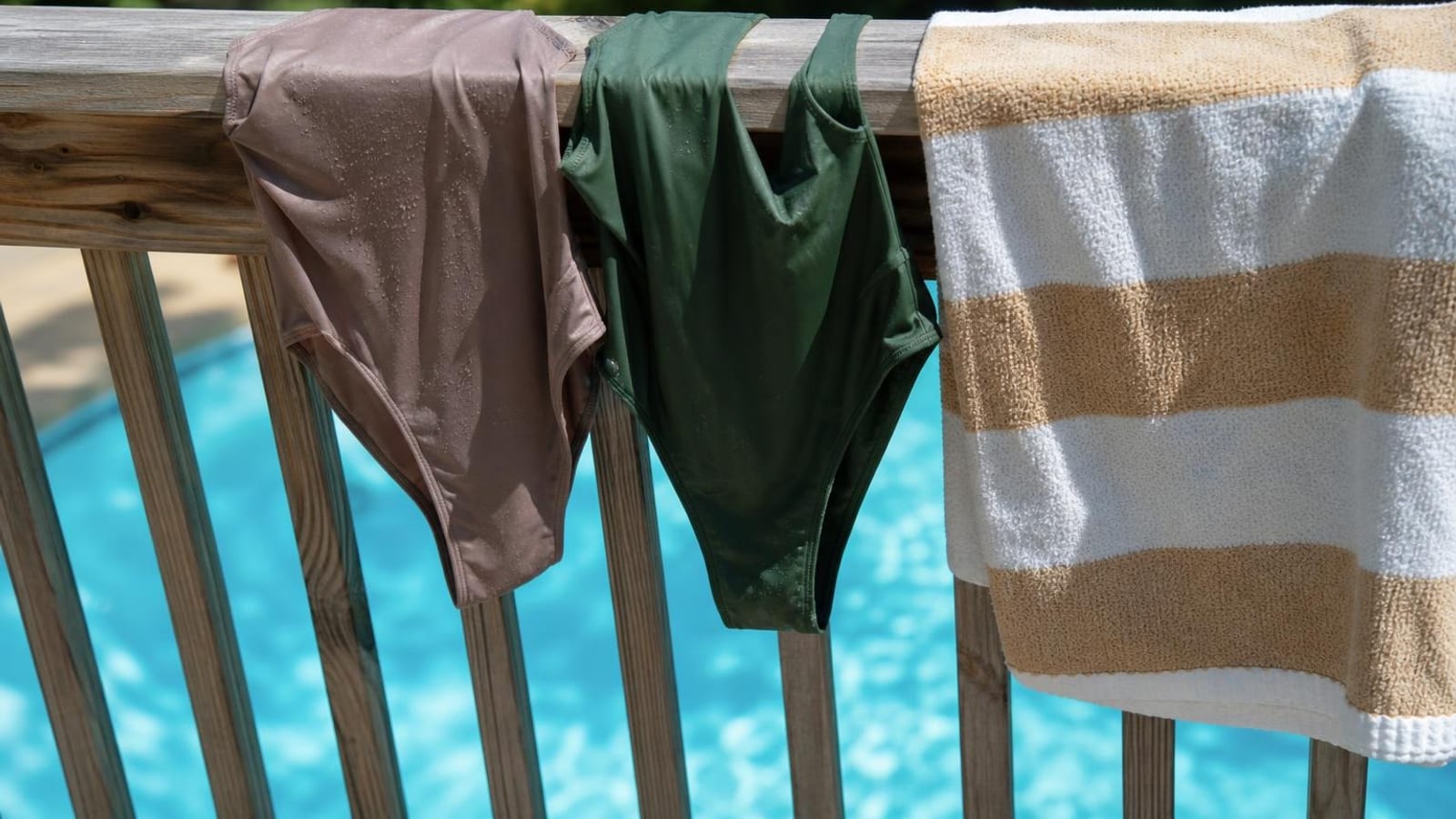
Buy the suit, keep the tags and the hygienic liner on, and get in your own shower wearing it. Soak it. Then look in the mirror, raise both arms, bend forward like you're lifting a wet four-year-old onto a pool ladder, and sit down on the edge of the tub.
That's the whole test. Do it three weeks before the trip so the return window is still open.
Fabric behaves completely differently wet. Light colors go sheer. Thin straps stretch and slide. A neckline that sat fine in a fluorescent fitting room drops two inches once it's carrying water weight. None of this shows up on a hanger, and none of it shows up in a product photo, because the model is dry and standing still.
Start with the fabric, not the style
The two things worth knowing about swimwear fabric are simple. Nylon with spandex feels wonderful, stretches beautifully, and chlorine chews through the spandex. Polyester, especially the poly-PBT blend used for training and team suits, resists chlorine far better and holds its shape for seasons instead of weeks.
The trade-off is real. Poly-PBT has less give, so sizing is less forgiving, and the selection is narrower and plainer. If your family vacation is a week at a beach house, nylon is fine. If you're at a hotel pool twice a day, or you swim laps at the Y all winter, polyester will outlast three nylon suits.
Hot tubs are the fastest way to destroy a suit ever made. Heat plus chlorine plus spandex equals a bagged-out seat and a shoulder strap that's given up by August. If you like the hot tub, own a cheap dedicated suit for it and stop mourning.
The fitting room checklist that actually catches problems
Before you buy, in the store, with the liner still in place:
- Squat all the way down. Leg openings should stay put. If the front rides up, it'll ride up in front of every parent at the splash pad.
- Reach both arms straight overhead. Watch what the bust does in the mirror. A one-piece that pulls the neckline down when you reach is a suit you'll be tugging at for seven days.
- Roll your shoulders forward. If the straps slip off, they'll slip off wet.
- Pinch the fabric and stretch it over your hand. Hold it toward the light. If you can see your skin clearly through it dry, it's transparent wet. Especially in white, pale yellow, light pink, and anything with a small print on a light ground.
- Check the torso. Most one-piece failures are torso length, not size. If the suit pulls your shoulders down and cuts into your legs, you need a long-torso cut, not a bigger number on the tag.
What coverage actually holds up in moving water
A pool is calm. Surf isn't. That distinction decides most of your purchase.
Tankinis ride up. Every single one, in waves, unless the top has a real elastic band at the hem or a built-in connection to the bottoms. A woman standing in chest-deep water with the top floating around her ribs is the most common swimwear failure on any beach in America. If you want the two-piece convenience for bathroom trips, buy the one with the gripper band and test it in the shower.
Swim skirts float. Water has opinions about loose fabric. If you're in the ocean, choose swim shorts with a drawstring and a built-in brief over a skirt, or a one-piece with a bit of leg coverage built in.
Swim leggings are the most underrated thing in the category. Full coverage, nothing to adjust, and you're not greasing your legs with sunscreen at 7 a.m. while two kids ask about breakfast. Pair them with a one-piece and you're set for a snorkel trip, a kayak, or three hours on a hot dock.
Rash guards earn their keep on a boat. Look for UPF 50+ printed on the tag, a zip that goes up to the collarbone, and a hem long enough to stay down when you lift your arms. The loose ones feel better on shore. The fitted ones don't balloon when you swim.
Buy two, not one
One suit dries. The other gets worn. This isn't luxury, it's basic logistics, because nothing dries overnight in Florida in July, and pulling on a cold wet suit at 8 a.m. is the kind of small misery that turns a good morning sideways.
Two suits also means you have a backup when a strap goes, and strap hardware goes at the worst possible moment.
Halter ties look great and they put the entire weight of the suit on the back of your neck. After a day of carrying a toddler on your hip, that's a headache you can trace to a specific decision. Wide-set straps, a cross-back, or adjustable shoulders will serve you better across a full week.
The care routine that doubles the life of a suit
Rinse in cold tap water as soon as you're out. Not later. Chlorine and salt keep working while the suit sits.
Squeeze it inside a dry towel, roll, press. Never wring it. Wringing is what breaks the elastic fibers along the seams, and once the seat is bagged there's no fixing it.
Hang it in the shade, not on a hot car hood, not on a metal railing in direct sun. Heat is the enemy. So is the washing machine, and so is the dryer, permanently.
Never leave a wet suit balled up in a plastic bag overnight. That's mildew by morning, and mildew doesn't come out.
Sunscreen and body oils stain light fabric. If you love a white suit, accept that it's a one-season item and buy accordingly.
The part nobody says out loud
Don't buy for the body you're planning to have by June. Buy for the body you have in the fitting room. A suit that fits in March and pinches in July stays in the drawer, and then you're the one on the lounge chair holding everybody's towels while your kids ask why you never get in.
That's the actual stake here. Not how the suit photographs. Whether you swim.
Your children won't remember what you wore at the lake. They'll remember that you were in the water, that you counted to three and let them jump to you, that you were the one who raced them to the buoy and lost on purpose. Comfort buys you that. Coverage buys you that. A suit you trust means you stop thinking about the suit at all, which is the entire point of owning a good one.
Get in the shower with it. Then get in the ocean.
Nina Castellan
BRO for Her
Runs the women-facing desk. Same standard, same tools, written for a different reader — not a softer one.

Watch
Worth an hour of your evening
More from BRO for Her.
From channels we rate. Plays on YouTube.
Read next