

The blood pressure number that's yours, not the exam room's
One cuff reading in a clinic tells you about ten minutes of your day. A week of readings at home tells you about your life.
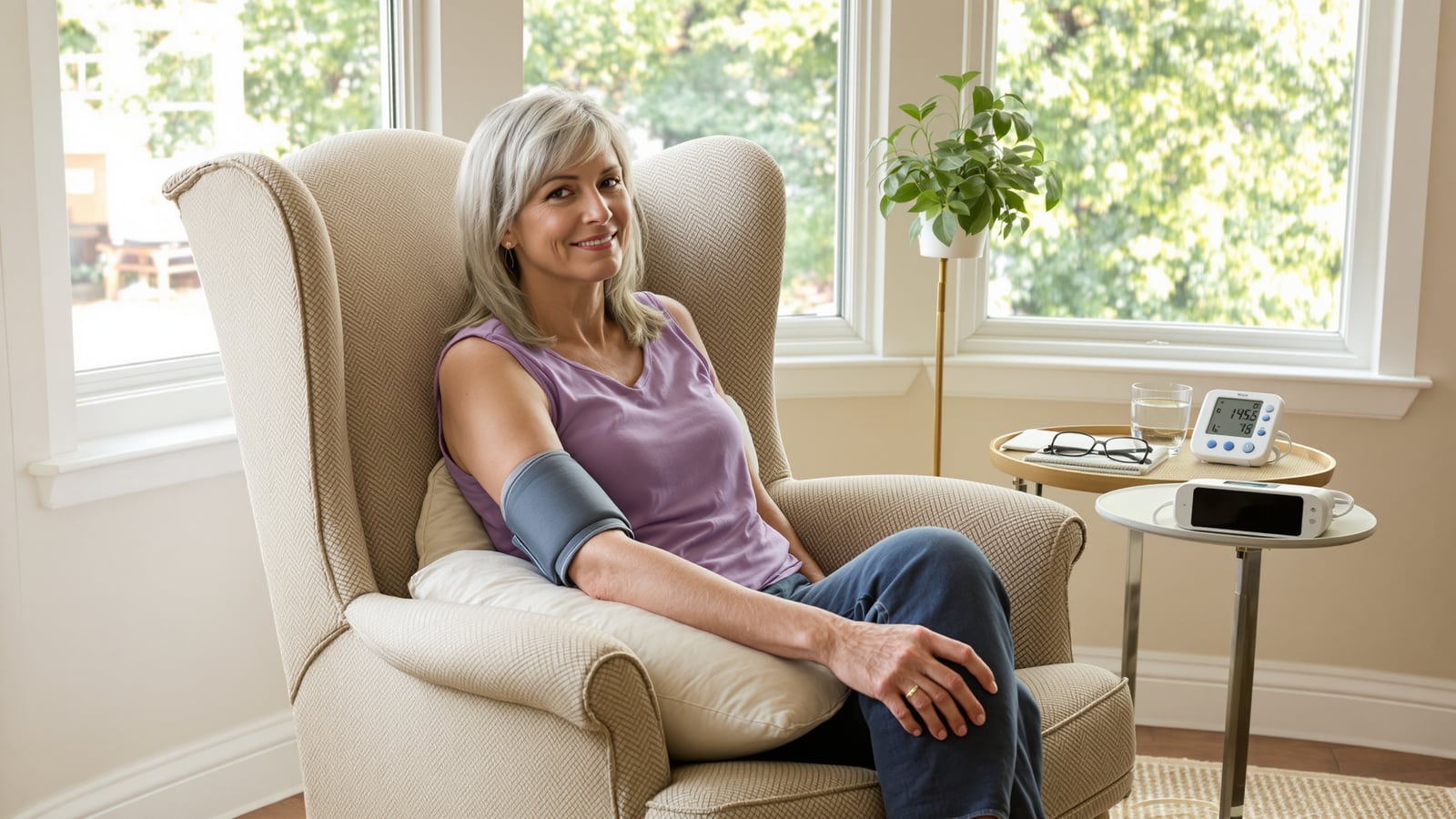
Quick answer: Ask for your numbers, then measure at home. Two readings every morning and every evening for seven days, taken seated and rested, then averaged. A home average of 130/80 or higher is the number to take to your doctor. The single reading from the clinic is a snapshot. The average is the movie.
The 148 you got after parking
You hurried in from the lot. You were four minutes late, the form wanted your whole medical history in ink, and the nurse wrapped the cuff over your sleeve while asking about your insurance. The screen said 148/92. The doctor said "a little high" and moved on.
That number is real. It's also close to useless on its own.
Blood pressure moves all day. It climbs when you're rushed, stressed, cold, caffeinated or talking, and it drops when you're rested. A clinic reading catches you at one moment, usually a bad one. A single high reading doesn't prove you have a problem. A single normal one doesn't prove you don't.
Two ways one number lies to you
Doctors have names for both mistakes.
White coat effect. Your pressure runs high in the office and normal everywhere else. It's common, and it's the reason nobody should start long-term treatment off one reading. Home numbers can spare you from being treated for something you don't have.
Masked hypertension. The reverse. You're calm and composed in the exam room, the cuff says 118/76, and you go home to a job, a house and a family that push your pressure up all day. Nobody looks for it, because the office number looked fine.
You can't tell which one you are from the exam room. You can tell from your kitchen table.
How to take a reading that means something
Most bad home data comes from sloppy technique. Fix that and the rest is easy.
- Buy a validated upper-arm cuff. Wrist and finger devices are fussier and less reliable. The American Medical Association runs a site, validatebp.org, that lists devices checked for accuracy. Look yours up before you buy.
- Get the right size. Measure around your upper arm and match it to the cuff's range. A cuff that's too small reads high. This is the mistake that ruins the most readings, and the box usually tells you the range.
- Skip the first half hour. No coffee, no exercise, no cigarettes before you measure. Empty your bladder first.
- Sit for five minutes. Back against the chair, feet flat, legs uncrossed, arm resting on a table at about heart height. Cuff on bare skin, not over a sleeve.
- Don't talk. Don't scroll. Both push the number up. If sitting quietly for five minutes sounds impossible, that's a separate problem, and getting your evenings back from your phone is a good place to start.
- Take two readings, one minute apart. Write down both.
Do this morning and evening for seven days. In the morning, measure before you eat and before any medication you take. Don't pick the days you feel calm. A log with only the good days is just a flattering photo.
Read the week, not the reading
Cross out the first day if you like, since people tend to be tense while learning the routine. Average the rest. Most guidelines in the U.S. put normal below 120/80. A home average of 130/80 or above counts as high, and 120 to 129 on top with a diastolic under 80 is called elevated, which is a warning, not a diagnosis.
Don't diagnose yourself off the arithmetic. Hand the log to your doctor. A page of readings from your own kitchen carries more weight than one taken between the scale and the insurance question, and a good doctor will say so.
If the home average is high, or the numbers don't match what the clinic found, your doctor may order a 24-hour ambulatory monitor. It's a cuff you wear on your arm that takes readings through the day and overnight, and it's the closest thing to the full picture. Ask about it if your numbers are confusing.
What a woman should know going in
A few things belong on the table because they change what your numbers mean.
Pregnancy history counts for years. High blood pressure during pregnancy or preeclampsia raises your risk of heart problems later, and your doctor should know it even if it happened twenty years ago. If you had it and nobody has brought it up since, bring it up yourself.
Menopause is a new chapter for your numbers. Pressure tends to rise after it. A woman who ran 110/70 her whole life and now reads 128/80 isn't failing at anything, but she should notice the change and have it looked at.
Check what you take. Some birth control pills raise blood pressure in some women. So can decongestants, anti-inflammatory painkillers like ibuprofen and naproxen, and certain supplements. Ask your doctor or pharmacist before you change anything, and don't stop a prescribed medication on your own. If you're sorting out which supplements aimed at women actually earn the money, put blood pressure on the list of questions.
Women's symptoms get brushed off. Be polite and be firm. "Here's my seven-day log. What do you make of it?" is a fair question, and you're entitled to a real answer.
The lifestyle part, quickly
Nothing here is exotic. Cut back on sodium. Eat more potassium-rich food like beans, potatoes and bananas, unless a doctor has told you to limit potassium. Walk most days. Keep your weight in a healthy range. Go easy on alcohol. Sleep.
Those habits can move the numbers, sometimes a lot, but they work alongside medical care, not instead of it. If your doctor prescribes medication, take it as directed and keep measuring, because the log is how you both find out whether it's working.
When it isn't a "log it and call Monday" situation
A reading of 180/120 or higher is serious. If you also have chest pain, shortness of breath, sudden changes in vision, weakness, trouble speaking or confusion, get medical help right away. If you see that number with no symptoms, rest five minutes and measure again. If it's still that high, call your doctor's office the same day.
One more habit
Keep the cuff somewhere you'll see it, like a kitchen drawer, not a closet. Take your reading at the same time you pour the coffee, or just before. Seven days of numbers is a small job. It gives you a fact about your own body that no one else is going to hand you, and you can walk into the next appointment holding it.
Nina Castellan
BRO for Her
Runs the women-facing desk. Same standard, same tools, written for a different reader — not a softer one.

Watch
Worth an hour of your evening
More from BRO for Her.
From channels we rate. Plays on YouTube.
Read next