

The jewelry in your drawer isn't doing anyone any good
A sandwich bag of Grandma's rings and chains is a decision you've been putting off. Sort it, price it honestly, and hand it on or let it go.
Quick answer: Sort it into three piles: wear it, remake or pass it on, sell it. Get anything that might be valuable appraised by someone who isn't trying to buy it, then decide.
Somewhere in your house there's a bag. Maybe it's a cigar box, a zippered pouch, or a sandwich bag at the back of a dresser. Inside is a tangle of chains, a ring that doesn't fit any finger you own, and one earring with no partner. It came from someone you loved. You haven't opened it in two years because opening it means making a decision.
Make the decision. The drawer is the one option that does right by nobody.
Why the drawer is the worst choice
Jewelry stored loose gets damaged. Chains knot and snap. Pearls on old silk thread stretch and fray until one day the strand lets go across the floor. Stones work loose from tired prongs and vanish without a sound.
It's also exposed. Many homeowner's policies cap what they'll pay for stolen jewelry at a modest sum, so ask your agent what yours does. If any piece is worth real money, it may need its own rider or a safe deposit box.
And keeping it out of guilt isn't honoring anyone. Your grandmother didn't wear that brooch so you could bury it. She wore it because she liked it.
Sort first, decide second
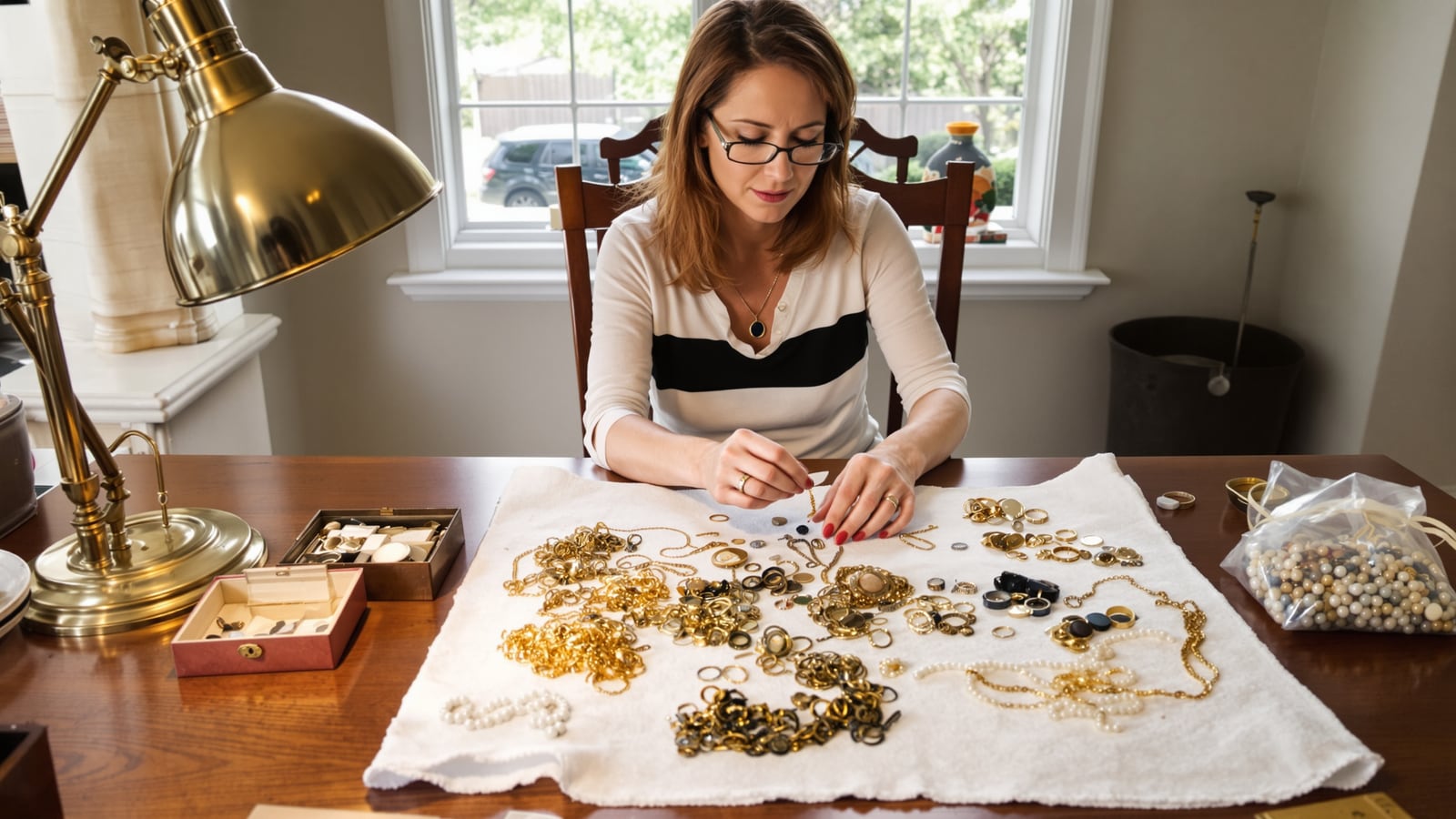
Spread a towel on the table, turn on a good light, and lay everything out. Make three piles and a fourth marked "don't know."
Turn each piece over and look for stamps. 10K, 14K, 18K, or the numbers 417, 585, 750 mean gold. 14K is 58.3 percent gold, which is why it's harder than the 24K you see in a commercial. 925 or STER is sterling silver. PT or PLAT is platinum. A loupe from a hardware or hobby store helps with tiny stamps.
Don't clean anything hard. Wipe pieces with a soft dry cloth and stop. Pearls, opals and emeralds are soft or porous and can be ruined by dips, toothpaste or ultrasonic cleaners. Old costume jewelry can lose its finish if you scrub it. A signed piece, with a maker's name on the back, can be worth more than it looks, so leave the polish alone until you know what you have.
Get it appraised by someone who isn't buying
This is the step people skip, and it's where they lose money.
There are two different numbers. An insurance appraisal states what it would cost to replace the piece new, and it runs high. Resale value is what a buyer will actually pay, and it runs much lower. Both are real. They answer different questions. Tell the appraiser which one you need.
Look for a graduate gemologist, or a member of a professional appraisal organization such as the American Society of Appraisers. Ask for a flat fee. Never use someone who charges a percentage of the value or who also wants to buy the piece. A man who values your ring and then offers to take it off your hands has a conflict, and he knows it.
Keep the written report. It's useful for insurance, for the estate, and for every conversation that follows.
Wear it, just differently
Plenty of inherited jewelry fails for one reason: the style isn't yours. The stone might be lovely and the setting dated.
A jeweler can reset a diamond in a plain band. A ring that's too small or too heavy can become a pendant. A pile of broken gold chains can be melted into one simple piece you'd actually put on. Get a written quote first. Ask to see the old metal weighed in front of you, and ask to have the original stones returned.
One caution. Some pieces should never be altered. A signed vintage piece or a fine period piece can lose much of its value once it's taken apart. Ask your appraiser before a jeweler touches anything.
Or skip the redesign. A grandmother's plain wedding band on a chain at your neck needs no remodeling at all.
Pass it on with the story attached
If a niece or daughter will wear it, the piece matters less than what travels with it.
Write a card. Who wore it, when, and what she said about it. Take a photo of the piece, and a photo of her wearing it if one exists. Tuck the card in the box. In thirty years nobody will remember where the pearls came from unless you've written it down.
Choose the person who'll wear it, not the one who asks loudest. If several relatives have a claim, talk before anything is divided and put the agreement in writing. If you're serving as executor, an estate attorney can tell you what the law requires where you live. Don't guess.
You're also allowed to say no. The cousin who "just wants to hold it" doesn't need to hold it.
Selling isn't a betrayal
Some women feel selling a dead mother's ring is a kind of disloyalty. It isn't. She'd want you secure more than she'd want a ring in a drawer.
But go slowly, because the market is built to catch people who are in a hurry.
- Get three offers, in writing. Take the same piece to three buyers.
- Match the buyer to the piece. A gold buyer pays based on metal weight and ignores design. Estate jewelry dealers and consignment shops pay for craftsmanship. A significant signed or period piece belongs at an auction house.
- Leave if you're rushed. "This offer is only good today" means the offer is thin. A fair buyer will still be there tomorrow.
- Know the fee. Consignment and auction houses take a commission. Ask the percentage before you hand anything over.
If you've never negotiated a price before, this piece on negotiating an offer covers the habits that carry over. Name a number, stay quiet afterward, and be willing to walk.
Ask a CPA about any tax consequences on a sale. The answer depends on your situation, and it isn't a question for a jewelry counter.
Then spend the money on something that lasts. Pay down a balance, start a fund for the kids, or buy the one thing she would have wanted you to have.
Keep a record, and keep one thing
Build a plain spreadsheet with a row for each piece: a photo, the stamp, the appraisal date, the value, and who gets it. It's the same kind of tool as in this piece on the raise conversation, and it turns a vague worry into a finished list. It also saves your family from sorting through your own drawer someday.
Whatever else you decide, keep at least one piece you'll actually wear. Have the clasp fixed. Restring the pearls if they need it. Hand everything on in better shape than it reached you.
Then close the drawer for the last time.
Nina Castellan
BRO for Her
Runs the women-facing desk. Same standard, same tools, written for a different reader — not a softer one.

Watch
Watch how it's done
Picked for this article.
From channels we rate. Plays on YouTube.
Jewelers Mutual Group
What Does A Stamp Mean On Jewelry: A Guide to Jewelry Makers Marks
BriteCo Insurance
Jewelry Stamps: The Key to Authenticity
Read next