What the Pap actually tests for, and what it doesn't
Two tests, one brush, two completely different questions. Know which one you're getting and what the letters on the result mean.
Two tests come out of the same appointment, the same brush and often the same little vial of pink liquid. They're not the same test and they don't answer the same question.
The Pap looks at your cells. A clinician collects a sample from the cervix, it goes to a lab, and somebody looks for cells that have started to change shape. Abnormal cells aren't cancer. They're the step before the step before cancer, which is exactly why anyone bothers collecting them.
The HPV test looks for the virus that causes those changes. It doesn't care what your cells look like. It asks whether high-risk strains of human papillomavirus are present right now. Public health agencies attribute roughly 70 percent of cervical cancers to types 16 and 18, which is why most labs report those two by name and lump the rest together as "other high-risk."
One test finds damage. The other finds the cause. That's the whole distinction, and knowing it changes how you read your results.
Which test you get depends on your age, and the experts don't fully agree
The U.S. Preventive Services Task Force and the American Cancer Society both publish cervical screening guidelines, and they don't match. That's not a scandal. It's two groups weighing the same evidence and landing in slightly different places.
The Task Force has recommended starting cytology, meaning the Pap, at 21 and repeating it every three years through 29. From 30 to 65, you pick: Pap every three years, high-risk HPV testing every five years, or both together every five years.
The American Cancer Society would rather you start at 25 and go straight to primary HPV testing every five years, with the Pap as a fallback where HPV testing isn't available.
The practical version: ask your clinician which test she's ordering, and write the answer down. "I had my Pap" and "I had HPV testing" are sentences people use interchangeably, and they shouldn't. When you switch doctors in four years, the new office will want to know which one you actually had.
Under 25, HPV testing on its own isn't useful. The virus is extremely common in young women and clears on its own most of the time. Testing for it just generates alarm and unnecessary procedures.
What actually happens, and how to make it less unpleasant
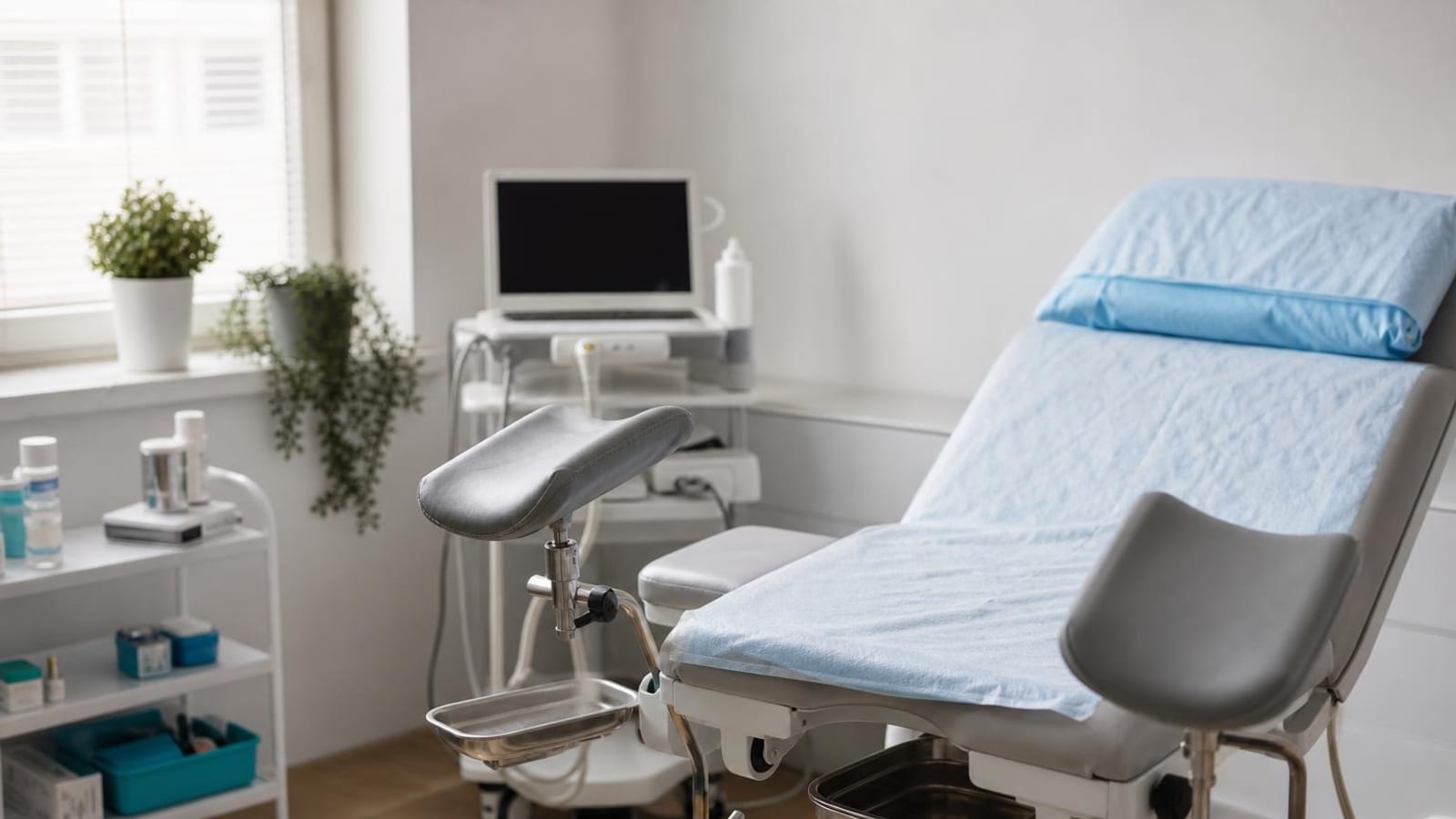
You undress from the waist down, you lie back, a speculum goes in, and a small soft brush is swept around the cervix. The collection itself takes under a minute. Most women describe pressure and a cramp, not pain.
Things that genuinely help, and that nobody tells you:
- Ask for a smaller speculum. They come in sizes. Pediatric and narrow-adult speculums exist and work fine for collection.
- Ask for lubricant. A small amount of water-based gel on the speculum doesn't ruin the sample. The old rule against it came from an era of glass slides.
- Don't book it during heavy bleeding. Blood can make a sample unreadable, and you'll get a call asking you to come back.
- Say if you've had a hard time before. Surgery, childbirth injury, a history of assault, painful exams. A good clinician will slow down, talk you through each step, or let you place the speculum yourself.
- Empty your bladder first. Small thing. Makes a difference.
If you get a result reading "unsatisfactory" or "inadequate," it means there weren't enough usable cells, not that something's wrong. You go back in two or three months and repeat it. Annoying, not ominous.
Decoding the result letter
NILM. Negative for intraepithelial lesion or malignancy. Normal cells. This is the one you want.
ASC-US. Atypical squamous cells of undetermined significance. The most common abnormal result, and the vaguest. The cells look slightly off and the lab can't say why. If your HPV test is negative alongside it, this usually means nothing and you resume normal screening.
LSIL. Low-grade changes. Typically reflects an active HPV infection. In younger women, a large share of these resolve without treatment.
HSIL. High-grade changes. This one gets a colposcopy, promptly.
AGC. Atypical glandular cells. Less common, taken seriously, and worked up more thoroughly because glandular cells can come from higher in the cervix or from the uterus.
Colposcopy sounds worse than it is. The doctor uses a magnifying scope and a dilute vinegar solution that makes abnormal areas turn white, then takes a tiny biopsy of anything suspicious. It stings. You may spot for a day or two. Biopsy results come back graded CIN 1, 2 or 3, and CIN 2 or 3 is usually treated with a LEEP, a thin heated wire loop that removes the affected tissue in about fifteen minutes.
Ask your doctor about LEEP and future pregnancies if you plan to have more children. The procedure removes a piece of the cervix, and that's a conversation worth having before you're on the table, not after.
A positive HPV test tells you less than you think
It tells you the virus is present. It doesn't tell you when you got it. HPV can stay dormant and undetectable for years and then show up on a test, which means a positive result in your forties says nothing about anyone's behavior, yours or your husband's. Marriages have taken damage over this misunderstanding. Don't let yours be one of them.
Most infections clear within a year or two. The ones that matter are the ones that stick around, which is precisely what repeat testing is designed to catch.
If you're HPV-positive with a normal Pap, the usual next step is either genotyping, to check specifically for 16 and 18, or a repeat test in twelve months. If 16 or 18 shows up, you'll likely go straight to colposcopy.
Self-collection is now a real option
The FDA has approved self-collection for HPV testing, including devices used in a clinic setting and, more recently, an at-home kit prescribed through telehealth. You collect the sample yourself with a swab and it goes to a lab.
The trade-off is real: self-collection works for HPV testing, not for cytology. A self-collected sample can't reliably give you a Pap result. If your HPV test comes back positive, you're going in for an exam anyway. But if the alternative is skipping screening for six years because you can't stand the appointment, take the swab.
What a Pap doesn't cover
It's not a screen for chlamydia, gonorrhea, HIV, syphilis or trichomoniasis. Those are separate tests, separately ordered. It doesn't check your ovaries. It doesn't rule out endometrial cancer.
It also doesn't apply if you have symptoms. Screening is for women who feel fine. Bleeding between periods, bleeding after menopause, persistent pelvic pain, unusual discharge that won't resolve — those are reasons to call the office now and say the word "symptoms" out loud, not reasons to wait for your next scheduled Pap.
When you can stop
Generally at 65, if you've had adequate negative screening in the prior decade and no history of high-grade abnormality. Adequate means documented, which is another argument for keeping your own records.
If you've had a total hysterectomy with the cervix removed for a benign reason, and no history of CIN 2 or worse, screening typically ends. If the cervix was left in place, it doesn't. Plenty of women don't know which surgery they had. Find out.
Immunocompromise, HIV, a history of high-grade lesions or DES exposure in utero all change the schedule. So does a new abnormal result. Your clinician makes that call, not a guideline table on the internet, and not this article.
Put the date of your last screening in your phone with the test name attached. Five years is long enough to forget, and this is the one cancer where the machinery to catch it early already exists and is sitting in a drawer twelve minutes from your house.
Nina Castellan
BRO for Her
Runs the women-facing desk. Same standard, same tools, written for a different reader — not a softer one.

Watch
Watch how it's done
Picked for this article.
From channels we rate. Plays on YouTube.
Pathology Tests Explained
Pap smears vs HPV testing and cervical cancer detection
Alirod MD
Pap Smear Results | Explained by an OBGYN
Read next