How to Play Golf With Your Boss Without Making It Weird
Four hours, one cart, zero small talk to hide behind. What to do on the first tee, at the turn, and after a shank.
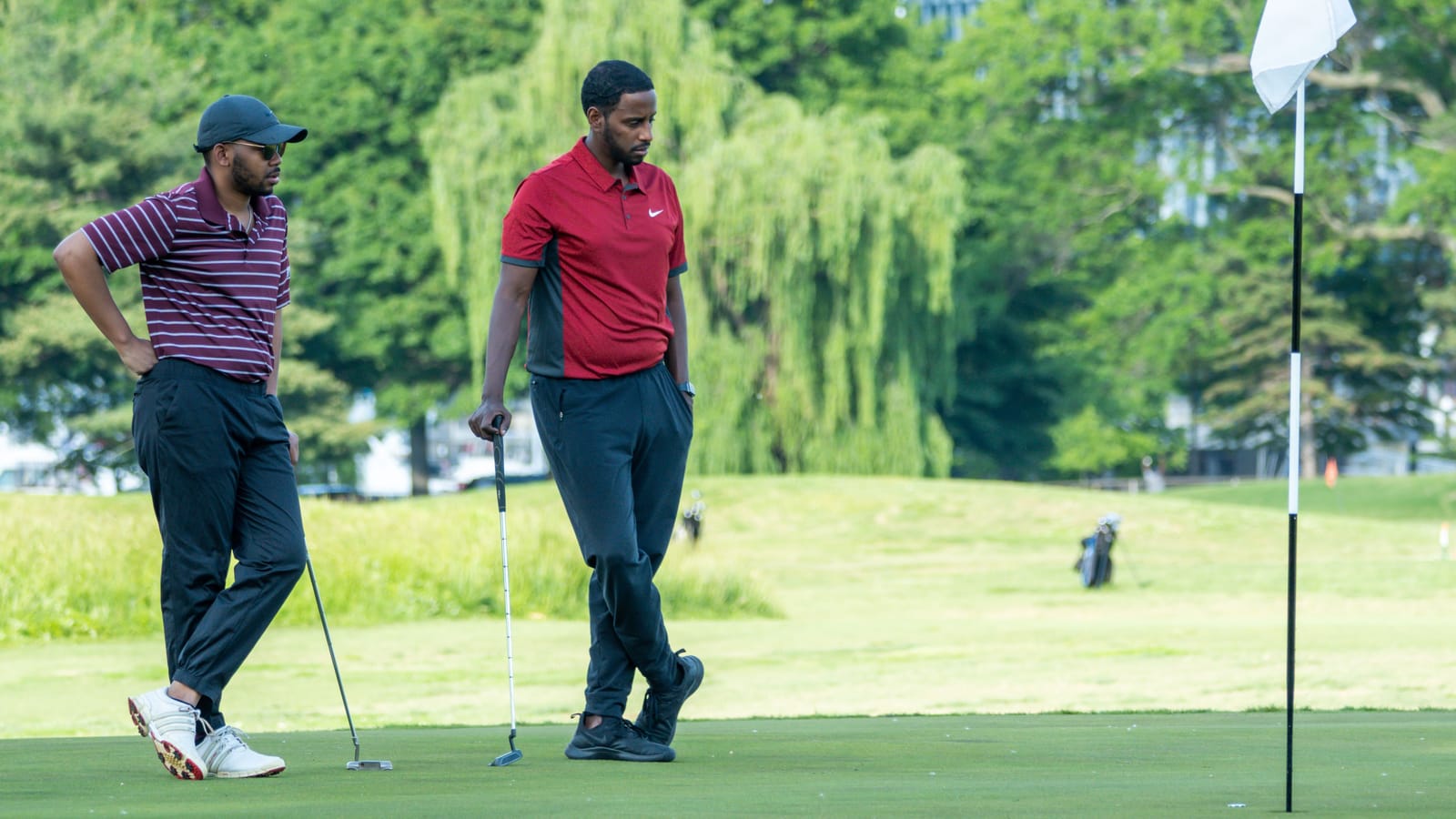
Get there forty minutes early. Not fifteen. Forty. That buys you time to check in, hit twenty range balls, roll six putts to learn the green speed, and be standing at the first tee with a scorecard and a pencil before anybody else pulls into the lot. Half of playing well with your boss or a client is just being the guy who was already there.
The other half is that a round of golf is four and a half hours with nowhere to hide. No slides. No conference room. Whoever you actually are shows up somewhere around the sixth hole, and everyone in the cart notices.
Good news: that's an opportunity, not a threat. You don't have to be good at golf. You have to be good to play with. Those are very different skills and only one of them is available to you this Saturday.
Settle the money before anybody reaches for a wallet
Call the pro shop the day before and ask what the guest rate is, whether carts are included, and whether they take a card over the phone. If you invited him, you pay. All of it — green fee, cart, the range balls he hits while you're still tying your shoes. Do it before he arrives so there's no wallet standoff at the counter.
If he invited you to his club, you don't get to pay, and you shouldn't try more than once. Guest fees at private clubs are often billed straight to the member and cash is frequently not accepted anywhere on the property. Say thank you, then buy lunch at the turn if the grill lets you, and write him an actual note afterward. Paper. Stamp. It takes four minutes and almost nobody does it anymore.
Tip the bag guy five bucks when he loads your clubs and five more when he cleans them after. Have singles in your pocket before you leave the house, because fumbling for change at the bag drop is a small, avoidable indignity.
Say your handicap out loud on the first tee, and be honest about it
"I shoot about 105 on a good day, I'll play fast and I'll keep up." That sentence solves nine problems at once. Nobody's confused, nobody's disappointed, and nobody has to watch you pretend a topped drive was a swing thought gone wrong.
The worst move in business golf is the guy who talks himself up on the first tee and then spends six hours proving it was fiction. The second-worst is the guy who sandbags on purpose so he can dust everyone on the back nine. Both of them are lying, just with different timelines.
And no, you don't throw the round. Losing on purpose is a form of condescension, and most men over fifty can smell it through a golf glove. If you beat your boss, beat him quietly, compliment two of his shots on the way in, and don't mention the score again unless he does.
If somebody floats a wager on the first tee, a friendly "I'm just here for the walk" ends it with no tension. You never owe anybody a bet.
Be the fastest player in the group
This is the whole game. Pace is the only golf skill you can master today, with the swing you already have.
- Play ready golf. If you're ready and safe, hit. Honors are for tournaments.
- Take your practice swing while somebody else is playing, not after they finish.
- Drive the cart to your ball, but drop your partner at his first, with the club he asked for. Grab a second club for yourself on the way out.
- Watch your ball land. Pick a tree behind it. Then watch his.
- Carry a spare ball in your pocket so you're never walking back to the bag.
- Pick up at double bogey. Nobody wants your nine. Write down the X and move.
Give yourself a rough limit of about three minutes looking for a lost ball, and less if the group behind you is standing in the fairway. Hit a provisional when you think it's gone. That one habit saves more time than anything else a weekend player does.
The scratch golfer who takes five hours is a nuisance. The 108-shooter who keeps up is welcome anywhere.
Your temper is the actual interview
He's not evaluating your swing. He's watching what you do after the shank on 7.
Club slams, cursing, the long theatrical stare down the fairway, the running commentary about how you never do that — all of it reads the same way to the guy in the passenger seat. This is how you handle failure in public. You may have never given him a cleaner sample of your character.
So set the standard early and keep it. Bad shot, tee it up, next one. Laugh at yourself once. Don't apologize four times, because that's its own kind of performance and it makes everyone tired.
Same goes for his bad shots. Don't coach. Unless the man says the actual words "what am I doing wrong," you have no swing tips. None. Not even the good one you read.
What to talk about for four and a half hours
Kids. Where he grew up. How he got into the business back when it was different. Hunting, fishing, the truck he's thinking about buying, the trip his wife wants to take in October. Ask a second question after his answer instead of pivoting to your own story. That's the whole trick, and most people never learn it.
Skip politics, skip anything off-color, and skip complaining about coworkers. You can't take any of it back at the clubhouse.
The business conversation, if there's one, happens somewhere around 14 through 17, and it's short. "I'd love twenty minutes next week to walk you through the Henderson numbers." Then you drop it and go putt. Pitching on the first tee tells him the golf was a delivery mechanism. Nobody likes learning they were the target.
On drinking: stay one behind him, or have none at all, and never be the reason a round gets loud. If he's not drinking, you're not drinking. Simple.
Gear, honestly
Don't buy a $600 driver for this. Buy golf shoes that fit, a collared shirt without a logo from a competitor, and a sleeve of whatever ball you already hit. Tuck the shirt in, check the club's rules on shorts before you pack, and leave the cargo pants home.
Have these in your bag: six tees, a Sharpie, a ball marker, a divot tool, sunscreen, a towel, and Advil. Fix your ball marks on the green. Rake the bunker behind you. Stay out of everyone's putting line, which means walking around the arc between their ball and the hole, not straight over the top of it. Any broad-spectrum SPF 30 beats none, but make it a mineral one (zinc oxide), like Badger Clear Zinc SPF 30 or Neutrogena Sheer Zinc SPF 50, and reapply at the turn.
The guy with the eleven-year-old irons and immaculate manners gets invited back. Every time.
After the 18th
Shake hands on the green, hat off, look him in the eye. Say thanks for the day and name one specific thing — his tee shot on 12, the way the back nine played, the burger at the turn. Specific is what makes it real.
Then let it sit. Don't email him that night about the deal. The round was the point.
He'll remember two things about you Monday morning, and neither one is your score. He'll remember that you kept up, and he'll remember what you looked like when it went sideways.
Marcus Vale
Editor-in-Chief
Twenty years in magazines, most of it deciding what to cut. Writes about work, discipline and the decisions that compound.

Watch
Worth an hour of your evening
More from Golf.
From channels we rate. Plays on YouTube.
Read next