Nail Biting Stops When Your Hands Get A Better Job
Willpower loses to a habit you don't notice starting. Here's the file, the substitution and the honest verdict on bitter polish.
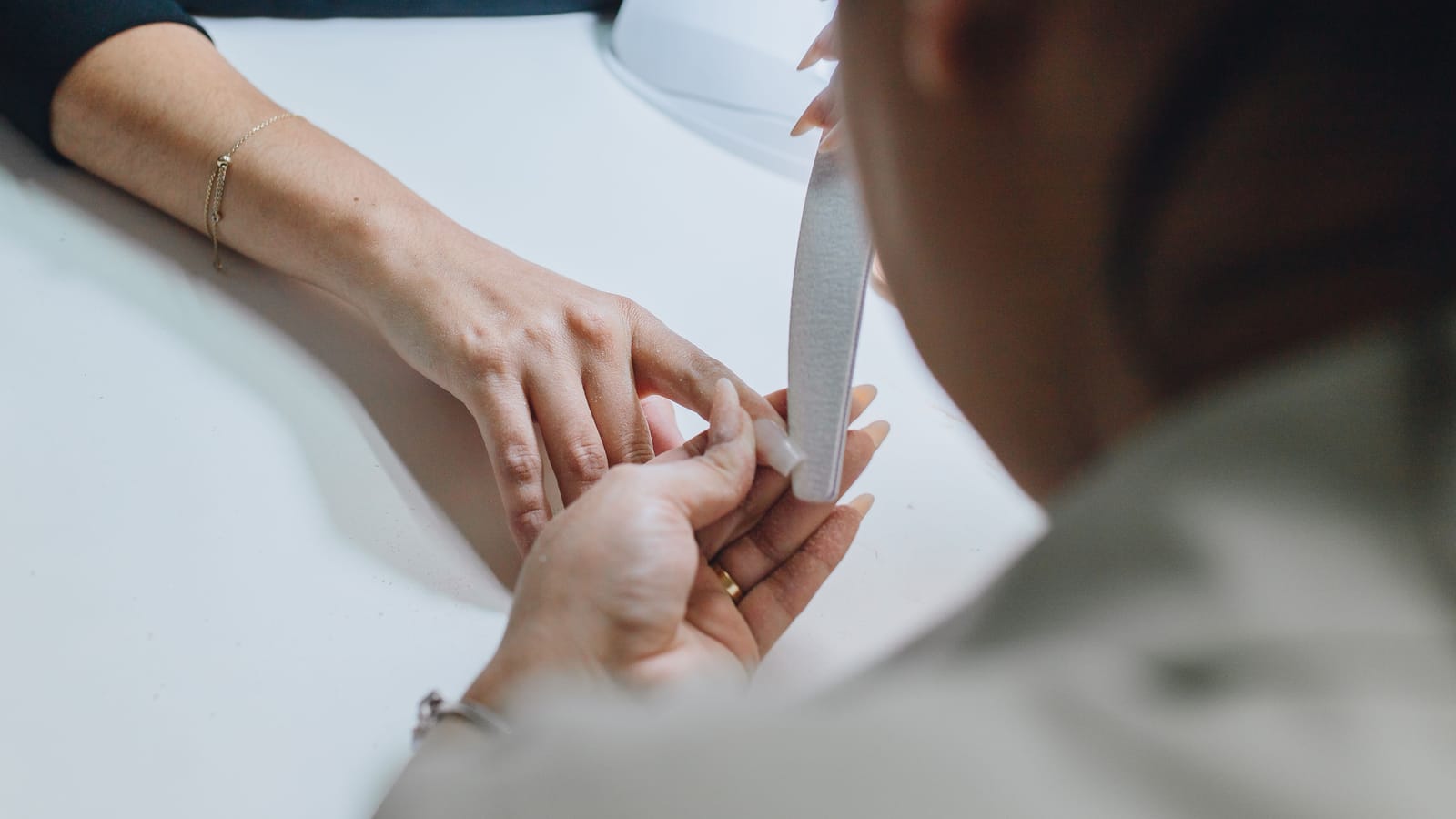
Buy a glass nail file. Four or five bucks, keep it in the center console of your truck and a second one at your desk. That single purchase does more for a nail-biting habit than every promise you've made yourself since high school, because most biting doesn't start with an urge. It starts with a snag. Your thumb finds a rough edge, your teeth go to fix it, and eleven minutes later you're working on the other hand.
Remove the snag and you remove the trigger for a big chunk of it. That's not the whole fix. It's the part nobody tells you, and it's free.
Willpower is the wrong tool for this
Deciding to quit works on things you do on purpose. Nail biting isn't one of them. Ask anyone who does it when they last did it and you'll get a shrug, because the hand goes up without checking in with anybody. It's automatic, it's usually tied to a specific situation, and it's often doing a job — burning off low-grade restlessness while you read, drive, sit through a meeting or stare at a screen.
So stop trying to out-discipline it. Behavioral therapists treat this family of habits with something called habit reversal training, and the shape of it is simple: notice the trigger, then do something else with the same hand that's physically incompatible with getting it to your mouth. Awareness first, substitution second. That order matters. You can't replace a behavior you never catch happening.
Two days of just noticing
Before you change anything, spend two days keeping a tally. Not a journal. A note on your phone, or a pen mark on the back of your hand every time you catch yourself.
You're looking for the pattern, and there almost always is one. For most guys it's three or four specific situations doing 80 percent of the damage. Driving. The last hour of the workday. Reading on the couch after the kids are down. Watching a game that's close.
Once you know your three, you've turned a vague problem into a scheduling problem. You don't need to defend twenty-four hours. You need to defend four windows.
Kill the snag
File, don't clip, and never tear. Clippers leave a squared edge with corners that catch on a sleeve, and a caught corner is an invitation.
Run a glass file or a 240-grit emery board across each nail twice a week, always in one direction on the free edge, then take thirty seconds to round the corners. Your nails should feel smooth when you drag them across your lower lip. If any edge catches there, it'll catch on your teeth later.
Short is good, but not scalped. A nail bitten to the quick leaves an exposed, tender edge and a ridge of loose skin at the sides, and that loose skin is the next thing you'll pick at. Aim for a whisper of white at the tip. Enough to file, not enough to chew.
Cuticles are the other half of this. Dry, split cuticles get picked, and picking and biting are the same habit in different clothes. Cheap fix: a pea of thick hand cream or plain petroleum jelly worked around each nail bed before bed. Do it while you're already brushing your teeth so it doesn't become its own project. Push cuticles back gently after a shower if you want, but don't cut them. That's how you get an infection.
The substitution, and it has to be physical
When you catch the hand moving, you need a replacement that occupies the same equipment for about sixty seconds. That's usually how long the urge takes to fade if you don't feed it.
Options that actually hold up in a real day:
- Clench both fists and press your forearms into your thighs. Free, invisible, works in a meeting.
- A metal fidget ring or a worry stone in your left pocket. Keeps the dominant hand busy and nobody sees it.
- Sunflower seeds or ice water in the car. Mouth gets a job, hand gets a job, both are occupied.
- Gloves in the driving window. Sounds ridiculous. Works absurdly well, because it makes the automatic move impossible and forces the decision to be conscious.
Pick one per trigger situation and keep the tool physically in that place. A fidget ring in your gym bag doesn't help you at 4:30 p.m. at your desk.
Bitter polish, honestly
Denatonium benzoate is the bitter agent in most of those small bottles at the drugstore. It's genuinely unpleasant, and it does something useful: it converts an unconscious habit into a conscious event. You notice, because your mouth tells you.
That's its real job. It's an alarm, not a cure. Some people quit on it in a month. Plenty of others acclimate within a couple weeks and chew right through the bitterness, which is a strange thing to learn about yourself. It also has to be reapplied every two or three days, it comes off in dish soap, and your coffee will taste like regret if you get careless with your fingers.
Use it as a training aid for the first four weeks while the substitution habit sets in. Don't make it the plan.
A clear strengthening polish is the other version of this, and no, it isn't a women's product. Two coats of clear on ten nails takes six minutes, looks like nothing from three feet away, and adds a layer you don't want to wreck. Sunk cost is a legitimate motivational strategy.
What it's actually costing you
Dentists see the results before anybody else does: chipped enamel at the edges of the front teeth, and wear that doesn't grow back. The skin side is worse. Chronically bitten nail folds get red, swollen and tender, and that's paronychia, an infection of the skin around the nail. If a finger is throbbing, hot, or has a pocket of pus at the side, that's a doctor visit, not a bandage and hope.
And if you've been at this long enough that the nail plate itself looks ridged, split or shortened permanently, ask a dermatologist what's recoverable. Some of it is. Some of it isn't, and you'd rather know.
When it's bigger than a habit
There's a real category here — body-focused repetitive behaviors — and nail biting sits in it alongside skin picking and hair pulling. If yours draws blood regularly, if you hide your hands, if you've tried to stop a dozen times and the failures are starting to feel like a character verdict, that's not weakness and it's not vanity. Ask your doctor for a referral to someone who treats these specifically. Habit reversal training with an actual clinician beats doing it alone, and it's a short course of treatment, not years on a couch.
Give it six weeks and expect a relapse
Fingernails grow about a tenth of an inch a month. Three weeks in, your nails clear the fingertip and start looking like they belong to an adult. Six weeks in, people notice. A few months in, a nail you'd chewed to the quick has fully replaced itself.
Somewhere in there, you'll have a bad week — a deadline, a sick kid, a sideways conversation with your boss — and you'll look down and find one hand halfway through the old routine. That's not the plan failing. That's the trigger list telling you it has a fifth entry you hadn't logged.
File the edge, put the ring back on, and carry on. The habit has a hundred chances a day to win. You only need to be slightly more stubborn than it is.
Dean Shaw
Gear & Garage
Reads the warranty, the parts list and the long-term owner reviews before anything else. Trucks, tools, watches, and the cheap version that costs more.

Watch
Watch how it's done
Picked for this article.
From channels we rate. Plays on YouTube.
Alive Academy
How to stop biting your nails from the root cause up (psychology)
Read next