Six minutes at the sink, and you're done for the day
A weekday grooming routine you can actually finish, in order, with the reasons each step earns its place and the ones you can drop.
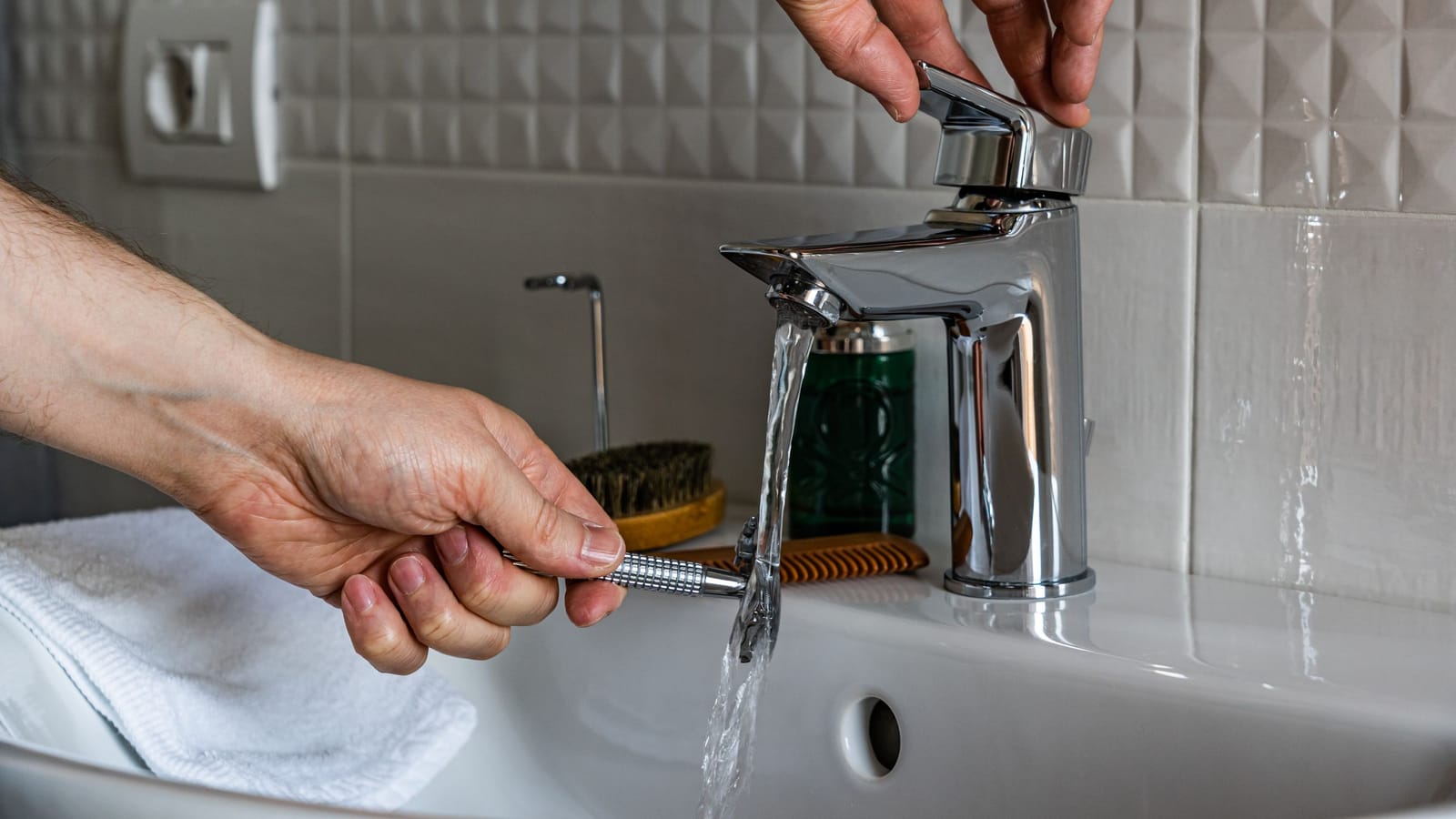
Set a timer on your phone. Six minutes of sink time covers everything your teeth, skin and hair actually need on a weekday. Nearly everything sold beyond that's optional, and a fair amount of it does nothing at all.
The shower is its own clock. This is what happens standing at the mirror afterward.
The sequence, in order
- Teeth — 2:00. The full two minutes, not the thirty seconds you've been doing.
- Face wash — 0:30. Warm water, a small amount of cleanser, rinse.
- Moisturizer with SPF — 0:45. Onto skin that's still slightly damp.
- Deodorant — 0:15.
- Hair — 1:30. Product in, comb or hands through, done.
- Quick check — 0:30. Brows, nose, the bit of stubble under the jaw you keep missing.
That's five and a half minutes with slack built in. Order matters more than most people expect, which is why the list is in this order and not a different one.
Brush properly, then leave the fluoride where it's
Two minutes is longer than it feels. Most people quit around forty-five seconds and are genuinely surprised when they time themselves. Use an electric brush if you'll actually use it; the timer alone is worth the money.
Then don't rinse with water. Spit and walk away.
Rinsing washes off the fluoride that's meant to sit on the enamel and keep working. It's the single easiest upgrade in this whole routine and it costs nothing. If you use mouthwash, use it at a different time of day, because most rinses will strip the fluoride off just as effectively as tap water.
One more thing on timing. If breakfast involves orange juice, coffee or anything acidic, brush before you eat rather than after. Acid softens enamel for a while, and scrubbing softened enamel is a slow way to sand down your own teeth.
Wash your face, but stop washing it so hard
A cleanser's job is to remove oil, sweat and whatever was on your pillowcase. That's it. If your skin feels tight and squeaky afterward, the product was too harsh or you used too much of it.
Tight isn't clean. Tight is stripped.
Skip the scrub with the grit in it. Physical exfoliants with jagged particles create small tears, and daily use of them is a reliable way to end up with irritated, reactive skin that you then buy more products to calm down. Once or twice a week is plenty if you like the feel, and a gentle chemical exfoliant does the same job with less collateral damage.
Toner is mostly a holdover from the era when soap left an alkaline film that needed neutralizing. Modern cleansers don't. If you enjoy it, fine. It isn't doing structural work.
Sunscreen is the step that actually shows up in twenty years
Of everything in the cabinet, daily sunscreen has the strongest evidence behind it. Ultraviolet exposure is a known driver of skin cancer and it's responsible for the large majority of what people call aging on the face — the leathering, the uneven pigment, the fine lines around the eyes. Dermatologists are close to unanimous on broad-spectrum SPF 30 or higher, every day, including cloudy ones. Window glass blocks UVB and lets plenty of UVA through, so a desk by a window isn't shelter.
Two practical points.
You're probably using too little. The standard guidance is roughly a quarter teaspoon for the face and neck, which is more than instinct suggests. A thin smear of SPF 50 performs like a much lower number.
A moisturizer with SPF in it counts, as long as you apply enough of it. Combining the two steps is the difference between a routine you keep and one you abandon in March.
If you're picking one, make it mineral. First, though: any broad-spectrum SPF 30 you'll wear every day beats a better one you skip. Zinc oxide and titanium dioxide sit on the skin and cover the full spectrum. They're also the only two filters the FDA proposed in 2019 as generally recognized as safe and effective, and it asked makers for more safety data on the rest. Mineral is gentler on sensitive skin, too. The trade-off is that some formulas leave a white cast. Tinted ones fix that. CeraVe Hydrating Mineral Sunscreen SPF 30, EltaMD UV Physical SPF 41 (tinted) and Neutrogena Sheer Zinc SPF 50 are good places to start.
Apply while your skin is still slightly damp from rinsing. Moisturizer works partly by sealing in water that's already there, so a damp face gives you more out of the same amount of product.
And no, the collagen listed on the front of the jar isn't going anywhere. The molecule is far too large to cross the skin barrier. It's a fine moisturizing ingredient and a meaningless claim.
Shave days run longer, so don't shave every day
A proper shave adds three or four minutes. Trying to fold it into six is how you end up with razor burn and a rushed jaw.
Shave every other day if your face allows it. The skin gets a recovery day, and the average man's stubble at forty-eight hours is short enough to cut cleanly.
The rules that matter: shave after the shower when the hair is soft and hydrated, use enough lather to actually cushion the blade, go with the grain first, and rinse the blade often. Don't stretch your skin taut and drag the razor over it repeatedly. Multiple passes over the same patch is the main cause of ingrown hairs, particularly on curly beard hair and particularly on the neck.
Change the blade before it starts pulling, not after. A dull blade doesn't cut hair, it tears it, and that's what leaves the rash.
If you're growing a beard instead, the six minutes still apply. Wash it with something mild, and skip the oil unless the skin underneath is genuinely dry. Most beard oil is fragrance and marketing.
Hair, and what no product will do
Ninety seconds. Product into damp hair for hold, into dry hair for texture and separation, and less than you think in both cases. Start with an amount the size of a pea and add if you need to.
Most men wash their hair more often than it needs. Every other day is fine for most, daily if you're oily or working outdoors.
Nothing you apply topically thickens an existing hair shaft. Thickening shampoos coat the hair to make it feel fuller for a few hours, which is a cosmetic effect, not a biological one. If you're genuinely losing hair and you mind, that's a conversation with a doctor, and it's worth having earlier rather than later, because the treatments that work hold ground better than they recover it.
The antiperspirant trick nobody tells you
Apply it at night.
Antiperspirants work by forming temporary plugs in the sweat ducts. That happens best when you're not sweating — so a clean, dry underarm before bed gives the active ingredient a proper chance to settle in. It survives the morning shower. Put it on a wet armpit at 7am and most of it runs off before it does anything.
Deodorant, which only tackles odor, is fine whenever.
Ten minutes on Sunday buys back the week
The jobs that wreck a weekday morning are the ones you can batch.
Nails cut and filed. Nose and ear trimmed. Brows tidied where they've crossed the bridge, leaving the shape alone otherwise. Neckline on the haircut cleaned up if you know what you're doing, left to the barber if you don't.
Do those once a week with a decent light and they never eat a Tuesday.
Everything above fits in a shelf's worth of product: a cleanser, an SPF moisturizer, a razor with sharp blades, one hair product, a toothbrush, an antiperspirant. Six things. The eleven-step regimen you keep reading about isn't a superior version of this. It's a longer one, and you won't do it past week three.
The man with good skin at fifty isn't the one who bought the most. He's the one who did the same dull thing every morning, on the mornings when he didn't feel like it.
Dean Shaw
Gear & Garage
Reads the warranty, the parts list and the long-term owner reviews before anything else. Trucks, tools, watches, and the cheap version that costs more.

Watch
Watch how it's done
Picked for this article.
From channels we rate. Plays on YouTube.
Pierre Dalati
The Ultimate Morning Grooming Routine For Men
Stile JS
Perfect Men’s Grooming Routine (Simple & Effective)
Read next