The Three Numbers Stamped Inside Your Glasses
Face shape charts are a tiebreaker at best. The fit numbers printed on the temple arm are the real answer, and the pair you own already tells you yours.
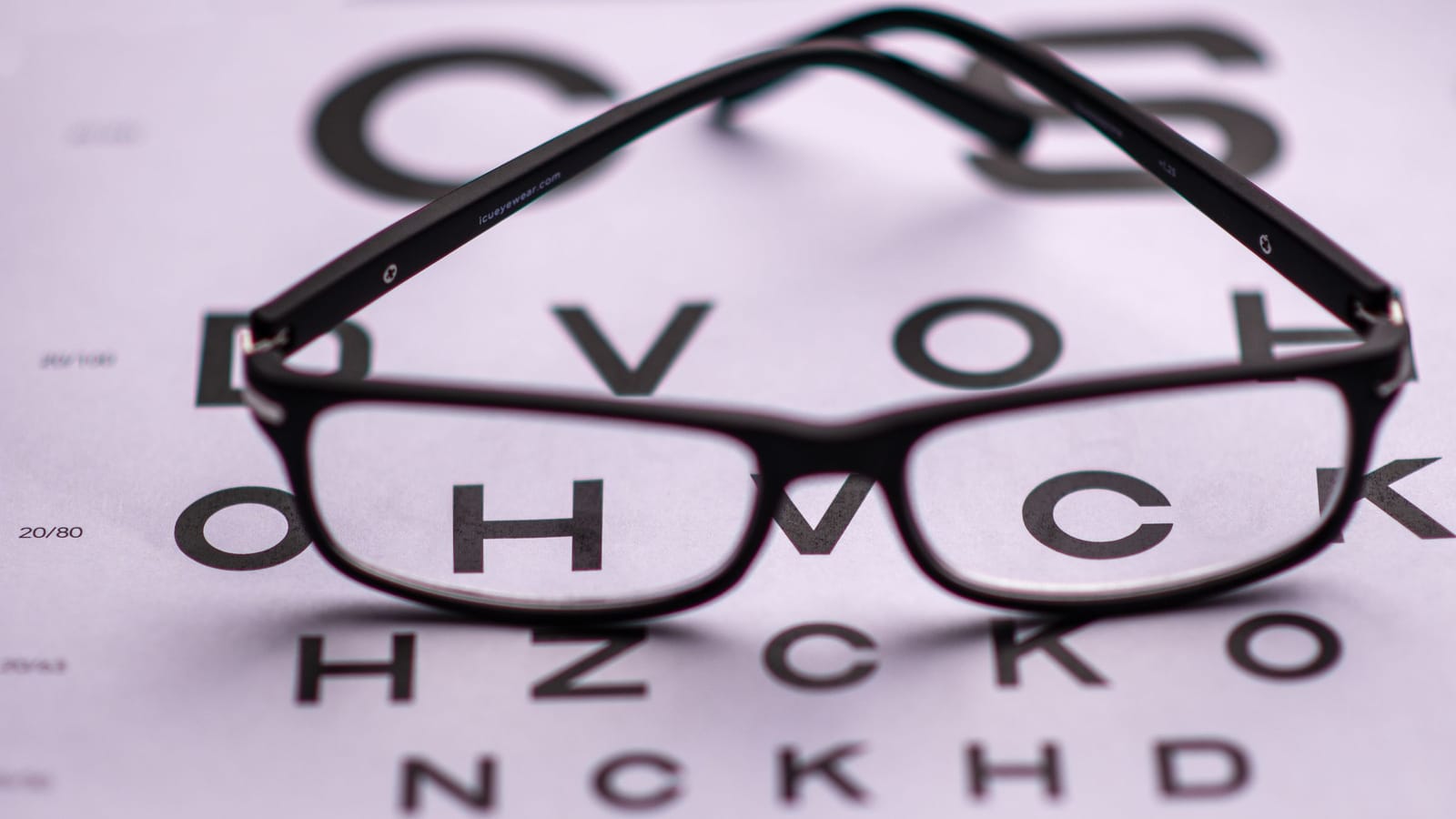
Take off the glasses you're wearing right now and look at the inside of the left arm. You'll see something like 52□18-145. Fifty-two is the width of one lens in millimeters. Eighteen is the bridge, the gap between the lenses. One forty-five is the temple, the arm length from hinge to the bend behind your ear.
Those three numbers do more for how you look in glasses than every "oval face, round frames" chart on the internet. Frames are sized like shoes. Nobody tells you, so most men buy a 9 when they wear an 11 and then decide they just don't look good in glasses.
If the pair you own fits well, write the numbers down and shop within a couple of millimeters of them. If it fits badly, you now know which direction to move.
Frame width is the thing people actually notice
The measurement that matters most isn't printed on the arm at all. It's total frame width, hinge to hinge, and the rule is simple: the outer edge of the frame should land at the outer edge of your face, or within a hair of it.
Stand in front of a mirror and look straight ahead. If you can see your temples poking out past the frames, the glasses are too small and your head will look wide. If the arms bow outward from the hinge before they reach your ears, they're too big and they'll slide down your nose every time you look at your phone. That slide is the single most common complaint at the optical counter, and it's almost never the nose pads. It's width.
Your eyes should sit roughly in the middle of each lens, maybe a touch above center. If your pupils are crowded toward the inside edges, the bridge is too narrow. Crowded toward the outside, too wide.
The bridge is where the cheap pairs fail
That middle number is the one online shoppers ignore, and it's the one that decides whether the frames leave dents in the side of your nose by 2 p.m.
Two millimeters is a lot here. An 18 bridge and a 20 bridge feel like different products. If your glasses constantly creep down, try a bridge one size smaller before you try anything else.
Men with a low or flat nose bridge, which includes a whole lot of people of Asian descent and plenty who aren't, should look specifically for frames with adjustable nose pads or an "Asian fit" / "alternative fit" designation. These sit the lens further from your face and lift the frame so it doesn't rest on your cheeks. Molded plastic bridges with no pads look clean and are murder on the wrong nose.
One more: if your lashes touch the lenses, you need pads or a deeper bridge. You'll be cleaning smears off the glass forever otherwise.
Face shape, used honestly
The charts aren't nonsense, they're just oversold. The underlying idea is contrast. Angles soften a round face, curves soften a square jaw, and a strong horizontal browline balances a long face.
In plain terms:
- Round or full face. Rectangular frames with a defined upper edge. Keep the lenses a little wider than they're tall.
- Square, heavy jaw. Rounded or soft-cornered frames, thinner material, slightly rounded lens bottoms.
- Long or narrow face. Taller lenses and a wider frame. Avoid small ovals, which stack a small circle on a long rectangle.
- Angular with strong cheekbones. Almost anything works. Enjoy it.
Now the caveat nobody sells you. Face shape is a tiebreaker between two frames that already fit. It's not a reason to buy a pair that's the wrong width, and it will never rescue one. A perfectly "correct" shape in the wrong size looks worse than a "wrong" shape that fits.
Color is a browline decision
Match the frame to your eyebrows, not your shirt. The frame becomes part of your brow line the second it's on your face, and when the two are close in weight and tone, the whole thing reads as intentional.
Dark hair and heavy brows carry black acetate and thick tortoise. Light or graying hair gets swallowed by black. Go to brown, gunmetal, olive, or a warm tortoise instead, and the frame stops being the loudest thing in the room.
Silver and gray metals sit better with cool complexions. Gold, copper, and tortoise sit better with warm ones. If you have no idea which you are, look at the veins on your wrist in daylight. Blue-ish leans cool, green-ish leans warm. It's a rough test and it's free.
If you wear progressives, ask about fitting height
Progressive lenses need vertical room. Those low, wide, fashion-forward rectangles that look great on the shelf often don't have enough lens height to fit a full progressive corridor, and you end up with a reading zone the size of a postage stamp.
Ask the optician for the minimum fitting height of the specific lens design before you fall in love with a frame. Many designs want somewhere around 28 to 30 millimeters of lens height, and short-corridor options exist if you want something smaller. Get that answer first and you'll save yourself a remake.
Same conversation covers your PD, the distance between your pupils. Have them measure it in the store. A PD that's off by a couple of millimeters gives you eyestrain that you'll blame on your screen for six months.
Weight, and the part you feel at hour ten
Acetate is warm-looking, holds bold color, and can be adjusted with heat. It's also heavier, and it loosens over time.
Metal is lighter and lower-profile. Titanium and beta-titanium are the lightest things worth buying, they don't corrode from sweat, and they flex instead of snapping. You pay for it. A titanium frame typically starts where a decent acetate frame ends.
If you're getting a strong prescription, ask about high-index lenses, 1.67 or 1.74. Thinner edges, less of that thick-rim look, noticeably lighter on your nose. Then add anti-reflective coating. Nothing else you can buy does more for how you look in photographs and on video calls, because it takes the white glare off the lens and lets people see your eyes.
Before you hand over the card
Make them adjust the frames on your face in the store. Not a glance. An actual adjustment.
Check three things. The frame sits level when you look in the mirror, not tilted toward your dominant ear. The arms touch the side of your head lightly all the way from hinge to ear, without pinching at the temple. And when you lean forward to tie your shoe, the glasses stay put.
Then ask what the return window is and whether adjustments are free for the life of the frame. A shop that says yes to both is worth more than a $40 discount from a website that says neither.
Thirty seconds, every morning
Run the lenses under lukewarm water, put one drop of plain dish soap on each side, rub with your fingertips, rinse, dry with a clean microfiber cloth. That's it. Your shirt tail is fabric full of grit, and it's why your lenses have that fine web of scratches you can see against a bright sky.
Once a week, hook a fingernail under each hinge screw and check it's snug. Loose hinge screws are how a frame quietly goes crooked over a month, and how you end up convinced your prescription changed.
Glasses are the only thing you own that people look through to see your eyes. Buy them like they matter, because everybody you meet today is going to see them before they hear your name.
Tobias Reed
Style & Grooming
Spent a decade in menswear retail watching men buy the wrong size. Believes fit is ninety per cent of it and says so weekly.

Watch
Watch how it's done
Picked for this article.
From channels we rate. Plays on YouTube.
FramesandContacts
How to Choose the Right Frame Size
Goggles4u Eyeglasses
How to measure your Frame Size | Goggles4u Eyeglasses
Read next