Four Weeks to a Sunday Roast
One knife, one pan, four Sundays. A plain-language cooking course that ends with you carrying a roast to the table.
Buy one knife. An 8-inch chef's knife, $40 to $60, full tang, heavy enough that you notice it in your hand. That knife plus a cheap honing steel will do about ninety percent of everything in this course. You don't need the block set your aunt gave you, and you definitely don't need the santoku with the dimples.
This is a four-week course. One session a week, ninety minutes or so, plus a bit of practice in between. At the end you'll put a roast, potatoes, a vegetable and a pan gravy on the table at the same time, hot, and sit down with your family instead of sweating over the stove while everybody waits.
One skill at a time. Don't skip ahead.
What you'll be able to do by Week Four
- Hold a knife correctly and cut an onion, a carrot and a chicken breast without fear.
- Get a real brown crust on meat in a hot pan, and know why it wasn't happening before.
- Season with salt at the right time, and taste as you go instead of at the end.
- Roast a chicken or a beef joint to a temperature you chose on purpose.
- Make a pan sauce from what's stuck to the bottom of the pan.
- Time three dishes so they finish together.
Safety, before anything else
A dull knife is the dangerous one. It skids off the onion instead of biting in, and it skids toward your other hand. Hone before every session: ten passes a side, light pressure, and don't confuse honing with sharpening. Get the knives properly sharpened once or twice a year, or buy a pull-through sharpener and accept it's a blunt instrument.
Three more rules and then we cook.
Never try to catch a falling knife. Step back and let it hit the floor. Wet your cutting board's underside with a damp paper towel so it can't slide. And keep a small bowl of water and a folded towel by the stove — if a pan of oil ever catches fire, you smother it with a lid, you don't move it and you don't throw water at it.
Kids in the kitchen is a good thing. Kids in the kitchen while you're carrying a 350-degree cast iron skillet isn't. Say "hot pan, behind you" out loud, every time, until it's a habit.
Week 1 — The knife
- Grip it properly. Pinch the blade between thumb and the side of your index finger, just ahead of the handle. The other three fingers wrap the handle. It'll feel wrong for about ten minutes and correct forever after.
- Make the claw. Curl the fingertips of your guiding hand under. Knuckles forward, fingertips back. The flat of the blade rides against your knuckles. You physically can't cut what isn't sticking out.
- Slice, don't chop. Tip stays on the board. Push forward and down, pull back and down. Chopping straight down is slow and it bruises herbs.
- Do five onions. Halve pole to pole, peel, flat side down, horizontal cuts, vertical cuts, then across. Five onions in one sitting. Put them in a bag and use them all week in everything.
- Then carrots, then celery, then a whole chicken breast into strips. Same grip, same claw, every time.
What goes wrong: you'll rush. Slow is smooth and smooth is fast, and speed shows up on its own around onion number twelve. Also, your neck will ache — your board is probably too high or too low. Counter at roughly wrist height when your arms hang down is about right.
Week 2 — Heat and the pan
Most bad home cooking is one problem: the pan wasn't hot enough and there was too much food in it.
- Get a 10 or 12-inch cast iron or heavy stainless skillet. Nonstick can't do this week.
- Preheat for real. Medium-high, three to four minutes empty. A drop of water should skitter across the surface, not sit and sizzle.
- Dry the meat. Pat a chicken thigh or a steak with paper towels until it looks matte. Water is the enemy of browning.
- Salt it, then oil the pan, then lay it down away from you. It should hiss immediately. If it doesn't, the pan's cold — take the meat out and wait.
- Leave it alone for three minutes. Don't poke it. It releases from the pan when the crust is formed.
- Cook one thing at a time. Crowding drops the pan temperature and everything steams gray.
Practice: chicken thighs, twice this week. Skin down, six or seven minutes, flip, finish to 165°F in the thickest part. A $15 instant-read thermometer is the single best purchase in this whole course.
Week 3 — Salt, taste, and the pan sauce
Salt early. Salt on the surface of meat an hour before cooking, or the night before, does something salt at the table can't. It seasons all the way through and it dries the surface, which gets you back to Week 2's crust.
Buy kosher salt in the big box. It's easier to pinch and harder to overdo.
- Taste everything, constantly. Vegetables as they cook. Sauce three times. If you only taste at the end, you can only apologize.
- Learn the four fixes. Flat tastes like it needs salt. Heavy and rich needs acid — lemon or vinegar, a teaspoon at a time. Harsh needs fat. Dull needs heat or fresh herbs at the last second.
- Make a pan sauce. Sear your meat, take it out, tip off most of the fat. Onion or shallot in the pan, two minutes. Pour in half a cup of stock or wine and scrape every brown bit off the bottom with a wooden spoon. Reduce by half. Kill the heat, swirl in a tablespoon of cold butter. That's it.
- Roast vegetables properly. 425°F, cut them the same size, toss in oil, spread out on the sheet with space between them. Crowded vegetables steam.
Week 4 — The Sunday roast
Work backward from when you want to eat. Write the times on a scrap of paper and tape it to a cabinet. That's the whole trick.
- Salt the bird or the joint the night before. Uncovered in the fridge. The skin dries out, which is exactly what you want.
- Out of the fridge an hour before it goes in the oven.
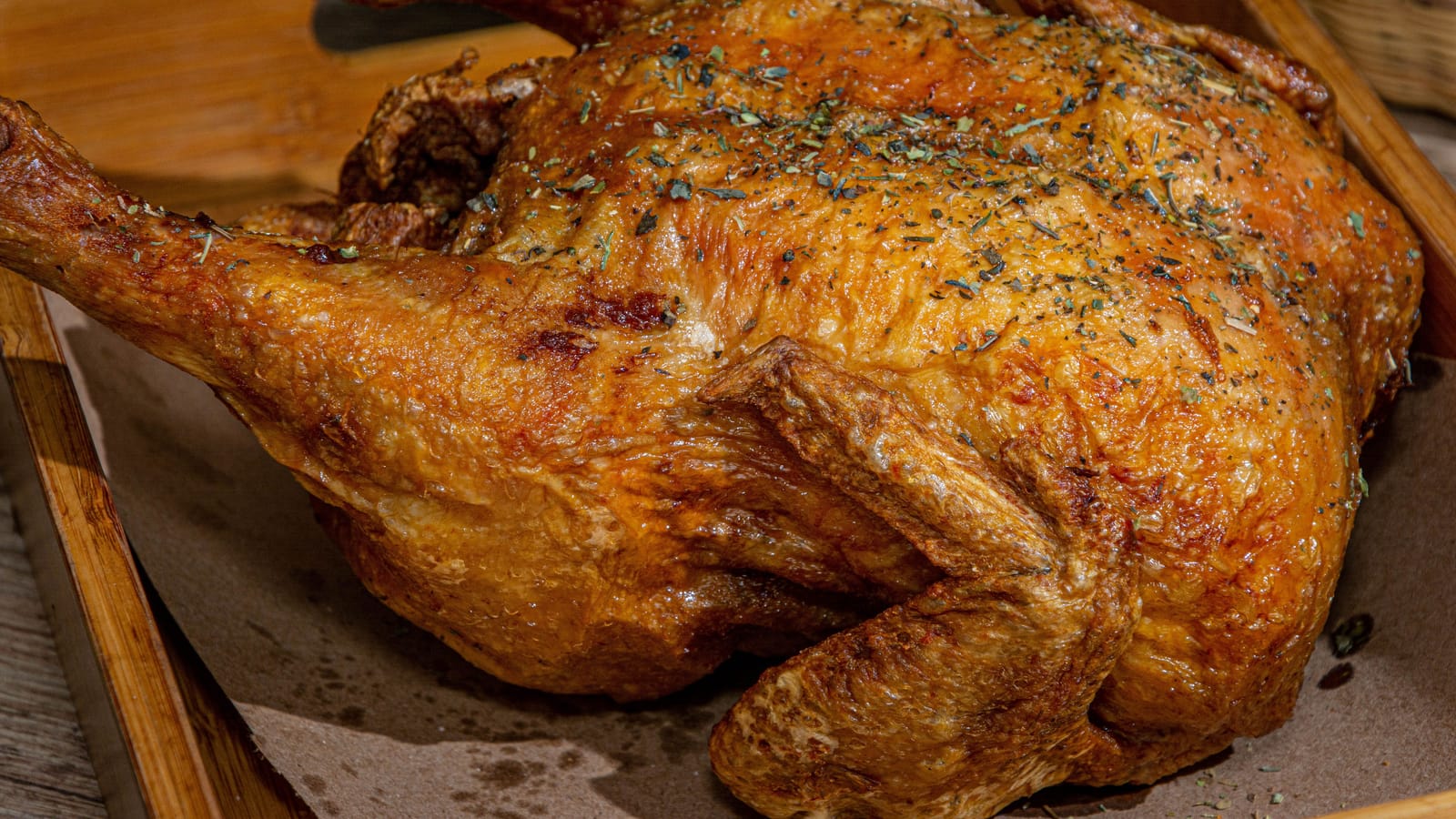
- Chicken: 425°F, roughly 20 minutes a pound, done at 165°F in the thigh. Beef: sear it in the pan first, then 325°F, pull at 130 to 135°F for medium rare. Pork: 145°F, then a three-minute rest minimum.
- Rest the meat. Twenty minutes for a roast, ten for a chicken, loosely tented with foil. This isn't optional. Cut it early and the juice runs onto the board instead of staying in the meat.
- Rest time is when everything else happens. Potatoes go in the hot oven. Pan sauce on the stovetop from the drippings. Green vegetable last, four minutes.
- Carve across the grain. Look at the lines in the meat, cut perpendicular to them. Same knife you've been using for four weeks.
Trade-off worth naming: the oven can't be at 425°F and 325°F at once. If you're doing beef low and slow, par-boil your potatoes, drain them, rough them up in the pan, and roast them at the end while the beef rests. Sequence beats simultaneity.
Printable checklist
Every session
- [ ] Hone the knife, ten passes a side
- [ ] Damp towel under the cutting board
- [ ] Trash bowl on the counter
- [ ] Thermometer within reach
- [ ] Phone face down
Week 1 — Five onions. Carrots. Celery. Chicken breast into strips. Claw grip, every cut.
Week 2 — Preheat 3 minutes. Meat patted dry. One layer only. Chicken thighs to 165°F, twice.
Week 3 — Salt an hour ahead. Taste three times. One pan sauce. One tray of roasted vegetables at 425°F.
Week 4 — Salt the roast the night before. Write the timeline. Rest the meat. Carve across the grain.
Kit list — 8-inch chef's knife, honing steel, large cutting board, heavy skillet, sheet pan, instant-read thermometer, kosher salt, wooden spoon. That's the lot.
Self-check
Answer these honestly before you call it done.
- Where are your fingertips when the blade is moving?
- How do you know the pan is hot enough without touching it?
- Your sauce tastes heavy and a bit dull. What do you reach for first?
- What temperature do you pull a beef roast at for medium rare, and why is that lower than the number you want?
- You've got one oven and three dishes. Which one starts first?
If you can answer four of the five without scrolling up, you can cook. Not well yet. But you can cook, and the rest is just repetition.
Invite somebody over for the fifth Sunday. Cooking for people you love is the only reason any of this matters, and a slightly overdone chicken carried to a full table beats a perfect one eaten standing at the counter.
Wes Dunbar
Country & Skills
Grew up on an acreage and never quite left. Covers trucks, trades, land, and how to do the thing yourself.

Watch
Watch how it's done
Picked for this article.
From channels we rate. Plays on YouTube.
KQED
Classic Roast Chicken Ultimate Guide | Jacques Pépin Cooking at Home | KQED
Epicurious
The Best Way To Carve A Whole Chicken | Epicurious 101
Read next