Your kids will stay at the table if you make it short
Fifteen minutes, phones in a basket, and better questions than "how was school." A plain plan for getting your family to the table and keeping them there.
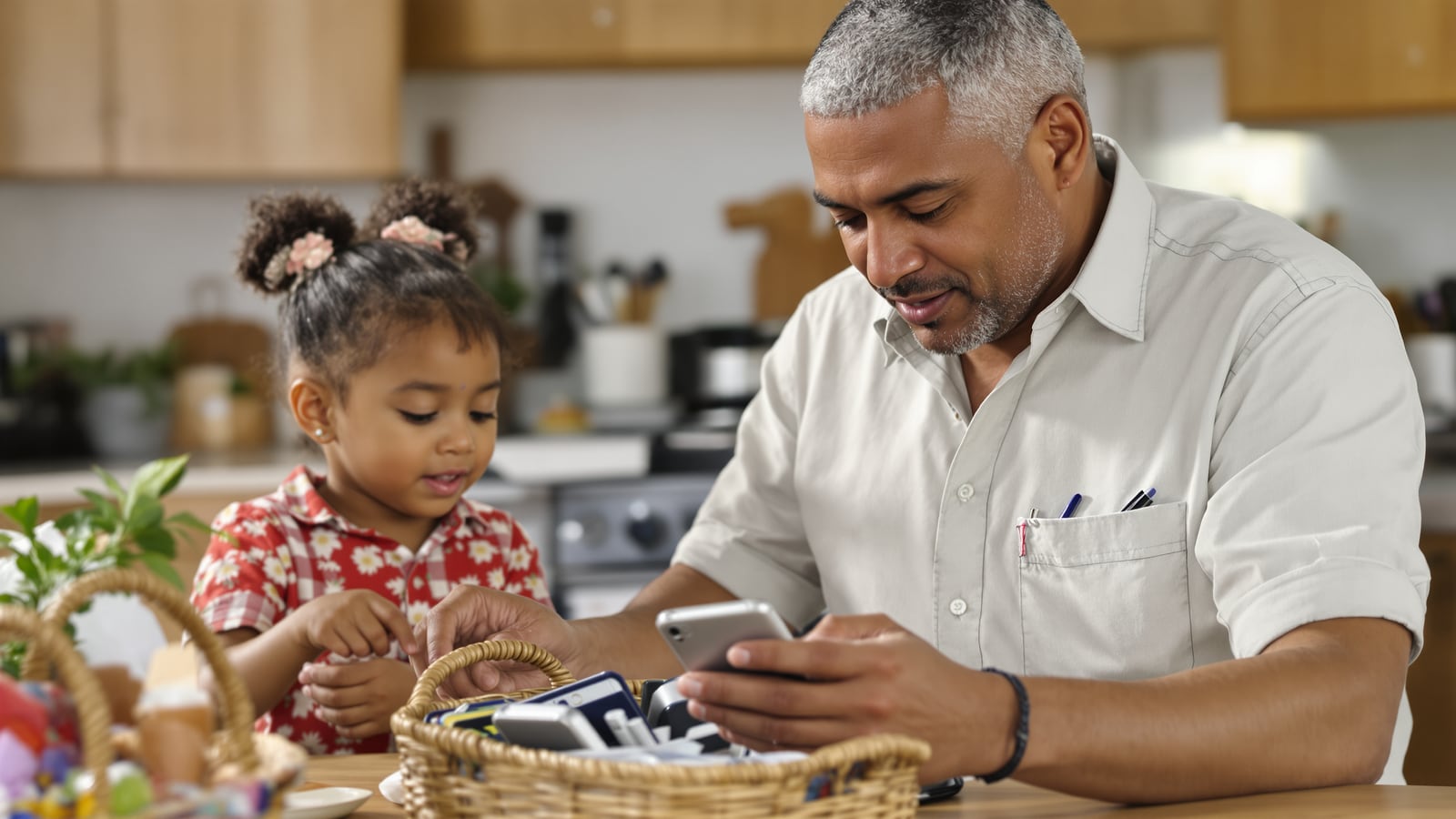
Quick answer: Set a fifteen-minute floor instead of a two-hour ideal. Put every phone in a basket before anyone sits, yours first. Ask questions that can't be answered with "fine."
By minute ten, your seven-year-old is sliding down his chair until only his eyes clear the table. Your twelve-year-old is answering in single syllables and looking at the spot where his phone usually sits. You've cooked, you're tired, and you're wondering why this was supposed to be the heart of family life.
It's supposed to be, and it can be. But the version most parents picture, everyone lingering, trading stories, laughing over dessert, is the ceiling. You don't start there. You start with a floor.
Pick a number and say it out loud
Tell the kids how long dinner lasts. "We sit for twenty minutes, then you can ask to be excused." Kids will stay for almost anything when they can see the end of it. It's the open-ended sitting that sends them under the table.
For a toddler, five to ten minutes in the same booster seat in the same spot is a real win. Let him go when he's done, but he leaves the table walking, and the food stays put. For ages five to eight, fifteen minutes. For nine to twelve, twenty to thirty, and watch how often they stretch it themselves once the conversation is worth it.
Now the honest part. Practice, work shifts and a Tuesday that fell apart will cost you some nights. Four dinners a week at the table beats seven planned and zero held. Pick the nights you can protect and protect them like an appointment.
Phones go in the basket, and yours go first
Get a basket or a drawer, and put it across the room from the table. Not face-down next to the plate. Out of reach, out of sight, and out of the corner of the eye.
Then comes the part that stings. If your rule is "no phones at dinner" and you glance at yours "just for the score," you don't have a family rule. You have a rule for kids. They'll spot that before you've put the phone back down.
Your twelve-year-old will argue. Don't debate it nightly. Say "Table's for people," and wait. You can be kind and immovable at the same time. That's the whole job.
If you're on call or expecting a real emergency, say so up front and keep the phone on the counter, not in your lap. Make it a rare exception your kids can see is rare. If you're still sorting out when a kid should have a phone at all, this piece on phone rules will help you set terms before the table becomes the battleground.
Retire "How was school?"
You know the answer. It's "Fine." Then silence, and you take another bite wondering where your kid went.
The question is too big and too easy to dodge. Ask something small and specific:
- Who did you sit with at lunch today?
- What was the funniest thing that happened?
- What was the hardest part of the day, and what was the best?
- What did you do at recess that you'd do again?
- If you could skip one class tomorrow, which one, and why?
Then do the thing most parents skip. Go first. Tell a story about your day, and make it a real one, including the part where you looked foolish. Tell them about the time you were fourteen and got cut from the team, or the meeting where you said the wrong thing to the wrong person. Kids copy what's modeled. A dad who admits he blew it on Thursday gets a son who can say the same on Friday.
And when something hard does come out, let it be heard before it's judged. If a kid confesses he lied, cheated on a quiz or broke something, how you react in the next ten seconds decides whether he ever tells you again. Save the consequences for later, away from the table. Teaching a kid to tell the truth when it costs him goes deeper on that moment.
Give everybody a job
People stay where they're needed. A kid with a task has a reason to be in the room.
A four-year-old can put out napkins and carry the unbreakable cups. An eight-year-old can set the whole table and fill water glasses. A twelve-year-old can cook one night a week, badly at first, and that night he picks the music and runs the dinner conversation. What your four, eight and twelve-year-old can actually do lays out what's realistic at each age so you're not asking too little or too much.
After the meal, everyone carries their own plate and somebody wipes the table. Leave it a little cleaner than you found it, and the kids learn that's just how you leave a room. They'll do it at a friend's house in ten years without being told.
One meal, and nobody's a short-order cook
You're serving your family. You aren't running a restaurant with six custom orders.
Cook one meal. Put one thing on the table you know every kid will eat, usually bread or fruit, and let that be the safety net. Use a "one bite" rule for new foods: one honest bite, no commentary, and no one's forced to finish. Everyone still sits for the full time, whether they eat or not. The table is about showing up. The food comes second.
Don't turn it into a standoff, and don't use dessert as a weapon. If a child refuses nearly everything, gags on textures, or you're worried about his weight or growth, that's a question for your pediatrician, not a dinner-table war.
When it falls apart
It will. Somebody will cry over the peas. Your teenager-in-training will roll his eyes so hard you'll hear it. You'll lose your temper and eat a cold casserole in a silent kitchen.
Show up the next night anyway. Same time, same chairs, same basket by the door.
Your kids won't remember the pot roast. They'll remember that every evening, somebody saved them a seat.
Sam Ortiz
Dads & Family
Father of three. Writes about presence, discipline and the long game, without pretending any of it's tidy.

Watch
Worth an hour of your evening
More from Boys & Girls.
From channels we rate. Plays on YouTube.
Read next