The first pocket knife is a lesson with a blade attached
Age is the weakest signal. Here's what a kid actually needs to show you first, and how to spend the first afternoon with a knife and a stick.
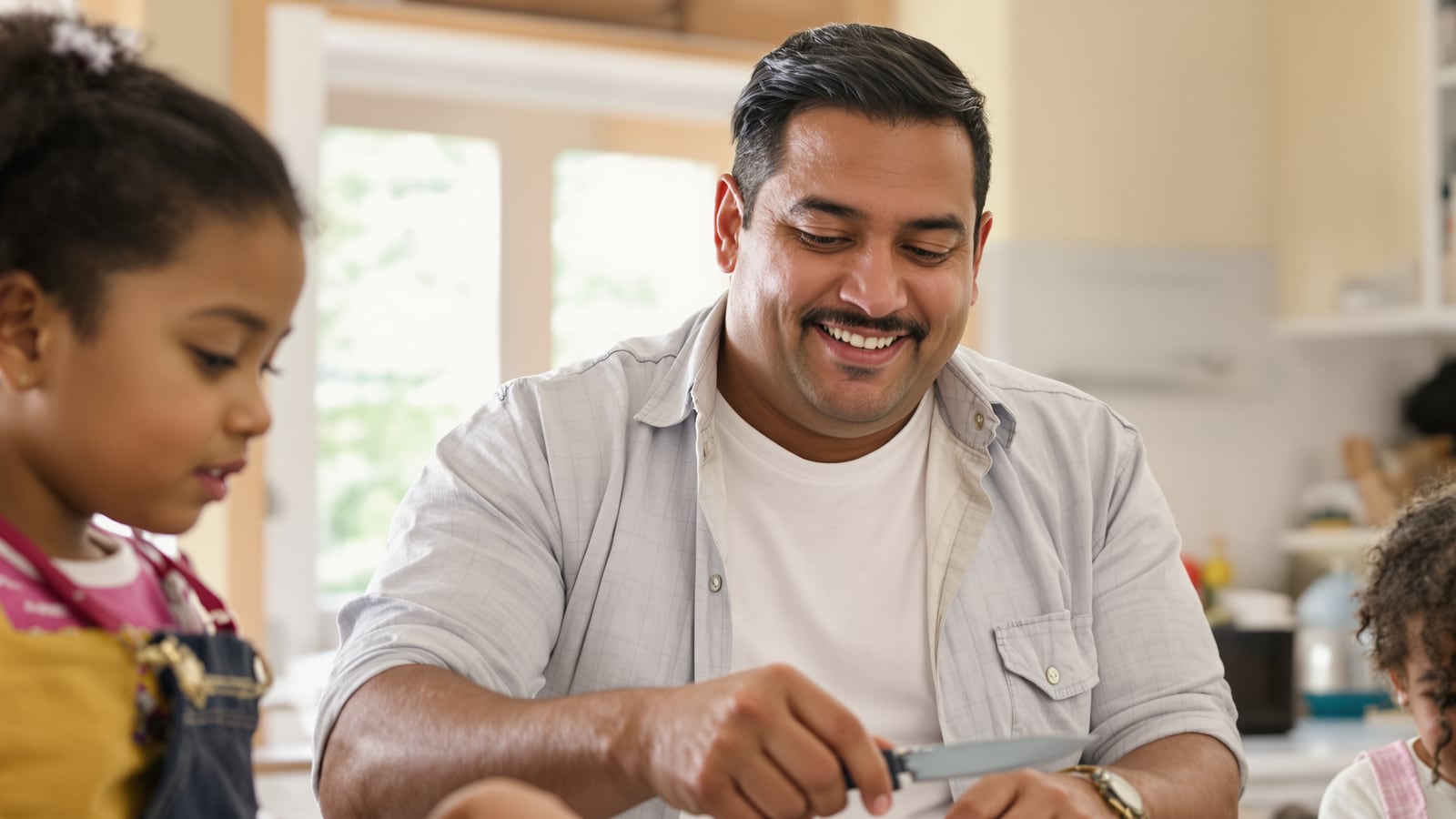
Quick answer: Most kids are ready somewhere between six and ten, but the number matters less than three things. He follows a rule when nobody's watching. He can sit still for twenty minutes. He tells you when he messes up. Start with a small knife, in your own yard, with you sitting beside him, cutting one stick.
A seven-year-old with a new knife and a dad in the next room is a bad plan. The same kid and the same knife, with Dad on the next stump, is one of the better afternoons of childhood. The knife didn't change. The setup did.
What ready actually looks like
Skip the birthday math. Watch for these.
Does he put tools back where they belong without being reminded? Does he handle the scissors, the hammer or the kitchen peeler carefully? When you say "stop," does he stop, or does he finish the one more thing first?
That last one decides it. A kid who needs three tries to stop isn't a bad kid. He's just not there yet, and waiting six months costs you nothing. Saying "not yet" to a kid who's pushing hard is a small act of backbone, and it's the kind he'll thank you for later. "Everybody in his class has one" isn't a reason. His readiness is.
If you want a measuring stick for what a kid can handle at different ages, What Your Four, Eight and Twelve Year Old Can Actually Do is a good companion.
Pick the knife
Small and plain wins. You want a blade a couple of inches long or less, with a rounded or blunt tip, like a sheepsfoot shape. It cuts wood fine and it's far worse at accidentally stabbing something. A small Swiss Army-style folder fits the description. So does any basic one-blade folder from a hardware store.
Two trade-offs are worth knowing.
A locking blade won't fold shut on his fingers mid-cut. But he has to learn to release the lock to close it, and small hands sometimes struggle with that. A non-locking slip-joint is easier to close and can fold if he pushes on the back of the blade. Either works. Pick one, and test it yourself first.
And don't buy a dull "kid-safe" knife. It's the opposite of safe. A dull blade makes a child push hard, and hard pushing is how a slip turns into a trip to urgent care. Sharp, small and controlled is the goal.
A cut-resistant glove on the hand that holds the wood is cheap insurance. It also tells him the edge is real.
The five rules, said out loud
Say them before the knife leaves the box. Make him say them back.
- Sit down. Nobody whittles standing up or walking around.
- Check the blood circle. Stretch an arm out and spin. Nobody and nothing inside that circle, himself included.
- Cut away. The blade moves away from his body and away from the hand holding the wood. Always.
- Closed means closed. The knife is folded when he's walking, talking or running. If he hands it to someone, it goes over closed, or handle first.
- Put it away when you're done. It doesn't get left on the grass, the table or the porch rail.
Scouting has used a version of this for generations. Their Totin' Chip card is earned by learning the rules, and break one and a corner gets clipped off. You don't need a card. But the idea is right: the knife is a privilege that comes with a code, and the code comes first.
The first afternoon
Keep it short. Thirty minutes is plenty.
Find a straight stick about as thick as his thumb. A green one from a maple or willow cuts easier than dry deadwood. A soft pine scrap works too. The job is a roasting stick: peel the bark off the last four inches, then shave it to a dull point.
Show him how to peel it like a vegetable peeler, short strokes, away from himself, thumb braced behind the stick. Then sit back and let him do it. Don't hover and don't grab. If something looks wrong, say "stop, and check your circle." Make him fix it himself.
Then build a small fire, or fire up the grill, and cook a hot dog on the stick he made. That's the whole lesson. The knife was just the way in.
It also makes a good first entry on a summer list. Twenty Summer Projects Kids Will Actually Finish has more of that kind of thing.
When he gets nicked
He probably will. Most kids do, sooner or later.
Stay calm, and I mean really calm, because your reaction decides whether he tells you next time. Rinse the cut, press on it with a clean cloth, bandage it. If it's deep, gaping or won't stop bleeding under firm pressure, that's a call to your pediatrician or a trip to urgent care. Not a judgment call for the backyard.
Then ask the real question: what was he doing right before it happened? Usually it's a broken rule, like cutting toward himself, or hurrying. Name it without a lecture.
If he rushed to hide it, that's the bigger problem. Teaching a Kid to Tell the Truth When It Costs Him Something is worth reading before this ever happens. A kid who reports his own mistake is safer with a blade than one who never makes any.
When the knife goes in your pocket
Break a rule, and the knife goes in your pocket for a week. No yelling. Say it flat: "Rule three. I'll hold it till next Saturday." Then give it back on Saturday and mean it.
Consistency matters more than severity. A mild consequence every time beats a harsh one once.
Know where it stays home
Most schools ban knives of any size, and so do plenty of places kids go, from sports facilities to government buildings. Laws about blades vary by state and by province, so check yours. Make it a rule that the knife lives at home, in the tackle box or in the camping bag, and goes with him only when you're with him on purpose.
Leave it sharper than he found it
This is the old code, and the knife is a good place to start teaching it. When the afternoon's done, he wipes the blade clean, dries it, puts one drop of oil on the joint, and puts it away. If he borrows yours, it comes back cleaner than it left.
Do that for a year and you won't need to talk about trust. You'll have watched it grow, one clean blade at a time.
Sam Ortiz
Dads & Family
Father of three. Writes about presence, discipline and the long game, without pretending any of it's tidy.

Watch
Worth an hour of your evening
More from Boys & Girls.
From channels we rate. Plays on YouTube.
Read next