

One swollen leg isn't something to sleep on
When one calf or ankle puffs up and the other doesn't, the cause matters more than the cosmetics. Here's how to check it and when to stop checking.
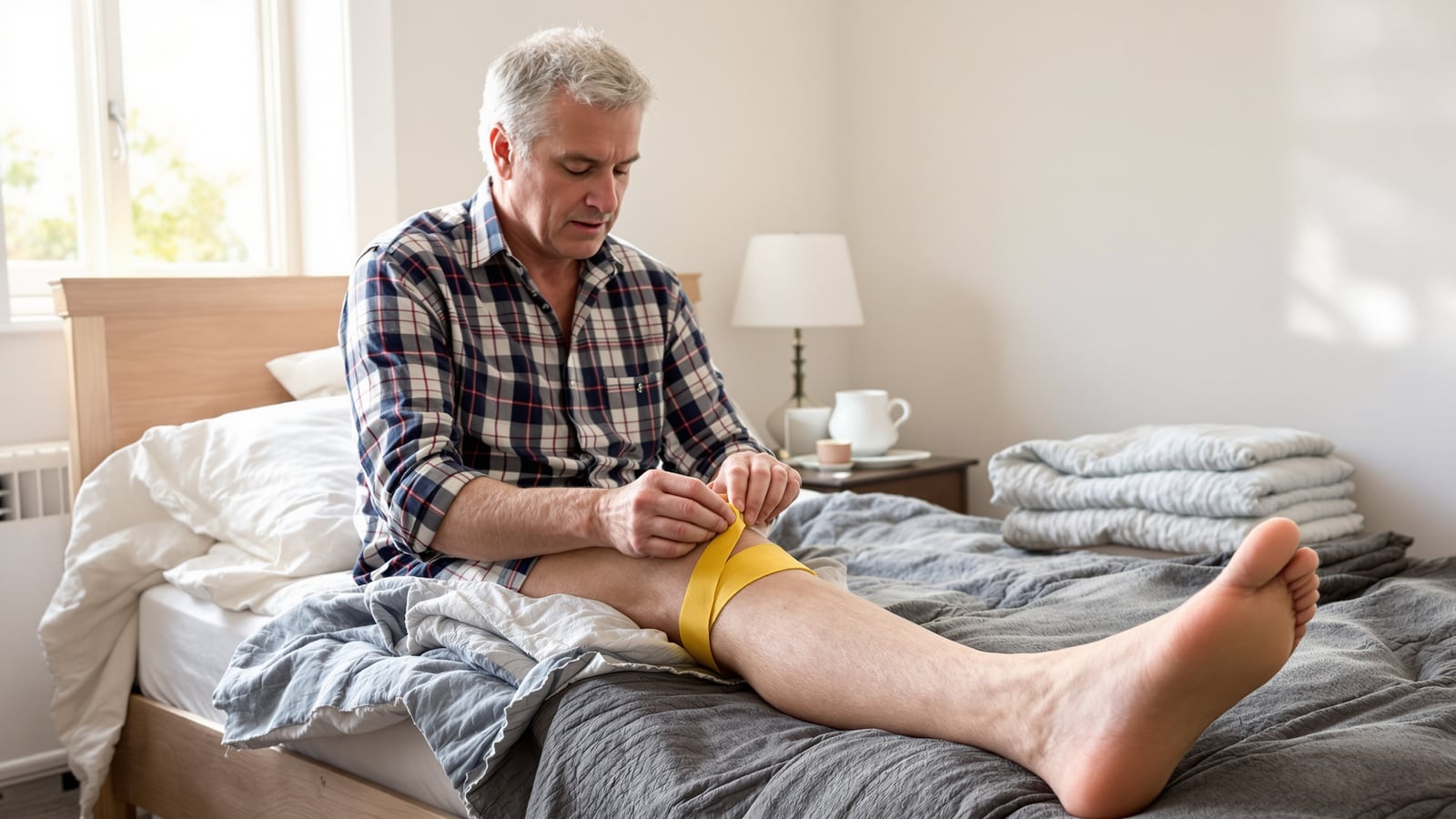
Quick answer: One leg swollen, the other normal, and it came on over hours or days? Get seen today, not next week. If you also have sudden shortness of breath or chest pain, skip the appointment and get to an emergency room.
Why one side is a different problem
Two puffy ankles after a long day on your feet usually point to something general. Salt, a hot afternoon, a medication, or a heart, kidney or liver issue your doctor should know about. That's worth a checkup, but it's rarely a same-day problem.
One leg is different. Your body doesn't swell one calf out of mood. Something local is going on in that leg, and one of the possibilities is a blood clot in a deep vein, called deep vein thrombosis, or DVT.
Most of the time a clot like that sits there and causes trouble in the leg. Sometimes a piece breaks off, travels to the lungs and blocks blood flow. That's a pulmonary embolism, and it's the reason this isn't a "wait and see" symptom.
The two-minute check
You can't diagnose this at home. You can gather what the doctor will ask for, and you can do it before you've finished your coffee.
- Compare, side by side. Sit down, bare both legs, and look at them next to each other. Ankle bones, calf shape, the skin over the shin. Is one leg visibly fuller?
- Measure. Take a soft tape and wrap each calf about four inches below the bottom of the kneecap. Write down both numbers. A gap of an inch or more is worth telling the doctor about. The number also beats "it looks kind of puffy" on a phone call.
- Feel gently. Is one calf warmer than the other? Tender when you press lightly along the back of it? Does the pain feel like a charley horse that won't quit?
- Check the skin. Redness, a reddish-purple tint, or veins that look more prominent on one side count. So does a firm, rope-like feel along the calf.
- Think back. Any injury in the last week? A long drive or flight? A surgery, a cast, a stretch in bed with the flu?
Then stop. Don't dig your thumb into the muscle, and don't massage it. If there's a clot in there, rubbing is the opposite of what you want.
Who ought to take it more seriously
A few situations raise the odds, and they're ordinary enough that people dismiss them:
- Long stretches of sitting. A nine-hour drive, a cross-country flight, a week of working from the couch with a bad knee.
- Recent surgery, a leg in a cast or brace, or a hospital stay.
- A previous clot, or a close relative who's had one.
- Cancer or cancer treatment.
- Pregnancy and the weeks after delivery, or hormone-based medication your doctor prescribed.
- Smoking. If that's you, the piece on what actually works when you quit tobacco is worth your time. This is one more reason.
- Older age and extra weight.
Notice what isn't on the list: being fit and young. Plenty of healthy people have had a clot after a long haul in a truck cab or a plane seat. Don't talk yourself out of it because you look the part.
The signs it may have reached the lungs
This is the part where you stop reading and move.
- Sudden shortness of breath you can't explain
- Sharp chest pain that gets worse when you breathe in
- A fast heartbeat, lightheadedness or fainting
- Coughing up blood
Any of those with a swollen leg means emergency care now. Don't drive yourself. Get someone else to take you, or get emergency medical help to come to you. Chest symptoms have their own rules, and what a heart attack actually feels like is a good read on why people lose time guessing.
What else it could be
Good news first: a lot of one-sided swelling isn't a clot.
- A strained calf muscle or twisted ankle. Usually there's a moment you can point to. Bruising often follows.
- Cellulitis. A skin infection. The leg is red, hot and tender, the redness may creep outward, and you may run a fever. It needs treatment too, usually antibiotics, so it's no reason to relax.
- A Baker's cyst. A fluid-filled pocket behind the knee that can leak down into the calf.
- Vein valve trouble or lymphatic problems. Slower, longer-running causes that your doctor can sort out.
- Pain from the back. Sometimes a leg that hurts is really a back problem. If it's pain without swelling, when to rest a bad back and when to get moving covers that ground.
Here's the annoying part. From the outside, a clot and a pulled muscle can look nearly identical. That's why even experienced doctors don't guess by eye. They test.
What the visit looks like
Expect questions first. When did it start? Any travel, surgery, injury, new medication? Then an exam of the leg.
The usual next step is an ultrasound of the leg veins. It's painless. A technician puts gel on the skin and moves a wand along the leg. You may also get a blood test called a D-dimer, which helps decide whether a clot is likely.
If a clot turns up, treatment is typically a blood-thinning medication, and plenty of people go home the same day. That's your doctor's call, and it depends on your history. Take what you're told seriously, including how long to stay on the medicine. Quitting early because you feel fine is how people end up back in the same chair.
Bring a short list: your tape measurements, when it started, every medication and supplement you take, and your recent travel or surgery. A thirty-second summary gets you better care than a ten-minute ramble.
Four mistakes that cost people
Waiting for morning. Swelling from a clot doesn't reliably go down overnight, and you won't know it's not going down until you've lost the time.
Stretching or massaging it out. Treat the leg like it's fragile until someone has looked at it.
Keeping it to yourself. Tell your wife or husband. Tell the person you live with. Somebody should know you're getting it checked and should be the one driving if the answer is bad.
Assuming you'd know a serious one. Many clots are quiet. Some people feel only a dull ache and a slightly bigger ankle.
If it turns out to be a pulled muscle, you've lost an hour and you've got a ruled-out answer. Take that trade every time.
Cal Brennan
Fitness
Strength coach. Trains fathers, tradesmen and desk workers, which means programs that survive a bad week.

Watch
Watch how it's done
Picked for this article.
From channels we rate. Plays on YouTube.
Dr Sumit Kapadia Vascular Surgeon
What If a Blood Clot Is Forming in Your Leg RIGHT NOW? (DVT Warning Signs)
Read next