

The Extra Pillow You Added Is Telling You Something
Breathless when you lie flat and better when you sit up? It's a classic sign doctors take seriously, and the fix starts with a checkup, not another pillow.
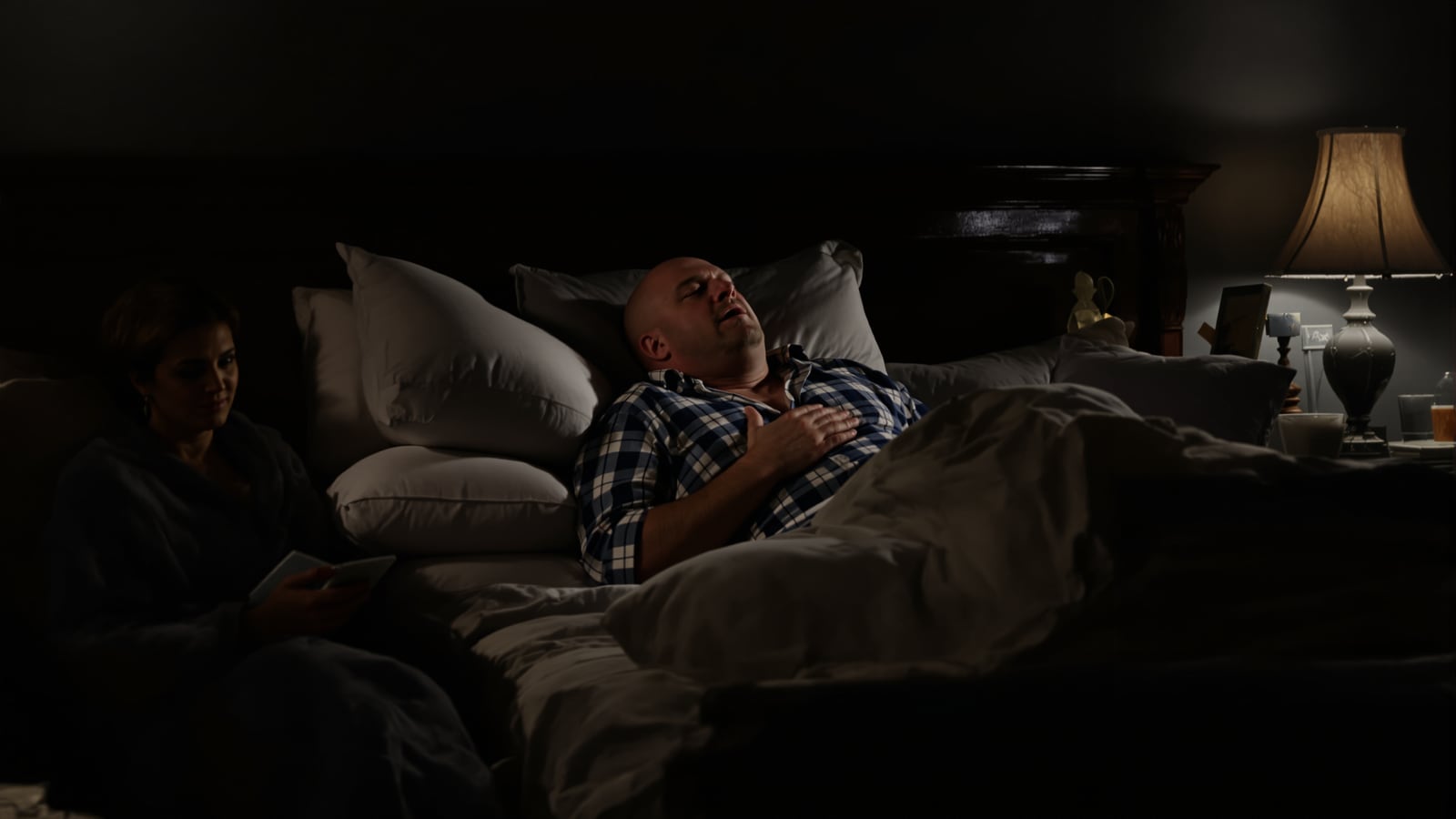
Quick answer: Breathlessness that shows up when you lie flat and eases when you sit up has a name, orthopnea. It's one of the classic signs of heart trouble, though lung problems, sleep apnea and other conditions can cause it too. Don't adapt to it. Get it checked. If it comes with chest pain, fainting, blue lips or struggling to speak, get emergency medical help right away.
The workaround is the tell
Nobody walks into a doctor's office and announces they've got orthopnea. They say they've been sleeping a little funny.
It starts with a second pillow. Then a third. Then a wedge from the drugstore. Eventually the recliner in the living room becomes the real bedroom, and the story at home is that the couch is just more comfortable these days. Your wife has noticed. You've told her it's your back.
Doctors actually ask about this. "How many pillows do you sleep on?" is a standard question, and "three-pillow orthopnea" is old medical shorthand for a reason. The number matters, and so does whether it has gone up.
If you've quietly rebuilt your sleep around a symptom, that's the symptom. Say it out loud to someone who can do something about it.
Why lying flat makes it worse
Standing or sitting, gravity pulls blood and fluid down toward your legs and belly. Lie down and that fluid redistributes. More blood comes back toward your chest, and your heart and lungs have to handle the extra load.
A healthy heart absorbs it without you noticing. A heart that's pumping weakly or stiffly can't keep up. Pressure backs up into the lungs, fluid seeps into the tissue, and the air has less room to move. Sit up, gravity pulls some of it back down, and you can breathe again.
That's the mechanism behind the heart-related version, which is why doctors treat this symptom seriously. It doesn't prove anything by itself. It does earn you an appointment.
A related pattern has its own name, paroxysmal nocturnal dyspnea. You fall asleep fine, then an hour or two later you wake up gasping, sit on the edge of the bed, maybe go stand at an open window. If that's happening, don't wait for your next routine physical.
What else it can be
The heart is the cause everyone should rule out first, but it isn't the only one. Your doctor will think about several.
- Lung disease. Asthma and COPD often flare at night or when you're flat. If you smoke or used to, this piece on quitting tobacco is worth your time, though quitting doesn't replace the exam.
- Sleep apnea. Gasping awake, loud snoring and daytime exhaustion point this way. It's common, treatable, and it puts its own strain on the heart.
- Acid reflux. Lying down lets stomach acid creep up. You'd usually also notice a sour taste, burning or a cough rather than pure breathlessness.
- Extra weight. Pounds on the chest and belly press up against the diaphragm when you're flat.
- Fluid elsewhere. Kidney problems, liver disease or fluid around the lungs can all show up this way.
- Anemia and other blood problems. Low red blood cell counts leave you short of breath with less effort.
- Anxiety. It can produce a real sensation of not getting enough air. It's a fair conclusion only after the physical causes have been checked, and stress doesn't stay in your head is a good read once they have.
A stuffy nose from a cold can also make a flat pillow miserable. The difference is that a cold passes in a week. This doesn't.
Signs that make it more urgent
Orthopnea alone deserves a prompt appointment. Pair it with any of these and the timeline shrinks.
- Swelling in your ankles, feet or lower legs, especially if your socks leave deep marks
- Weight creeping up over a few days with no change in how you eat
- Getting winded on stairs or a short walk you used to handle fine
- A dry, hacking cough that's worse at night
- Unusual fatigue, or needing to stop and rest mid-task
- A racing or irregular heartbeat
For people already diagnosed with heart failure, clinics commonly tell them to report a gain of about three pounds in a day or five in a week. That's a warning for people being monitored. If you haven't been diagnosed, it's still a good reason to step on the scale and note the trend.
Some signs mean stop reading and get help. Chest pain or pressure, fainting, lips or fingertips turning blue or gray, coughing up pink or frothy mucus, or being too breathless to finish a sentence. Don't drive yourself. Get emergency medical care right away. To see what the other emergency looks like, read what a heart attack actually feels like.
What the visit looks like
It's less dramatic than you're picturing. Expect questions first: when it started, how many pillows, whether you wake at night, whether you swell, what medications and supplements you take, how much you drink and smoke. Then a listen to your heart and lungs, a look at your neck veins and ankles, and a check of your blood pressure and oxygen level.
From there a doctor may order some mix of the following:
- A blood panel, which can include a marker that rises when the heart is under strain
- An ECG, which records your heart's electrical rhythm
- A chest X-ray
- An echocardiogram, an ultrasound of your heart that shows how well it pumps
None of it hurts. All of it is routine. Your doctor decides what applies to you, and that's the point of going.
If the answer turns out to be heart failure, that's not the end of the road. It's a condition managed every day with medication, salt and fluid changes, and regular follow-up, and people live full lives with it. Caught early it's far easier to manage than caught in an emergency room at 3 a.m.
Before you go
Spend a few nights gathering facts. Write down how many pillows you use now and how many you used a year ago. Note what time you wake up breathless, if you do. Weigh yourself each morning before breakfast and jot it down. Check your ankles at night. Bring your medication list, including the over-the-counter stuff.
Tell the doctor the recliner story. All of it. Doctors can work with a plain account of what you've been doing about it.
And bring your wife, or whoever shares your house, if they'll come. They've been listening to you breathe at night longer than you've been paying attention. They'll remember details you won't.
You wouldn't ignore a warning light on the dash just because the truck still runs. Your body has put one on.
Cal Brennan
Fitness
Strength coach. Trains fathers, tradesmen and desk workers, which means programs that survive a bad week.

Watch
Worth an hour of your evening
More from Health.
From channels we rate. Plays on YouTube.
Read next