

A small payment on the first of the month beats a big promise
You owe someone money or a favor you let slide. Paying it back slowly and on schedule rebuilds trust faster than any grand gesture.
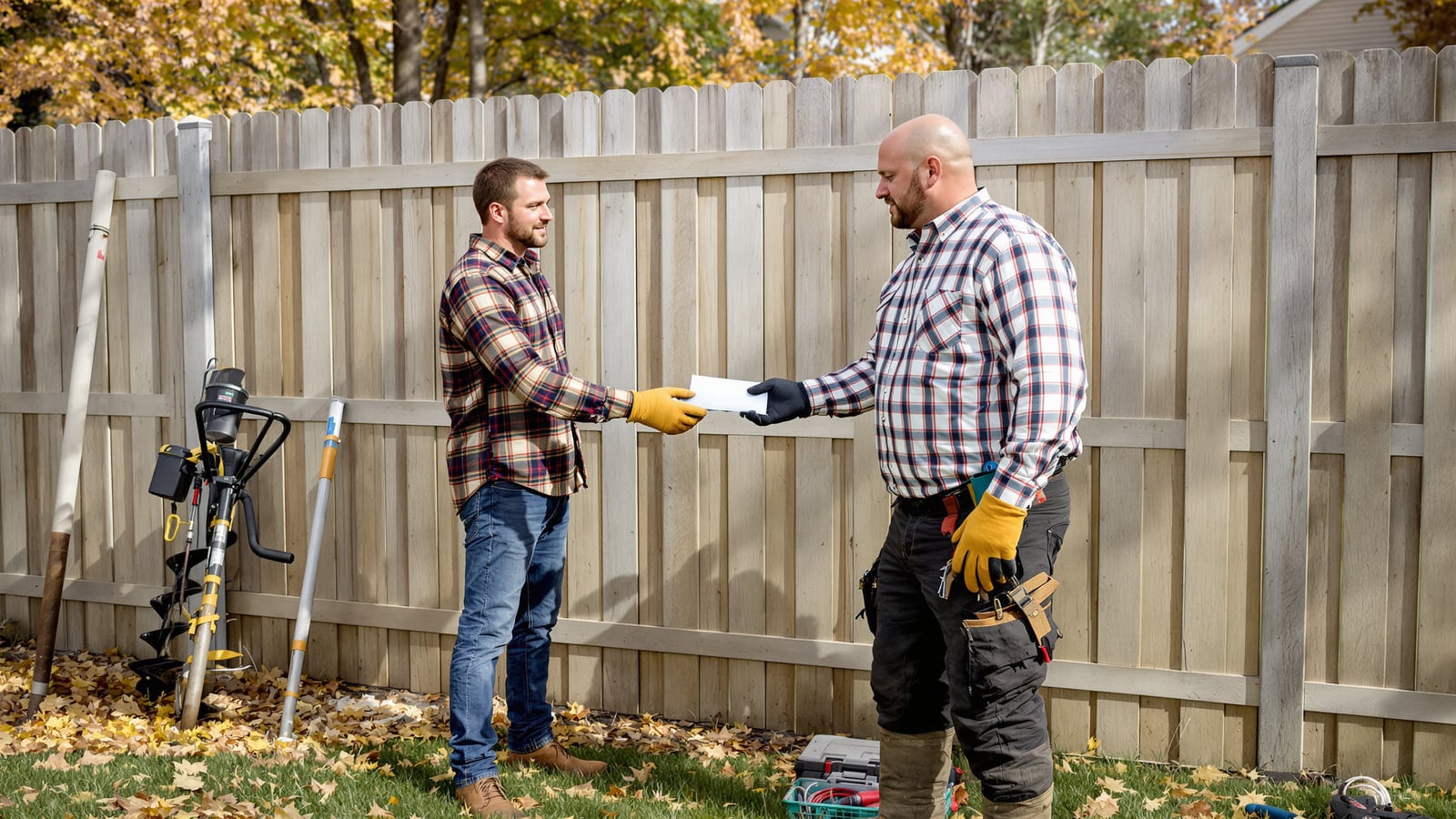
Quick answer: Pick a payment you can make in your worst month, set a date, and pay it early without being reminded. Trust comes back one on-time payment at a time. A speech doesn't bring it back, and neither does a lump sum that keeps getting pushed to "when things settle down."
The fantasy of the big payoff
Say you owe your brother-in-law $4,200. He fronted it when your transmission died, and you said you'd have it back by spring. It's now October. Neither of you mentions it at Thanksgiving, and both of you know exactly why the table is a little quiet.
Most men in that spot do the same thing. They wait for a bonus, a tax refund, or a good month, and they plan to show up one day with a check and a handshake. It's a nice picture. It also keeps the debt unpaid for as long as it takes the money to appear, and the money often doesn't appear.
Meanwhile the other man is doing math of his own. Not about the $4,200. About you.
What he's actually waiting for
A lender who's been let down isn't mostly worried about the cash. He's worried that your word doesn't mean much, and every month of silence supports that guess.
Trust is a prediction. It says "this man will do what he said." You can't argue someone into a prediction. You can only give them evidence, and evidence comes in small, dull, repeated pieces.
A hundred dollars on the first of the month, forty-two months running, is a better argument than one big check. Each payment is a small proof that you said a thing and did it. By the sixth month he's stopped wondering. By the twelfth, he may bring it up himself to tell you to knock it off and pay it down faster. That happens more often than you'd think, but don't count on it.
How to do it
Say it once, plainly. Call him or sit down with him. "I owe you $4,200. I let it drift and I'm sorry. I can do $100 a month starting the first, and I'll bump it when I can." No story about why it was hard. No asking him to understand. Say it, then stop talking.
Pick the number for your worst month. Not your average one. If $250 sounds generous but you'll miss it in February, say $100. A smaller payment you never miss beats a bigger one you skip twice. Missing is the whole thing you're trying to undo.
Take away the choice. Set up an automatic transfer or a calendar reminder for two days before the due date. Willpower is a bad plan for something you'll do for years. The same logic is behind why your last time management system quit on you: good intentions don't survive a busy week, and a default does.
Pay early, never late. If the first falls on a Sunday, pay Friday. Nobody asks you to. That's the point. An unasked-for early payment says more than ten promises.
Send a one-line note. "Sent this month's $100. $3,900 to go." Skip the commentary. It tells him the number is moving without making him feel like a bill collector.
Add when you can, and don't announce it. A tax refund lands, and the next payment is $600 instead of $100. A short text covers it. Don't ask for credit, and don't bring it up around other people.
When you're going to miss
You will, once, if the plan runs long enough. Transmissions fail, hours get cut, kids get sick.
Tell him before the due date, not after. "I can't make the full $100 on the first. I'll send $40 now and the rest by the fifteenth." Then do exactly that. A missed payment you warned him about is almost a deposit. One he has to chase is a withdrawal.
If the hole is bigger than a rough month, and you're juggling several debts, talk to a nonprofit credit counselor or a licensed professional about the whole picture. That's general advice, not a plan for your situation. But don't let your pride choose silence over a conversation.
The case where slow is wrong
If you have the money today, pay it today. Slow repayment is for the man who can't pay all at once, not for the one who'd rather keep his cash handy. Stretching out a debt you could clear in one afternoon is just a way of avoiding the awkward conversation, and the lender will see right through it.
Also, a debt isn't a leash. If the person you owe uses it to run your life, belittle you at every holiday, or demand a say in how you raise your kids, you can keep paying every dollar and still hold a line. Repay in full, with respect, and tell him calmly that the debt doesn't buy him your marriage or your decisions. Serving someone doesn't mean being run over by him.
It isn't only money
The same method works on things that don't have a dollar figure. You flaked on a friend's move. You missed a month of calls to your dad. You promised your wife you'd handle something around the house and it sat there until she did it herself.
You can't apologize those away in one conversation. You can pay them down. Show up early the next time he moves. Call your dad every Sunday at the same time until he stops being surprised. Fix the thing and then fix the next thing she hasn't asked about yet.
And give a little more back than you took. If he drove you to the airport, you drive him, and you bring coffee. If you borrowed his truck, you return it washed with a full tank, even if it came to you dirty and near empty. People remember the way you left a thing more than the way you took it.
Kids watch all of this, by the way. A son who sees his father quietly pay back a debt for three years learns more about a man's word than any lecture could teach him. How values actually pass down comes down to exactly this: kids copy what you do on the first of the month, not what you say at dinner.
The long way is the short way
The grand gesture feels faster. It isn't. It depends on one good day arriving, and most good days never turn up on schedule.
The slow way depends on something you control: whether you do the small thing again this month. If you can't decide how to start, How to Decide When Both Roads Look Right can help, but this one is simpler than most. Call him this week. Name the number. Pick the date.
Then be early on the first.
Cal Brennan
Fitness
Strength coach. Trains fathers, tradesmen and desk workers, which means programs that survive a bad week.

Watch
Worth an hour of your evening
More from Life.
From channels we rate. Plays on YouTube.
Read next