What your family does when you walk through the door
You won't feel yourself becoming the man your family needs. You'll see it in small, repeatable moments, and most of them happen before dinner.
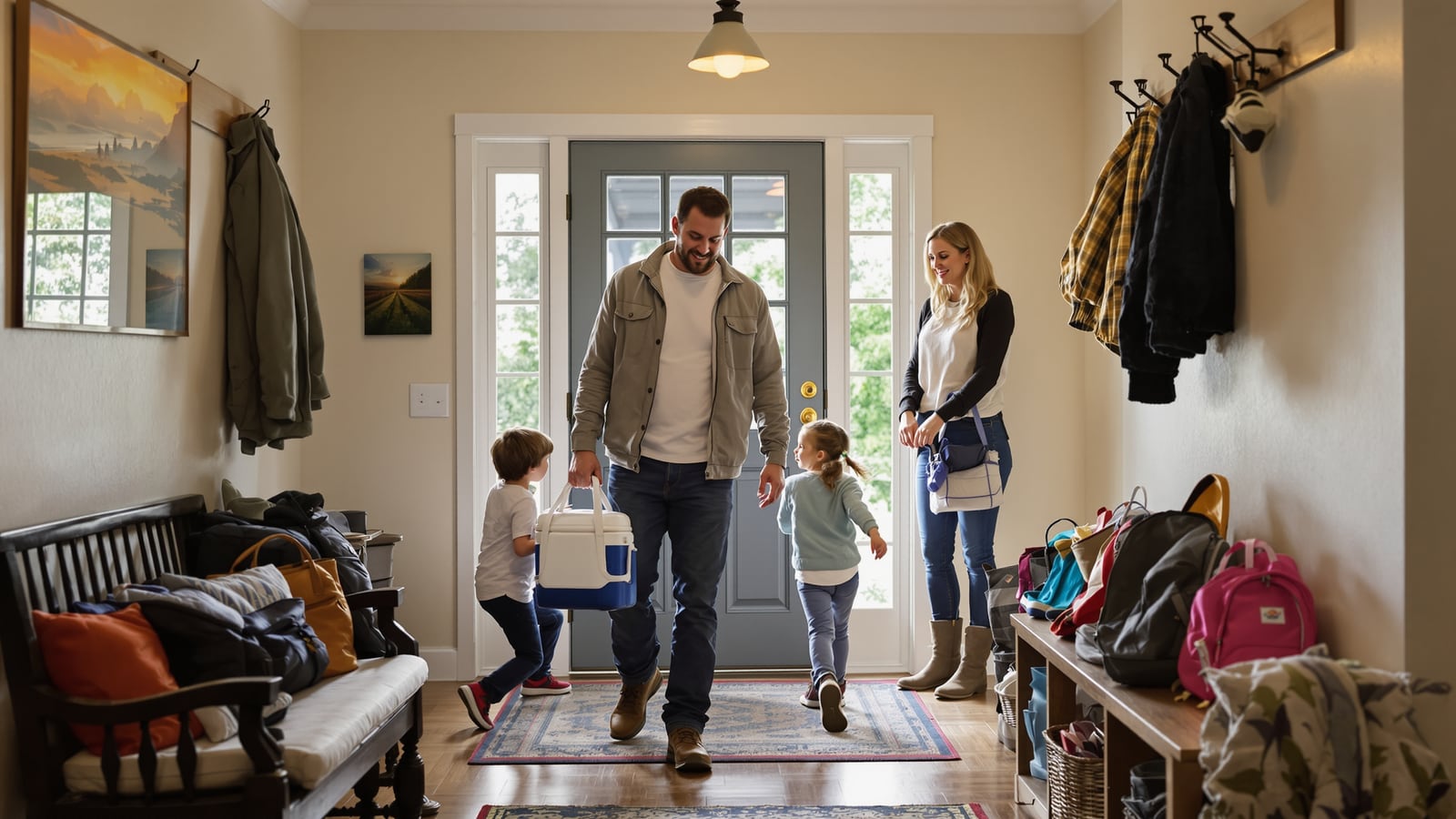
Quick answer: Stop grading yourself on income, effort or intentions. Watch how your family behaves around you in ordinary moments, and ask them two plain questions. The evidence is already there.
The driveway test
Tuesday, 6:40 p.m. The truck's in the driveway, the engine's off, and you've got about ten seconds before you open the door.
What happens in the next ninety seconds tells you more than your paycheck does. Does anybody's posture change? Do the kids drift toward you or toward their rooms? Does your wife look up with an open face, or does she do a quick read of your mood first, like checking the sky before hanging laundry?
That quick read is the thing to watch for. People don't do it to men they're afraid of, exactly. They do it to men whose weather they can't predict. A family can love you and still be forecasting you.
You won't feel the change when it comes. Nobody wakes up one morning and thinks, well, I'm steady now. You notice it the way you notice a kid has grown: by what used to be hard and isn't anymore.
Six things you can actually see
The bad news reaches you early. Your teenage daughter tells you about the fender-bender before her mother does. Your son admits he failed the quiz while there's still time to fix it. People bring problems to men who respond to the problem and not to the embarrassment. If you only hear about trouble after it's grown teeth, that's information about you, not about them.
Things get fixed before you're asked. The loose cabinet hinge. The oil change. The smoke detector that chirps at 2 a.m. and then gets ignored for three weeks. You don't have to be a handyman. You have to be the person who treats a house like it's your job to keep, and a family like it's yours to look after.
Your "no" is calm. Needed men say no a lot, and it doesn't cost the household an hour of recovery. No to the phone at the table. No to the party where you don't know the parents. No to the kid who's testing whether the bedtime is real. If your no comes out loud, it's usually because you're not sure it'll hold. If it comes out quiet and holds, they feel safer, even while they're complaining about it.
You apologize first, and short. "I was short with you this morning. That wasn't right." Eight seconds. No speech, no "but." Kids who watch this learn that a strong man can be wrong without falling apart. Wives who hear it learn they don't have to wait you out.
The house runs when you're gone. Take a three-day work trip. When you get back, was it chaos held together by your wife's willpower, or was it normal, just with one fewer chair at the table? A family that falls apart without you has been built around you, which feels like importance and is actually fragility. You're aiming to be missed, not required.
You're the same man in every room. The one who coaches Little League is the one who sits at the kitchen table. The voice you use on the phone with a customer isn't meaningfully different from the one you use on your kids. Children are expert detectors of this. They'll forgive a lot of mistakes. They won't forgive a performance.
The two questions
Signs are good. Asking is better.
Pick a quiet moment, not a fight and not a Sunday night when everyone's tired. Ask your wife: What's one thing I do that makes your week easier? What's one thing that makes it harder? Ask older kids the same, in their words.
Then the hard part. Don't defend yourself. Don't explain. Say "thank you" and write it down later if you have to. The first time you do this, you'll probably get a polite, safe answer. People who've been carefully managing you for a while don't believe the invitation right away. Ask again in a month. The answers get truer once they see what you do with the first ones.
Little kids give strange answers. "You make good pancakes" is a real answer. Take it. Pancakes are data.
When the signs say otherwise
Some of you read the list above and felt your stomach drop. Fine. Sit with it for a minute, then stop.
Seeing it's not a verdict. Most men who are good at this were bad at it recently, and the difference was that somebody they loved said one true thing and they didn't bristle. Nobody gets the report card and the transformation on the same day.
Pick one. Not six. If the bad news reaches you late, spend a month responding to the next piece of it with "thanks for telling me, let's fix it" and nothing else. If your apologies don't exist, make one this week. A single sign, repeated until it's boring, outperforms a dramatic resolution by about eleven months.
If you're running on fumes, that matters too. A man who sleeps six hours and scrolls till midnight isn't going to be patient at 6:40. Fixing the phone habit is often the cheapest thing you can do for your family. Take back the two hours your phone is quietly taking is a practical place to start.
The backbone part
Don't mistake any of this for becoming a pushover. The man your family needs serves them first, and he also holds the line.
He's the one who says the tablet stays out of the bedroom. He's the one who doesn't let anyone speak to his wife with contempt, including his own relatives, including at Thanksgiving. He'll take being disliked by a fourteen-year-old on a Friday night over being a stranger to that same kid at twenty-five. Service without a spine turns into a household where nobody's really led, and everybody feels it.
The test of the line is whether you hold it without turning cold. Firm on the rule, warm to the person. Those aren't opposites. They're the whole job.
Leave it better
One more habit worth stealing from the old code. Whatever you borrow, return better. Your wife's car? Bring it back with a full tank and a quick wipe of the dash, and say nothing about it. The kitchen after you cook? Cleaner than it was when you started. A friend's garage after you borrowed the ladder? Swept.
Do that long enough and it stops being a chore. It becomes how you move through a house, and your kids watch you do it more closely than they listen to anything you say. How values actually pass down, and what makes them stick gets into why that's so, and why habits usually beat speeches.
If you're stuck on a big family decision and both options look fine, How to Decide When Both Roads Look Right is worth ten minutes.
What it looks like when it's working
Nobody hands out a certificate. You won't get a card or a toast.
What you'll get is smaller. A daughter who tells you the truth the first time. A wife who stops checking the sky. A son who walks into the garage while you're working and just starts handing you tools.
Next Tuesday, sit in the truck for ten seconds. Then go in and see who looks up.
Cal Brennan
Fitness
Strength coach. Trains fathers, tradesmen and desk workers, which means programs that survive a bad week.

Watch
Worth an hour of your evening
More from Life.
From channels we rate. Plays on YouTube.
Read next