What Head of the House Looks Like at 6:40 on a Tuesday
Nobody's watching, nothing's on fire, and the dishwasher needs unloading. That's the night your leadership is actually decided.
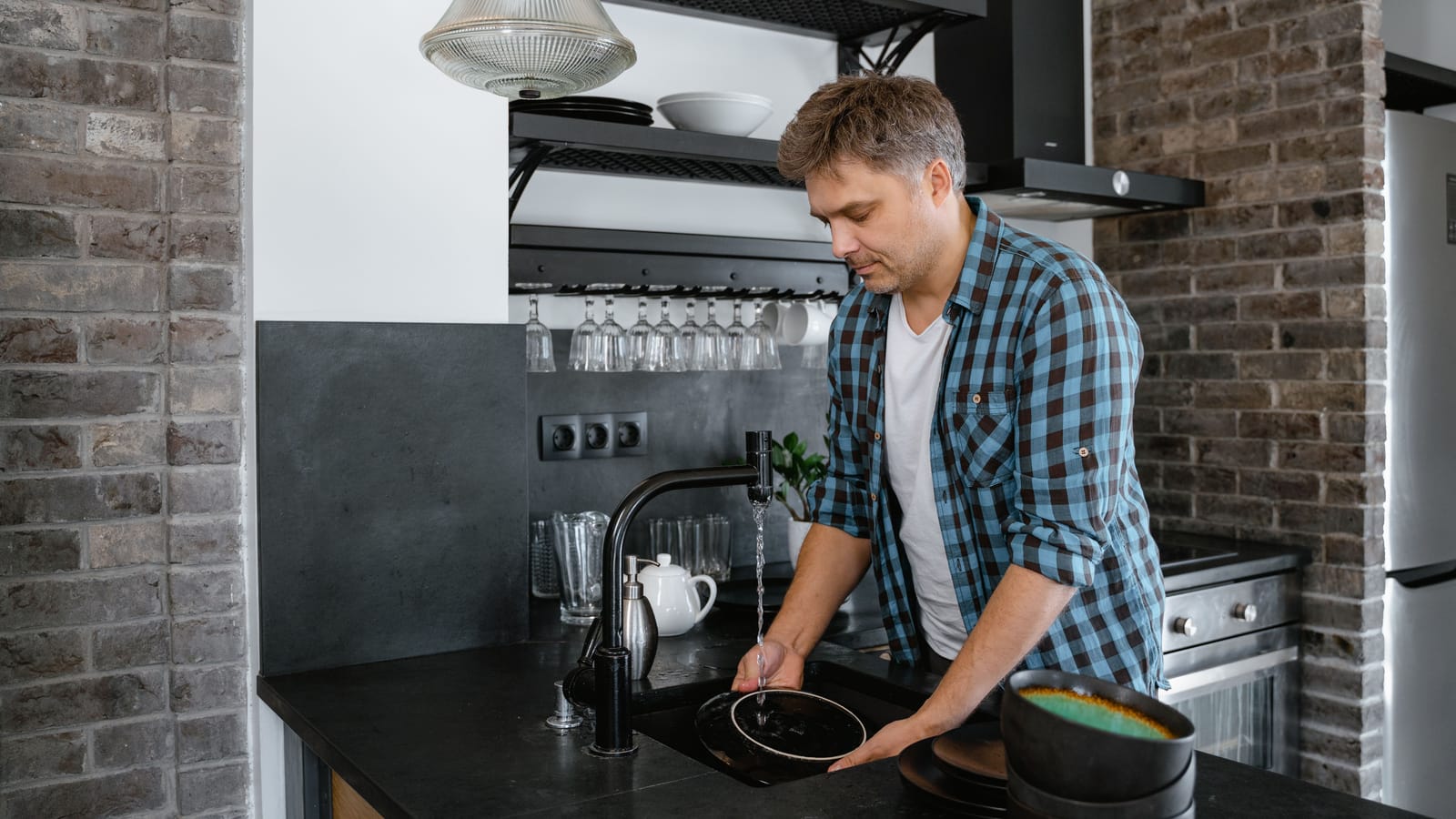
The dishwasher is the whole test.
Not the family meeting. Not the speech you'd give if the diagnosis came back bad, or the day your son gets cut from the team and you say the right thing in the truck. Those moments are rare and you'll probably rise to them, because men usually do when the stakes are obvious. The stakes on a Tuesday aren't obvious. That's the point. Tuesday is the night your wife finds out whether you meant it.
So let's walk one. Ordinary house, two or three kids, one job that ran long, a sink with the lunch containers still in it.
5:40 — the doorway
You get ninety seconds to decide what kind of night this is.
Whatever happened at work walks in with you unless you make it stay outside. Sit in the driveway for two minutes if you have to. Not a ritual, not a reset routine, just two minutes of not being the guy who got chewed out at 3:15.
Then go in loud enough that everybody knows you're home. Say a name. Touch your wife first, before the kids swarm you, even if it's four seconds and a hand on her back. That order matters more than anything else you'll do all evening, and the kids read it whether they can articulate it or not.
If you genuinely can't leave work outside because you're in a real crunch, say so out loud with a number attached. "I've got about forty minutes of stuff tonight and I'm going to do it after they're down." That's leadership. Walking in silent and distracted and making everybody guess what they did wrong isn't.
6:05 — the table
Dinner doesn't have to be good. It has to happen at a table with the TV off.
Your job at the table isn't to preside. It's to ask the second question. Everybody asks "how was school." The answer is "fine," and the conversation dies, and then you complain that your kids don't talk to you. Ask the second question. Who did you sit with. What was the hardest one on the test. Did Coach make you run again.
Then shut up and let it be quiet for a beat. Kids fill silence. Adults panic and fill it first.
Phones in a drawer, and yours goes in first. A rule you're exempt from isn't a rule, it's a preference you've enforced on smaller people.
6:40 — the dishes
Here's where most men lose the house, and they lose it politely.
You eat, you push back, you say something appreciative about the meal, and you go sit down. Nobody yells at you. Your wife clears the table. The kids scatter. You've just taught everyone in that room, by demonstration, that the work in this house sorts into "real" and "hers."
So stand up. Not to help. To do it. There's a difference between "what can I do" and unloading the dishwasher without being asked, and every wife alive can feel that difference from the next room. "What can I do" outsources the thinking to her. She's already carrying the list. Take an item off it permanently and own it forever. Dishes after dinner. Trash and recycling on Tuesday night before you sit down, because the truck comes early Wednesday and you will absolutely forget in the morning.
Servant leadership isn't a soft concept. It's mostly logistics. It's knowing where the spare toothpaste is.
7:15 — homework and the bath
The temptation here's to pick the easy kid.
Take the hard one. Take the third-grade math worksheet with the one problem that has him in tears, and don't do it for him, and don't lecture him about attitude while he's crying. Sit down, get low, and ask him to read the problem out loud. Half the time he solves it in the reading.
You'll want to say "this is easy." Never say that. You've just told him that easy things make him cry.
And when he gets it, don't throw a parade. Say "yeah, that's how you do it," and move to the next one. The calm is the reward. He's learning that hard things are survivable in the presence of a steady man, which is roughly the whole curriculum.
Meanwhile somebody's in the bath and somebody else has lost a shoe. Run the clock out loud. "Eight minutes till we're brushing teeth." Kids handle transitions fine when they can see them coming and terribly when they can't.
8:00 — bedtime is a hill
Bedtime falls apart because the adults negotiate.
Decide the time before you're tired. Then hold it, kindly, without raising your voice, for the fourth time in eleven minutes. The water glass, the bathroom, the sudden urgent memory about a field trip form. You answer the same way every time, in the same tone, and eventually the tank runs dry.
If you lose your temper, and you will, go back in. Sit on the edge of the bed and say the sentence: "I yelled. That was mine, not yours. I'm sorry." Then leave. Don't explain the provocation. The apology dies the second you attach a "but."
A man who apologizes to a seven-year-old isn't weakening his authority. He's showing the kid what the standard is when you're the one who missed it.
8:40 — the ten minutes nobody schedules
Your wife sits down and her shoulders drop about an inch.
Sit down too. Not in the other room. Not with the phone. Ten minutes, on the same couch, where she talks and you don't solve anything. Solving is your instinct and about sixty percent of the time it's the wrong move. If you can't tell which it is, ask: "Do you want me to fix this or just listen?" Sounds clinical the first time. By the third time it's just how you two talk.
Once a week, ask a bigger one. "What's the thing you're dreading this week?" Then take one piece of it. The insurance call she's been putting off. The parent-teacher email. Take it fully, and finish it, and don't announce that you finished it.
Put a date on the calendar while you're sitting there. Two weeks out, something cheap, something out of the house. A marriage that only ever meets at 8:40 on a Tuesday starts to feel like a shift handoff.
9:30 — last round
Walk the house.
Doors locked. Stove off. Lights that don't need to be on. Anything that needs to be secured, secured properly, every single night, no exceptions and no "I'll get it in the morning." If you keep a firearm in the home, this is where it gets confirmed locked and stored the way you decided it would be when you were calm and thinking clearly. A rule you follow only when you feel like it's a hobby.
Set the coffee. Look at tomorrow. Find the one thing that's going to go wrong at 7:10 a.m. and fix it now, while you're standing up anyway. Permission slip signed. Cleats by the door. Gas in her car if it's under a quarter tank, because you have time tonight and she won't have time in the morning.
The part that's actually hard
None of this is heroic, which is exactly why men skip it.
You want the leadership that comes with a moment. Standing between your family and something. Instead you get eleven years of taking out the trash on Tuesday, holding a bedtime you don't feel like holding, and asking a second question at a table where nobody thanked you for being there.
Do it for a year and you'll notice something strange. The house gets quieter. Not silent, just less friction. Your wife stops bracing for the evening. Your kids come find you when something's wrong instead of hiding it for three days.
You didn't earn that with a speech. You earned it at 6:40, standing at the dishwasher, when the game was on and nobody would have said a word if you'd sat down.
Marcus Vale
Editor-in-Chief
Twenty years in magazines, most of it deciding what to cut. Writes about work, discipline and the decisions that compound.

Watch
Watch how it's done
Picked for this article.
From channels we rate. Plays on YouTube.
Supernanny
Supernanny Coaches Parents Through Bedtime Routine | Supernanny
Read next