

Your spouse just owned up. What you do next sets the pattern.
When your husband or wife confesses a mistake you hadn't spotted, your reaction decides whether you hear the truth next time too.
Quick answer: Stay calm, thank them for telling you, and ask one question before you say anything else. Fix the problem as a team. Save any real consequences for a separate conversation, and don't bring it up again as ammunition.
The moment you didn't see coming
You're loading the dishwasher. Your wife says, "I need to tell you something. I paid the property tax late, and there's a $340 penalty."
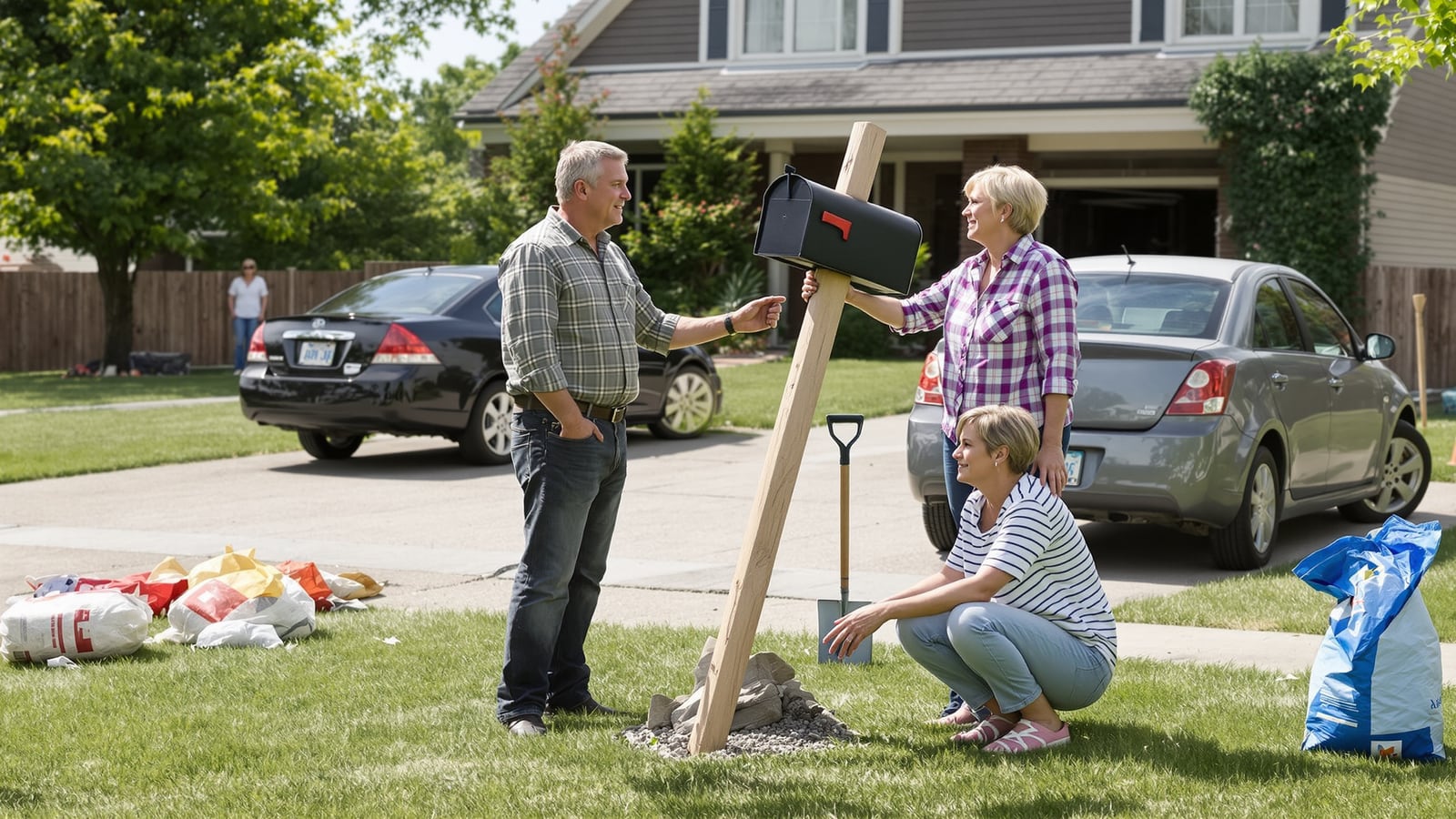
Or you're in the driveway and your husband says, "I backed into the mailbox. I'm sorry. I should've told you when it happened."
You hadn't noticed. You might not have noticed for weeks. They could have kept quiet, and they chose not to.
That choice is the most valuable thing you'll be handed all month. How you handle the next ten seconds decides whether you get another one.
Understand what just happened
Confessing costs something. Your spouse ran the numbers in their head before they spoke: how bad will this be, how long will it last, is it easier to stay quiet? They decided the truth was worth the risk.
Whatever you do next teaches them whether that was a good bet.
Meet a confession with a blowup and you've taught them that honesty gets punished. You won't stop mistakes that way. You'll only stop hearing about them. Most couples who end up hiding things from each other didn't start as liars. They got trained.
The first ten seconds
Say nothing until you've taken one slow breath. It feels awkward. Do it anyway.
Then say some version of this: "Thanks for telling me." Four words that carry weight. It doesn't mean the mistake was fine. It means the telling was right.
Then ask one question, and make it a real one: "How did it happen?" or "What do you need from me on this?" Not "How could you?" That isn't a question. It's a verdict with a question mark on it.
If you can't get there yet, say so: "I need a few minutes. I'm not mad that you told me. I just need to think." Walk to the garage, take a lap around the block, and come back. Coming back is the part that counts.
What kills the moment
Most spouses wreck a good confession in one of four ways.
- The "but." "I'm glad you told me, but I can't believe you'd do that." Everything before the "but" disappears.
- The instant audit. "Okay, what else haven't you told me?" You've just turned an act of honesty into a cross-examination. Next time they'll wait until they're sure they've got everything sorted first, and that means waiting longer.
- The scoreboard. "That's the second time this year." Maybe it is. If there's a pattern, it deserves its own conversation, at a calm hour. Don't dump it on someone in the middle of an apology.
- The long memory. You forgive in the kitchen on Tuesday and bring it up in an argument in March. That teaches your spouse that confessions never really close. They just go into a file.
The rules that keep a marriage argument from turning into a war apply here too. The big one: stay on the issue in front of you.
Fix the actual problem, together
Once the first reaction has settled, treat the mistake like a job on the farm or in the shop. Something broke. Who's going to fix it, and by when?
- Get the facts straight. What happened, what's the damage, what's the deadline?
- Split the work. The person who made the mistake usually takes the lead on fixing it. That's fair. But "together" means the other one doesn't stand back with arms crossed. Make the phone call with them. Sit next to them while they fill out the form.
- Write down the fix. If it's money, change how you handle it. If it's a missed date or a dropped task, decide who owns it from now on.
Take the property tax example. The fix isn't a lecture. It's a calendar reminder on both phones for the next due date and a decision about who pays the bill. Ten minutes of work, and the problem won't come back.
Consequences are not punishment
Here's where you don't have to be a pushover. Some mistakes carry real consequences, and a marriage built on honesty can admit that.
The difference is this. A consequence is tied to the problem and aimed at fixing it. A punishment is tied to your feelings and aimed at making the other person hurt.
If your husband spent money you'd both agreed to leave alone, a reasonable consequence is that the next purchase over a set amount gets discussed first. If your wife kept something from you that affected the family, a reasonable consequence is a standing check-in on that subject for a while. Both are specific, both have an end date, and both are said out loud.
Silent treatment, sarcasm and a week of cold shoulder aren't consequences. They're you making the house miserable and calling it accountability.
And if the mistake is part of a pattern, say so plainly and calmly, in a separate conversation: "This is the third time money's been hidden. I love you, and I can't run our house this way." That isn't cruelty. It's the backbone that keeps a marriage honest. Serve your spouse first, and hold the line while you do it.
Give back what they gave you
They told you the truth when they didn't have to. Return the favor.
If you've been sitting on something yourself, a purchase you shaded, a bad day at work you glossed over, a promise you let slide, now's a good time to bring it up. Confession spreads when it's rewarded. A house where one person says "I messed up" and the other says "so did I" is a house that stays honest.
There's a good guide on how to apologize to your wife and mean it, and it's worth reading from the other side too. When they apologize well, you can see what you're supposed to be doing when it's your turn.
When it's bigger than a mailbox
Not every confession is a late tax bill. If what you hear involves deception that cuts at the heart of the marriage, a serious secret, hidden debt, or a breach of trust that changes how you see your spouse, you don't have to handle it alone or in one evening. Take time. Get your feet under you. Then bring in a pastor or a licensed marriage counselor, someone with experience walking couples through it. How trust actually gets rebuilt after you break it lays out what that road looks like.
Addiction, abuse and crisis are a different category. They're not things a couple should try to fix across the kitchen table. See a pastor or licensed counselor, and get that help soon.
And safety comes first. If you're afraid of how your spouse will react to anything you say, or you're being hurt or controlled, get to a safe place, tell a parent, pastor or trusted adult, and contact local police if you're in danger. That isn't a marriage problem to be worked on later. It comes before everything in this article.
The long game
Two people can live together for forty years and never once say, "I got this wrong." Or they can build the kind of home where hard news gets said out loud, in the kitchen, on a Tuesday, without a flinch.
Every confession you receive well is a deposit in that account. Make a few of them, and the next hard thing gets said sooner, and costs less.
Say thank you. Fix the mailbox. Let it go.
Cal Brennan
Fitness
Strength coach. Trains fathers, tradesmen and desk workers, which means programs that survive a bad week.

Watch
Worth an hour of your evening
More from Marriage.
From channels we rate. Plays on YouTube.
Read next