The camera test for telling facts from feelings in the news
A reporter's adjectives can do more persuading than the facts. Here's a simple test for catching it, whichever side is doing it.
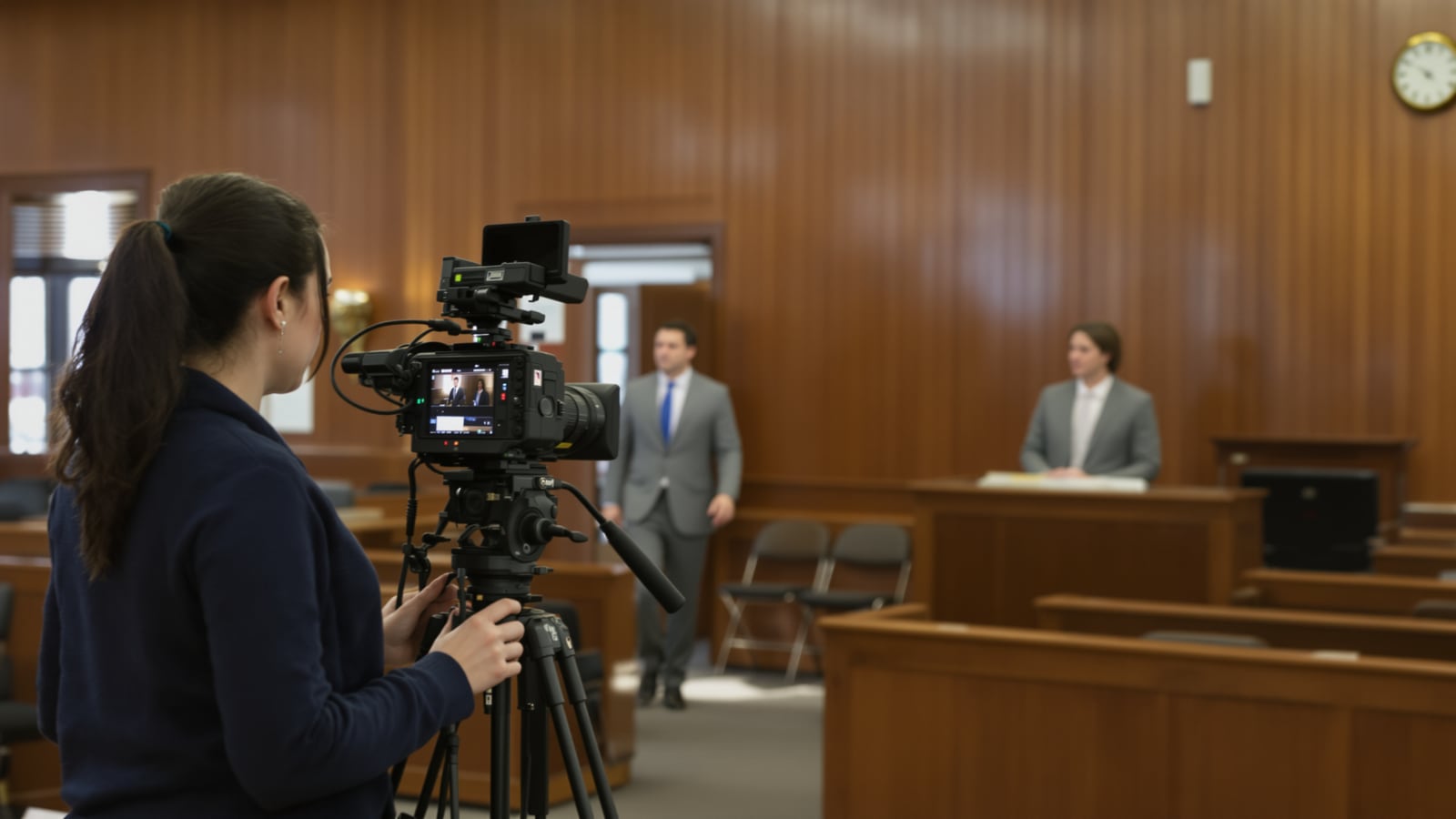
Quick answer: Ask whether a camera, a document or a counter could confirm the sentence. If it could, it's a fact. If it takes a mind to confirm it, it's a feeling, and you should ask whose.
The test
Take any sentence in a news story and picture a camera in the room. Could it record what the sentence says? Could a public record prove it? Could somebody count it?
Here are two sentences. I made them up for this piece, and they come from no outlet.
The mayor stormed out of the meeting, visibly furious.
The mayor left the meeting at 7:40, before the vote.
The second one is checkable. The first is a judgment dressed as an observation. Maybe she was furious. Maybe she had a dentist appointment and a short fuse about it. "Stormed" and "visibly furious" tell you what the writer wants you to feel about the mayor, and they spend your trust to do it.
The reporter did see something. The problem is that you can't see it, and the sentence skips the part where you'd decide for yourself.
Watch the adverbs and the verbs
Adverbs are the usual giveaway. "Defiantly." "Bitterly." "Quietly." "Predictably." Each one is the writer's opinion of how something was done, and no camera records an adverb.
Verbs are sneakier. Compare how one plain statement can be framed:
- The senator said the program was working.
- The senator claimed the program was working.
- The senator insisted the program was working.
- The senator admitted the program was working.
Only the first one is neutral. "Claimed" plants doubt. "Insisted" suggests he's protesting too much. "Admitted" implies he was caught. The facts are identical, and the reader walks away with four different impressions.
Headlines lean on this hardest. "Governor slams critics" and "Governor blasts reporters" almost never mean anyone was slammed or blasted. Somebody gave a sharp answer at a podium. Read the quote underneath and see whether it matches the verb up top. Often it doesn't.
Ask who is doing the feeling
"Voters are angry about the new tax." That sounds like a fact. It's a claim about the inner state of millions of people.
Ask what's behind it. A poll with a question, a sample size and a date? A dozen people interviewed outside one grocery store? One quote the reporter liked? Compare it with something like this, again my own invention:
Of the eleven people I spoke with outside the plant, seven said they'd vote against the measure. Four said they hadn't decided.
That's still feelings, but they're now attached to people, a place and a count. It's a fact about what people said, and you can weigh it for what it is. A small group in one parking lot tells you something, just not much. If you want to go deeper on reading numbers like these, the four questions an editor asks before a story runs is a good companion.
Catch the mind-reading
Some of the most common phrases in political coverage are claims about motive:
- "in a bid to shore up support"
- "seeking to distract from"
- "a move widely seen as"
- "critics say the timing is no accident"
No camera catches a motive. The writer may be right. Politicians do have motives, and sometimes they're obvious. But a motive is an inference, and an honest piece labels it as one, names who is making it, and gives you the evidence. "Widely seen as" is the tell. By whom? If the story can't name them, the reporter is the one doing the seeing.
Swap the party
This is the best single habit I know. When a sentence makes you nod along or bristle, swap the names. Make the governor a Democrat instead of a Republican, or the other way around. Replace the outlet you trust with the one you don't.
The governor, a Republican, defended the order in a combative press conference.
Now read it as the governor, a Democrat. If "combative" feels right in one and unfair in the other, the word is doing political work, not descriptive work. The test cuts both ways. Writers on the left slip adjectives into stories about people they dislike, and writers on the right do the same to people they distrust. Your own favorite outlet does it too, and that's the one you'll have the hardest time noticing.
A reader with real convictions should want this test most. If you hold your positions because they're true, they'll survive coverage that sticks to the record. If they only survive coverage that flatters them, that's worth knowing.
What the test doesn't say
Feelings belong in the news. A war story with no fear in it is a lie by omission. A report on a factory closing should tell you what it did to the town. Mood and color are fair game, and good reporters use them.
The difference is whether the reporter shows you or tells you. "The room went quiet when the numbers went up on the screen" is a scene, and you can picture it. "The room was devastated" is a verdict. The first lets you do the feeling. The second hands you one.
Fair attribution fixes a lot of this. "She told me she hadn't slept in two days" is a fact about what she said, and it's a legitimate way to carry emotion. The reporter hasn't claimed her state of mind as their own finding.
A ten-minute drill
Pick a story from this morning. Use one from an outlet you like, since that's where it's hardest. Print it or paste it somewhere you can mark it up.
- Underline every sentence a camera, a document or a counter could confirm.
- Circle every adverb, every loaded verb and every phrase like "widely seen as."
- Count each. Note how much of the story is left after the circles.
- Rewrite the three most loaded sentences in plain, checkable form. See whether the story still gets where it was going.
Some stories lose almost nothing. They were facts all along. Others shrink to a paragraph with a long cloud of mood around it. Neither result means the reporter is a bad person or that the underlying story is false. You've just learned what the piece is actually giving you.
Do it with a story from a source you distrust, too, and be fair about what survives. Then try it on a few of your own sentences the next time you describe an argument to your wife. Most of us editorialize in our retelling without noticing.
If a story falls apart under the test, it's also worth seeing how that outlet handles its own mistakes. And if the habit works for you, teach it at home. Dinner-table news talk goes a lot better when somebody at the table can say, "That's what the paper thinks. What did they actually see?"
The best reporters show you the receipt and leave the verdict to you. When you find one, subscribe.
Marcus Vale
Editor-in-Chief
Twenty years in magazines, most of it deciding what to cut. Writes about work, discipline and the decisions that compound.

Watch
Worth an hour of your evening
More from Media Literacy.
From channels we rate. Plays on YouTube.
Read next