

When the story changes and nobody tells you
Outlets rewrite stories after publication all the time. Here's how to catch a quiet retreat from the original claim and judge whether it was earned.
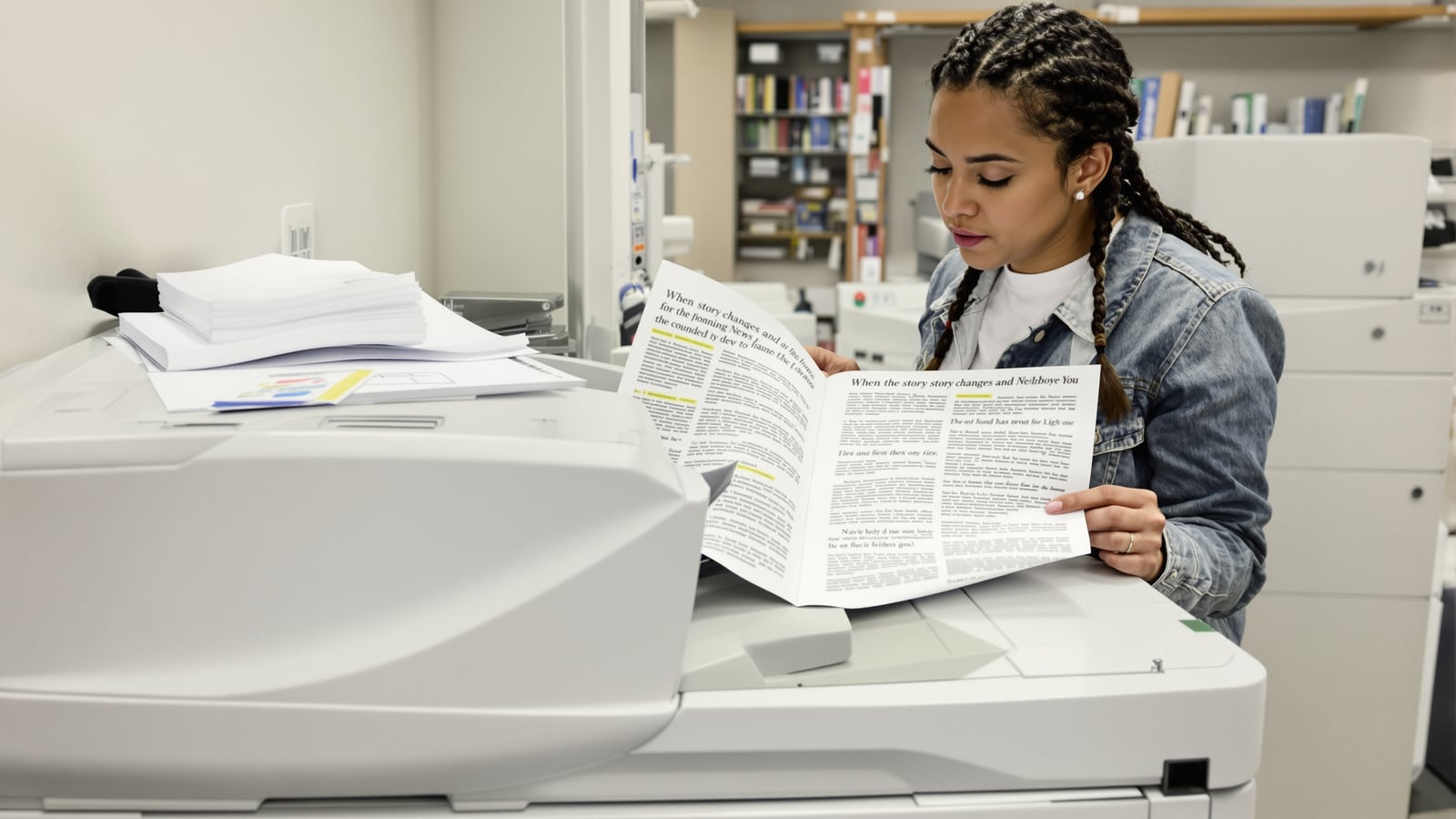
Quick answer: Compare the headline on the page with the web address, then pull up the earliest saved copy in the Wayback Machine. If the claim got weaker and there's no note saying why, the outlet changed its story without telling you.
Start with the web address
Open any news story and look at the URL. Many publishing systems build the address from the headline at the moment of first publication, and they don't rewrite it when the headline changes.
So you'll sometimes see an address that ends in something like "officials-blame-police-for-shooting" above a page headline that now reads "Questions Remain Over Shooting." That mismatch is a fingerprint. It doesn't prove anything about motive. It tells you the headline was edited and gives you the first draft's wording for free.
Also check the browser tab. The tab title sometimes lags behind the headline too.
Pull up the earlier version
Paste the story's address into the Internet Archive's Wayback Machine (web.archive.org). It keeps dated snapshots of many pages, and big news stories get captured often. Pick a snapshot from the first hours and compare it to the live page.
If there's no snapshot, try archive.today. And if you're reading something heated right now, save it yourself. The Wayback Machine has a "Save Page Now" box. It takes ten seconds and gives you a dated copy nobody can edit.
Paste both versions into any free text-compare tool and it will highlight every changed word. That's faster than reading two long articles side by side, and it keeps you honest about what actually moved.
Learn the verbs that slide
Softening usually happens in a few small places. Watch for these:
- Verbs of certainty become verbs of doubt. "Confirmed" turns into "said." "Admitted" turns into "acknowledged." "Killed" turns into "died." "Revealed" turns into "claimed."
- Attribution appears. A flat statement of fact becomes "according to officials" or "Palestinian health officials say." That one can be a legitimate fix. More on that below.
- Hedges get added. "Reportedly," "allegedly," "appears to," "what some described as."
- The subject disappears. "Police shot a man" becomes "A man was shot." Passive voice removes the actor, and the actor is usually the point.
- The number shrinks or turns into a range. "Hundreds" becomes "a number of people."
The reverse happens too. Language also hardens in updates, and "alleged" can quietly drop away. Run the same check in both directions.
The headline moves last, if it moves at all
Here's a pattern worth knowing. The body of a story often gets corrected while the headline, the push alert and the social post stay as written. The headline is what most people see. The correction lives in paragraph nine, where fewer readers ever look.
So check all four places: headline, first paragraph, the body, and the outlet's own posts on social media. If the social post still carries the original claim and the article doesn't, the outlet knows the claim got weaker and let the stronger version keep traveling.
Softening can be the right call
Don't treat every softened sentence as a cover-up. Sometimes the first draft overreached and the update is the story getting honest.
Take the October 2023 explosion at Al-Ahli hospital in Gaza City. Early headlines at several major outlets, including the New York Times, put the blame on an Israeli strike, resting largely on claims from the Hamas-run health ministry. Later assessments from the U.S. and others pointed to a failed rocket launch from inside Gaza. The Times revised its coverage and ran an editors' note saying its early reporting leaned too heavily on Hamas's claims and hadn't made clear those claims couldn't be verified.
The softer language was correct. An unverified claim from a party to the conflict shouldn't sit in a headline as fact. The thing worth crediting was that the editors said so out loud. The thing worth noting was that the strong version went around the world first.
The 2019 Covington Catholic story ran the same way. Early coverage leaned on a short viral clip. Longer footage complicated the picture, and several major outlets rewrote their stories. Again the updated language was more accurate, and again the first claim had gone out faster than the checking.
Ask two questions of every change
Once you've spotted a change, sort it with two questions.
Did the facts change, or only the tone? If new evidence arrived, such as longer video, a document or a named source, then a retreat in language is just reporting. If nothing new arrived and the claim simply got quieter, something else is going on. Maybe a lawyer called. Maybe the story drew pushback. Maybe the original was thin. You can't know which from the outside, so don't pretend to.
Did they tell you? A real update has a timestamp, a line saying what changed and why, and ideally the original wording quoted. A stealth edit has none of these. The outlets worth trusting are the ones that treat the change as something the reader is owed. We went through how to tell them apart in How to Tell Which Outlets Actually Own Their Mistakes.
Put those together and you get four outcomes:
- New facts, disclosed: normal journalism.
- New facts, not disclosed: sloppy but probably fine.
- No new facts, disclosed: the outlet owned a weak call.
- No new facts, not disclosed: that's the one to remember when the outlet's next big claim lands.
Hold your own side to the same test
Commentary: Conservatives have more reason than most to run this check. Covington taught a lot of us how a strong first draft can do its damage before the longer video arrives. But the discipline only means something if you apply it when your own side does the editing. A friendly outlet that quietly walks back a claim that flattered you has done exactly what the other side's outlet did. The same goes for a post a favorite commentator deletes and replaces. Screenshot the first one, and then judge it the way you'd judge anyone else's.
Go after the practice and the institution. Don't assume you know what's in a reporter's heart. Most edits are made by a tired person at a desk fixing something under deadline, and some of those people get it right.
What to do with what you find
Keep it narrow. Don't write "they covered it up." Write what you can show: "The 9:14 a.m. version said X. The 2:40 p.m. version says Y. No note explains the change." Link both archive copies. That sentence is accurate, it's checkable, and it can't be waved away.
If you're going to share the story, share the version that matches the evidence and say it was updated. If you shared the first one, fix that too. Own your own edits the way you want the outlet to own theirs.
And weigh it going forward. One quiet change is a data point. A pattern of strong openings and silent retreats tells you how that outlet treats its first draft, and how much weight its next breaking-news headline deserves. For the sourcing behind those first drafts, see When an Anonymous Source Is Worth Believing, and When It Isn't, and for the habits editors use before a story runs, The four questions an editor asks before a story runs.
The first version of a story is a claim. The last version is a claim too. What happened in between is the part you're not supposed to notice, so go and look.
Marcus Vale
Editor-in-Chief
Twenty years in magazines, most of it deciding what to cut. Writes about work, discipline and the decisions that compound.

Watch
Worth an hour of your evening
More from Media Literacy.
From channels we rate. Plays on YouTube.
Read next