Go to your sergeant first, and know when not to
The NCO support channel is how a unit actually gets fixed. Here's how to use it, how to lean on it as a family, and when to go around it.
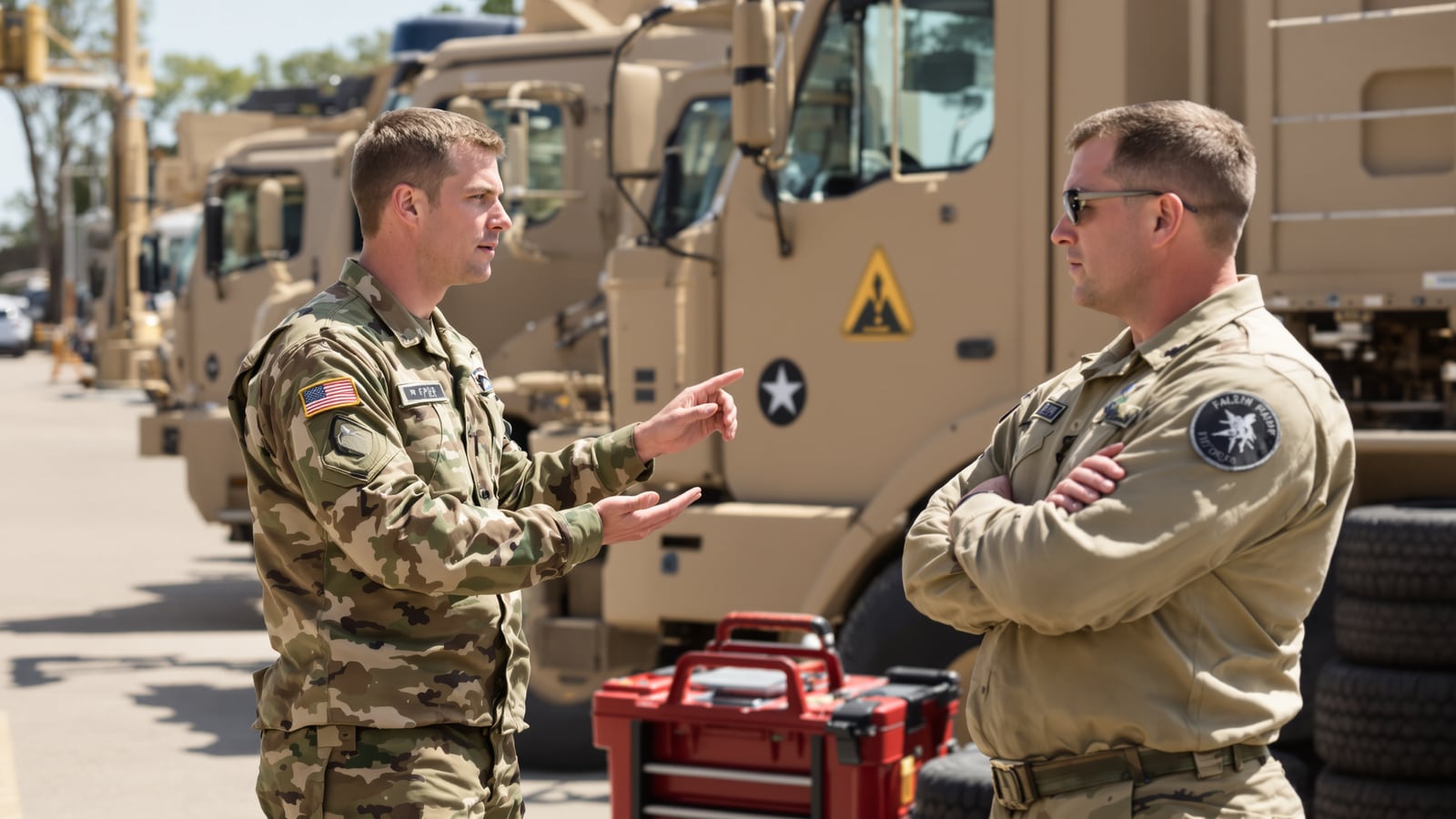
Quick answer: Take problems to the NCO directly above you, early, with facts and a proposed fix. The channel exists to solve things at the lowest level. It isn't the only door, though. Some problems are protected by law and policy, and you're allowed to walk straight through those doors.
Two lines on the same chart
Most new service members learn the chain of command in the first week. Private, team leader, squad leader, platoon leader, commander, and on up. That line carries authority. Orders move down it. Decisions get made in it.
The NCO support channel runs beside it. In the Army it goes from the team leader through the squad leader and platoon sergeant to the first sergeant, then up to the command sergeant major at battalion level and above. It doesn't give orders in place of the commander. It carries them out. It handles the daily work of making sure soldiers are trained, equipped, housed, squared away and looked after, and it carries information both directions.
Think of the commander as deciding what the unit does. The NCOs make sure Private Smith can actually do it, has his gear, and showed up on time with his head on straight.
The vocabulary changes by service. The Marine Corps splits its sergeants into NCOs and staff NCOs. The Navy leans on its chiefs. The Air Force has its own enlisted tiers and professional schools. The idea is the same everywhere: a corps of experienced enlisted leaders who own the individual. Your service's current regulations spell out the details. In the Army, start with AR 600-20 on command policy and ADP 6-22 on leadership.
Why it works the way it does
A captain might have a hundred and fifty people. She can't know which one's truck died, whose wife just started a night shift, or who's sleeping in the barracks lounge. A team leader with four soldiers can know all of it by Tuesday.
That's the design. Problems get caught where they're small and the person closest to them can still do something. A sergeant who hears about a pay issue on day three can have it with finance by day four. A commander who hears about it on day forty, from the soldier's angry father-in-law, has a mess.
It also builds the leaders. A specialist who learns to run a team learns to run a squad, then a platoon. Nobody has to invent that ladder. It's the oldest working apprenticeship in the country.
How to use it well
Say you're a private and your car just failed inspection with two weeks until rent is due. Here's the order that works:
- Tell your team leader that day. Not at the end of the week. Not after you've already missed a formation.
- Bring the facts. The dollar amount, the date, what you've already tried.
- Bring one idea. "I think I need a short-term loan from the relief society. Can you point me to the right person?" beats "I don't know what to do."
- Ask for one specific thing. An hour to go to the office. A ride. A name.
- Report back. Close the loop. A sergeant who watches you follow through will go to bat for you the next time.
The mistake that costs people the most is skipping the line. Going to the first sergeant or the commander over your team leader's head, on something your team leader could've handled, tells everyone you don't trust the person whose job is to help you. It also leaves that NCO blindsided in front of the people above him. You'll get an answer. You'll also get a reputation.
The second mistake is hiding it. Almost nothing a young soldier brings to a sergeant is new to that sergeant. They've seen the debt, the bad breakup, the DUI that almost happened. What they can't stand is finding out late.
If you're the NCO
You're the one carrying the weight. Some habits that separate the sergeants people remember from the ones they don't:
- Know your people's situations: spouse, kids, car, bills, the thing they're quietly dreading.
- Fix what's in your reach. Escalate what isn't, and tell the soldier you did.
- Never promise what you can't deliver. "I'll find out" is a complete answer.
- Hold the standard when it's inconvenient. The soldier who gets away with it today is your problem tomorrow.
- Say thank you in public and correct in private.
Corporals and sergeants often get promoted for being excellent soldiers, then handed a team with no manual for people. If that's you, find an older NCO you respect and ask how he'd handle the next hard conversation. Most will talk for an hour.
For families
The channel isn't just for the soldier. A spouse who's worried about a deployment schedule, a housing problem, or a family emergency can call the unit's family readiness contacts. In many units the first sergeant's spouse or the rear detachment leadership is the first call. Know the names before you need them.
If your spouse is deployed or on a long field exercise, the rear detachment is built for exactly this. Programs differ by unit and service, so ask your spouse's NCO at the start of the cycle, not in the middle of a crisis. For more on keeping a home steady while someone's gone, read What Holds a Marriage Together Through a Deployment.
Military OneSource is the official all-purpose line for families: 800-342-9647, or militaryonesource.mil. It covers counseling, financial help, relocation and more.
When to go around it
The channel is the default. It isn't a cage. Some situations should never wait for a sergeant's permission, and some can't safely go through the chain at all, especially if the problem is the person in it.
- Inspector General. For complaints about unfair treatment, abuse of authority or violations of regulation. You don't need permission, and you shouldn't be punished for asking.
- Equal opportunity and sexual harassment or assault response offices. Every installation has them. The DoD Safe Helpline is 877-995-5247.
- Medical and behavioral health. You can go on your own. A sergeant can encourage you, but he doesn't gatekeep your care.
- Legal assistance. Free help with wills, leases, powers of attorney and similar matters. Ask at your installation's legal office.
- Chaplains. They provide confidential counseling to anyone, whatever your background.
- Military Crisis Line. Dial 988, then press 1. Any hour, any day.
- Your member of Congress. A last resort, and it can bruise relationships. But it exists.
If an NCO is the problem, the rest of the channel above him is still there, and so are the options on this list. Using them isn't disloyalty. Covering for abuse is.
What it teaches you
A decade in this system teaches things civilians pay consultants to say. Own the people under you. Don't surprise the person over you. Fix it at the lowest level. Bring a solution with the problem. Show up before you're asked.
All of it carries into the civilian world, though nobody will hand you the language for it. When you start building a resume, turn your record into something a civilian hiring manager can read, and don't underrate "supervised five people and their gear" because it didn't come with a title. If you're still a year or two out, the 18 months before you take off the uniform is the place to start. And if you're not in yet, what to do in the 90 days before basic will tell you what your first sergeant is going to expect.
When you leave, the channel doesn't follow you. That's the loss nobody warns you about. The sergeant who knew your business is gone, and nobody's checking on you anymore.
So go be that for somebody.
Ade Fisher
Young Men
Teaches the trades intake at a community college. Writes the manual he wishes his students arrived with.

Watch
Worth an hour of your evening
More from Military & Vets.
From channels we rate. Plays on YouTube.
Read next