

Your ID card won't survive separation. Your DD-214 has to.
The active-duty card goes back the day you out-process. The paper and cards that open civilian doors are the ones you set up before you walk out.
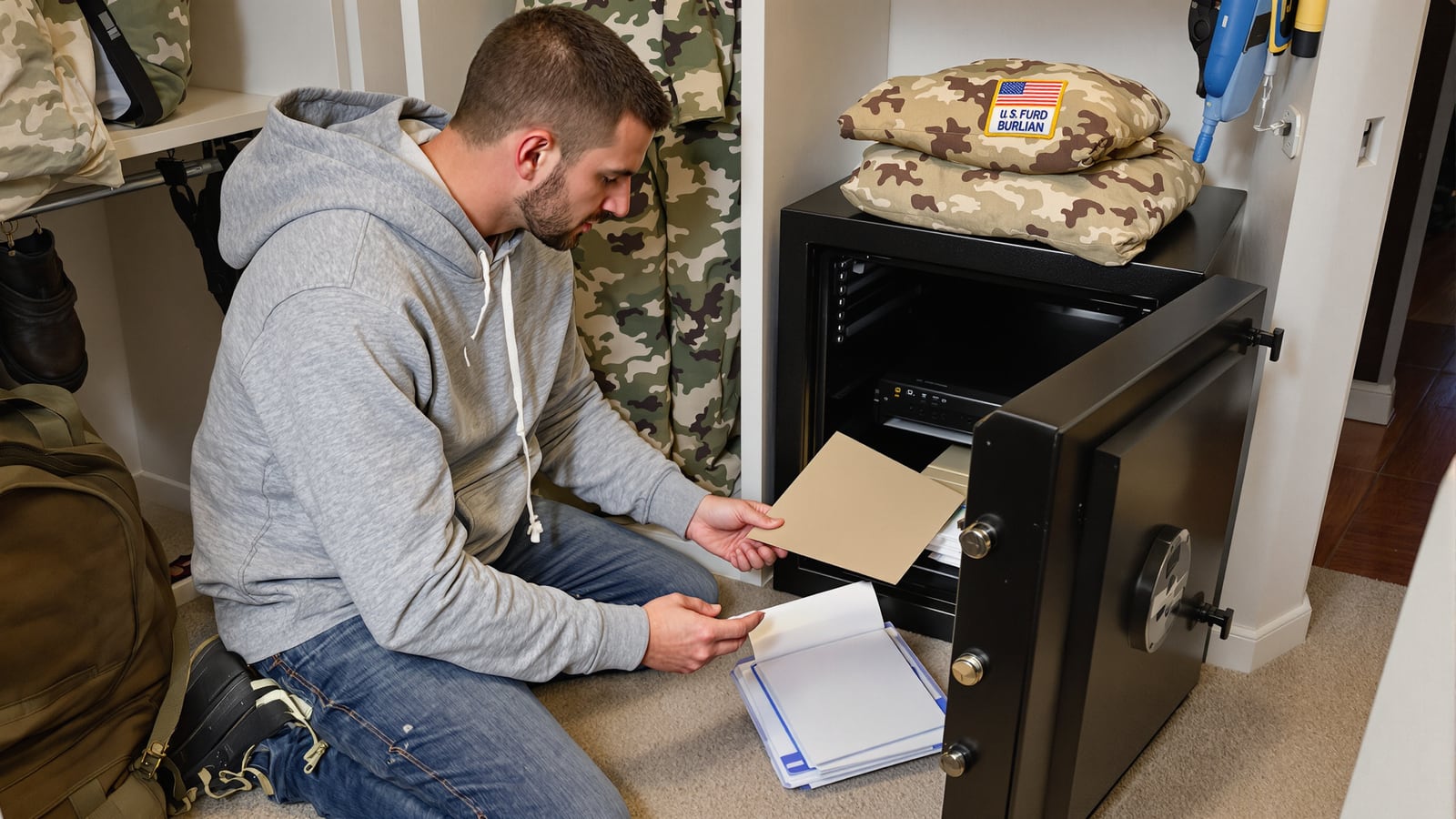
Quick answer: Your active-duty ID gets turned in when you separate. What opens doors afterward is your DD-214, a VA-issued Veteran ID Card if you qualify, and a veteran marking on your state license. Get all three squared away before you need them.
The card has an expiration date
You've carried it for years. It gets you on base, into the commissary, past the gate guard and into a doctor's office. Then on your last day somebody behind a counter takes it, or cuts it, and hands you a folder.
That's the surprise nobody puts in the briefing. The card you think of as "my military ID" doesn't come with you. Retirees keep a card of their own, and so do some Guard and Reserve members, and that's a different situation with different rules. For everyone else, the plastic stays at the out-processing center.
So when civilians say a military ID opens doors, what they really mean is proof of service opens doors. You'll need new proof, and you'll need to carry it correctly.
The paper that does the work
The DD-214 is the one that counts. It lists your dates of service, your job, your awards and training, and your character of service. Employers who hire veterans ask for it. The VA asks for it. Federal hiring offices ask for it before they'll apply veterans' preference, which gives eligible veterans extra consideration and, in some cases, points added to an application score. Your state veterans office will ask for it too.
Read it before you sign it. Check your dates, your rank, your awards and your specialty line by line. A missing medal or a wrong date is a ten-minute fix with a clerk standing in front of you. After you leave, it's a correction process that can take months. Your separation counselor can tell you how corrections work.
Then do the dull things that save you later:
- Scan it. Keep a copy in cloud storage you control and another on a thumb drive.
- Keep the original somewhere fireproof, not in the truck's glove box.
- Ask your county recorder whether they'll record it. Many counties do, often for free, and it leaves an official copy on file that you can pull whenever you need it.
- Don't post it online or hand it to a stranger. Older versions carry a Social Security number, and even newer ones carry plenty you'd rather keep private.
If you lose it, the National Archives handles replacement requests for military records. It's slower than you'd like, so don't plan on getting a copy the week you need it.
The card that replaces the card
The VA issues a Veteran ID Card, free, as proof of service. You apply through VA.gov. Eligibility depends on your service and your discharge, so check the VA's page before assuming.
Know what it is and what it isn't. It's a photo ID that shows you served, handy for the retailers, restaurants and employers who offer veteran discounts and don't want to see a DD-214 at the register. It isn't a benefits card, and it doesn't replace the health care card the VA issues if you're enrolled.
A lot of businesses now verify through online services instead of looking at plastic, so you may end up using a login more than a card. Either way, the proof traces back to the same record.
Put it on your driver's license
Most states will mark "Veteran" on your driver's license or state ID. You bring your DD-214 to the DMV once, and from then on the proof is in your wallet where it belongs, and you aren't carrying a document that shouldn't leave the house.
Rules and fees differ by state, so check your state DMV's site. This is the cheapest upgrade on the list. It takes one trip and an hour of your Tuesday.
What the proof actually buys you
Be realistic here. A card won't get you hired. It gets you a first conversation, and sometimes a better one than the next applicant gets, because plenty of hiring managers know what a veteran has already been through: showing up, finishing the task, being accountable for people and equipment.
Where it carries real weight:
- Federal jobs. Veterans' preference is law. You apply through USAJOBS and attach the right copy of your DD-214, the one showing your character of service. Disabled veterans may need additional paperwork, so read the announcement closely.
- Veteran-owned business status. If you start your own company, the Small Business Administration runs the verification process for veteran-owned small businesses. That status matters for certain contracts, and you apply through the SBA.
- Employers who recruit veterans on purpose. They'll ask for proof of service. Having it ready is the difference between a quick yes and a two-week email chain.
The Department of Labor's veterans employment office and your state workforce agency can point you to local programs. They're official, and they cost nothing.
Don't wave it around
Your record opens the door. Your résumé decides whether you walk through it, and a résumé full of unit acronyms won't help anybody. Turning Your Military Record Into a Resume Civilians Can Read walks through translating the work.
Interviews go the same way. Mention your service the way you'd mention any job: what you did, what you were responsible for, what you learned. Leave out the war stories. Nobody hires a man because he flashed a card, and plenty of people have lost the room by treating service like a coupon.
Discounts are a thank-you, so take them gracefully. If a place doesn't offer one, don't ask twice.
Do it while you still have a paycheck
Timing is the whole game. The best window to fix your paperwork is while you're still in, with a unit that can sign things and a counselor down the hall. What to Do in the 18 Months Before You Take Off the Uniform lays out that runway. If you're retiring, What Military Retirement Pay Actually Comes To covers the money side, since your retiree card and your pay both depend on clean records.
A short checklist for the last month:
- Review your DD-214 line by line and fix errors before you sign.
- Get several copies and scan one the same day.
- Apply for your Veteran ID Card on VA.gov.
- Visit the DMV about the veteran marking on your license.
- Ask the county recorder about recording your DD-214.
- Write down where every copy lives, and tell your spouse.
The plastic goes back to the Army, Navy, Air Force, Marines or Coast Guard. The service stays yours, and it only opens doors for the man who can prove it in under a minute.
Ade Fisher
Young Men
Teaches the trades intake at a community college. Writes the manual he wishes his students arrived with.

Watch
Worth an hour of your evening
More from Military & Vets.
From channels we rate. Plays on YouTube.
Read next