

The people who watched you work are your network
A deployment gives you months of proof of how you act under pressure. Turn it into people who'll vouch for you when you're home.
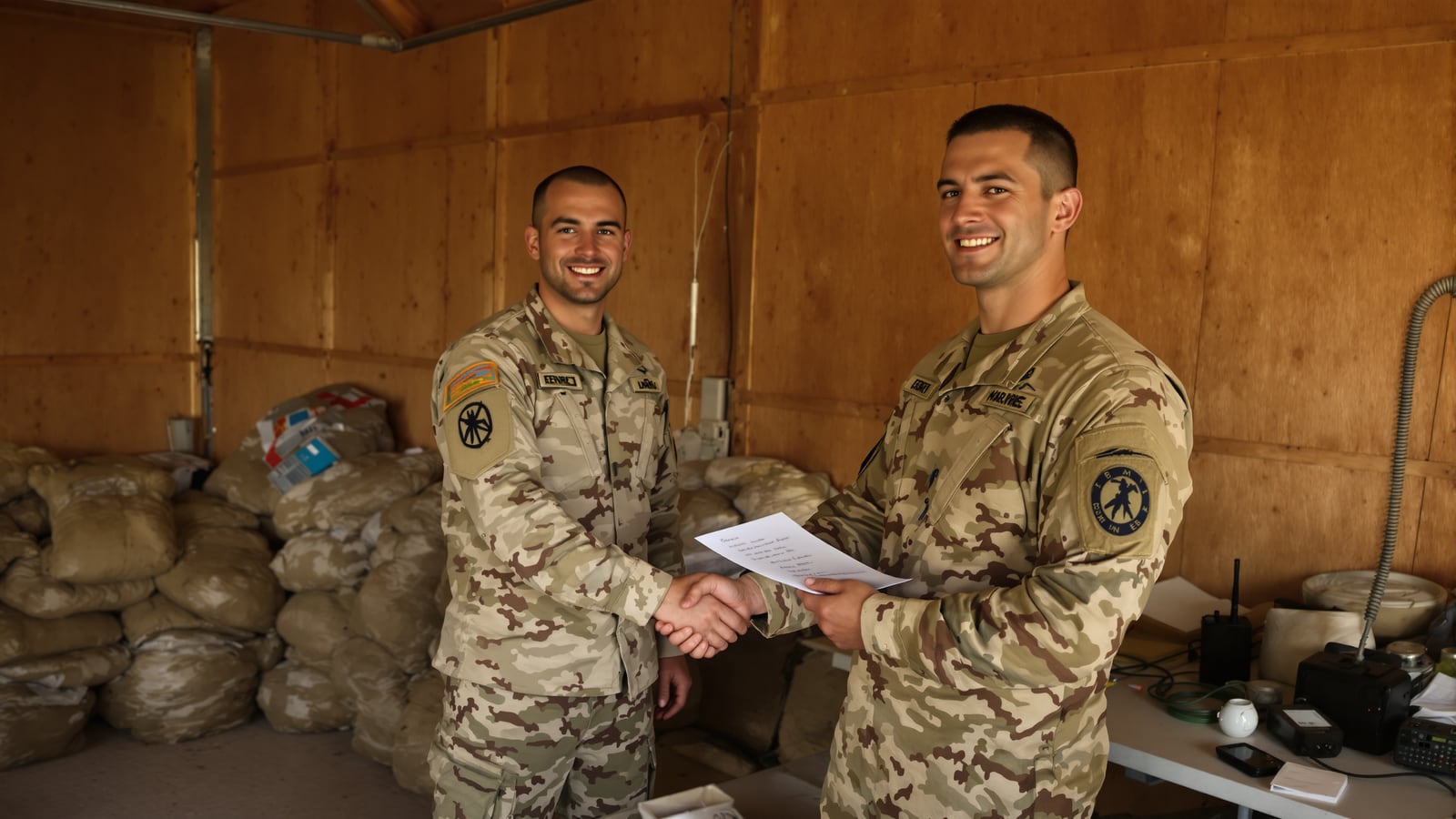
Quick answer: Keep a running file of who you worked with and what they saw you do. Get personal contact info, because your .mil address dies when you separate. Ask for written references before the rotation ends, and spend as much effort on peers and juniors as on rank.
Your boss's boss isn't who hires you
Most people build their network upward. They want the colonel's name on the reference list. It's not a bad instinct, but it's a thin one.
The person who calls you eight years from now is more likely the specialist who sat the next console over. By then he's a plant manager, a project lead, a department head at a utility. He remembers you covered his shift when his daughter was born. He doesn't need a polished pitch. He needs a name he trusts when somebody asks, "Know anybody good?"
So give the people beside you and below you the same attention you'd give a field-grade officer. They're going to be senior in places you've never heard of.
What a deployment gives you that a mixer can't
Civilians swap business cards in a hotel ballroom and guess at each other's character. You've spent months in a place where character shows up fast. Who stays calm when the generator quits at 0300. Who writes the clean handoff. Who complains and who fixes.
That's a rare advantage, and it expires. People scatter at the end of a rotation. Contact info goes stale. Memories blur. What you build while you're still together is worth ten times what you can rebuild from a distance.
Keep the file
Start a simple record, in a notebook or a note on your phone that stays off any operational system. For each person you'd vouch for, write down:
- Their name and a personal phone number or email
- What you worked on together
- One specific thing they did well
- Where they're headed next, if they say
The specific thing matters most. "Great guy" is useless in a reference. "Rebuilt our maintenance tracking so we stopped losing parts" is something a hiring manager can use. Write it while it's fresh. You'll forget by the next PCS.
And collect the personal contact info now. Government email goes away when you do, and people lose touch over exactly that.
Ask before the rotation ends
This is the step nearly everyone skips. You ask for a reference or a LinkedIn recommendation a year after you've lost touch, and the person has to rebuild the memory from nothing.
Ask while you're still on the same schedule. Make it easy. Send three bullet points of what you worked on together and let them edit. Better, write one for them first, unprompted. People tend to return that kind of favor, and you've paid the debt before it was asked for.
Some won't answer. Some will say yes and never do it. That's fine. Ask five and expect three.
Look past your unit
The smartest networking on a deployment happens outside your own lane. Most bases and forward sites have DoD civilians, contractors, interagency staff and allied personnel. These are the people who already live in the world you're about to enter.
Ask them how they got the job. What the pay looked like when they started. What they'd study if they were twenty-five again. Most people like being asked, and you'll learn more in one honest conversation than from a week of job boards.
Use downtime the same way. A certification course, a college class or a professional study group puts you in a cohort of people who aren't in uniform. Those classmates are a bridge. If you're sorting out what credentials actually translate, the piece on what to do in the 18 months before you take off the uniform lays out the timeline.
Mind your operational security
Here's the part where you can hurt people. Don't post unit details, locations, movements or names of people on any platform, and follow your command's guidance on social media without arguing about it. A network isn't worth a compromised mission or a family put at risk.
Build the public profile after you're home. Do the relationship work privately, in person and in conversation, and let the profile catch up later. A resume built from your record reads better anyway once you can talk freely. Turning your military record into a resume civilians can read covers how to translate it without giving away anything you shouldn't.
Be the one who helps first
The old code applies here: leave it better than you found it. Write a real turnover binder for your replacement, not a half-page of "good luck." Teach the junior soldier or airman the thing you wish somebody had taught you. Stay late to square away the shared space nobody owns.
None of it is networking on paper. All of it is how people decide, quietly, that you're the one to call. The ones who show up to stack chairs get remembered long after the ones who worked the room.
There's also a trap. If every conversation becomes an angle, people can tell, and it sours the relationship. Help first. Don't keep score. The return comes later and from places you didn't plan on.
Know where the official help sits
Informal contacts do the heavy lifting, but use the official channels too. Your installation's Transition Assistance Program is the starting point, and your transition counselor can explain what's available to you. DoD SkillBridge lets eligible service members train with a civilian employer during their final months of service, and it's one of the better ways to turn a handshake into a job. Ask your counselor whether you qualify and how your command handles approvals.
Outside the service, look at Hiring Our Heroes, American Corporate Partners for veteran mentoring, your local American Legion or VFW post, and the Department of Veterans Affairs at VA.gov for benefits and employment resources. Check each program's current terms on its own site before you plan around it, because rules and eligibility change.
If you're married, your spouse is building a network too, through family readiness groups and the other spouses who've already been through it. Don't treat that as a side project. What holds a marriage together through a deployment is worth reading for how to carry the home side while you're gone.
The measure
Imagine a stranger asks the people you served with, "Would you hire him?" You can't control the answer in the last month. You can control it across the whole deployment, one shift and one handoff at a time.
Do the work like somebody's going to ask about it later. They will.
Ade Fisher
Young Men
Teaches the trades intake at a community college. Writes the manual he wishes his students arrived with.

Watch
Watch how it's done
Picked for this article.
From channels we rate. Plays on YouTube.
Hire Heroes USA
Networking With Purpose: LinkedIn Tips for Veterans and Military Spouses | Hire Heroes USA
Eagle Group of MN Veterans
Networking Tips for Military Veterans
Read next