The First Ninety Days of Learning Guitar as a Grown Man
Fifteen minutes a day, four chords, and one song you can play for your kids by Easter. What actually works, and what wastes your first month.
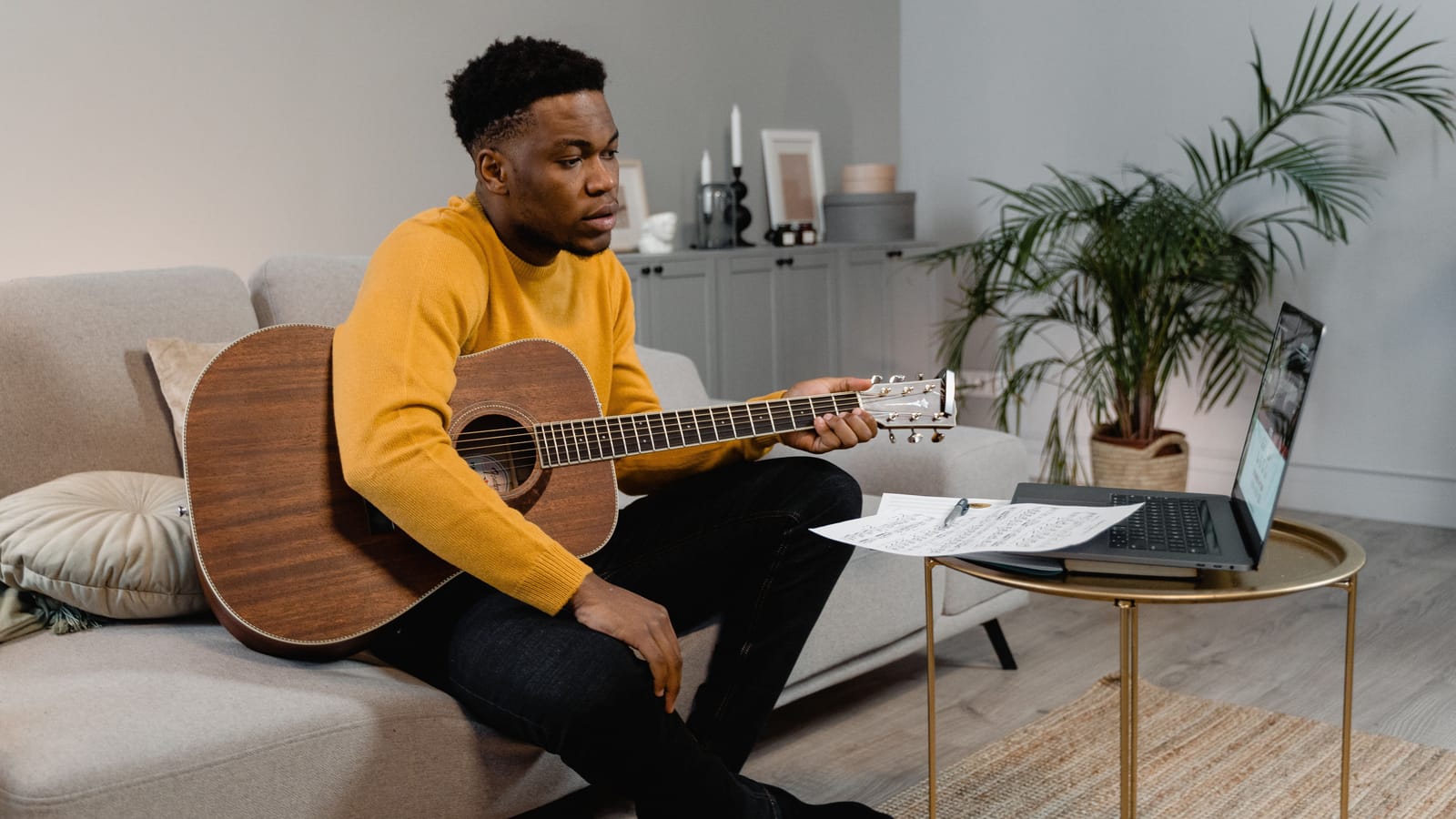
Spend less on the guitar and more on the setup. That's the single decision that decides whether you're still playing in March.
A Yamaha FG800, an Epiphone DR-100, a Fender CD-60S. Any of those will do the job, and they land somewhere in the low hundreds new. Then take it to a local shop and ask for a setup. It'll usually run you fifty to seventy-five bucks, they'll lower the string height, check the neck relief, and hand you back an instrument that doesn't fight you. On a factory acoustic the action at the 12th fret can sit high enough that fretting a clean chord takes real hand strength you don't have yet. You'll assume you're the problem. You're not. The guitar is.
Most men who quit in the first six weeks quit because of a guitar they could barely press down, not because they lacked musical talent. Talent isn't the bottleneck. String height is.
The gear list is four items long
A clip-on tuner, the Snark kind, about fifteen dollars. A capo, the Kyser quick-change kind, ten to twenty. A handful of medium picks, .73mm, because thin picks flop and heavy picks are unforgiving. And a stand.
The stand matters more than it sounds. A guitar in a case under the bed gets played twice. A guitar on a stand in the corner of the living room gets picked up while the coffee brews. Friction kills habits, and unzipping a case at 9:40 at night is exactly enough friction to make you go watch something instead.
Skip the amp, the pedal, the second guitar, the strap locks, the hardshell case, and every YouTube channel selling you a system. You'll want to buy things. Buying things feels like progress and costs nothing in fingertips.
Fifteen minutes, same time, every day
Here's the math that actually works: fifteen minutes a day beats two hours on Saturday, and it isn't close. Your hands are learning a physical skill. Physical skills consolidate with frequency, the way a jab does, the way a golf swing does. Six short sessions a week will put you miles past one long one.
Pick the time and anchor it to something you already do. After the kids are down. Before the shower. In the truck at lunch, if you've got the nerve to keep it behind the seat.
Set a timer. When the fifteen is up, you're allowed to stop with a clear conscience. Some nights you'll keep going for forty minutes because something clicked. Those nights are the reward, not the requirement.
Days 1 to 30: four chords and sore fingertips
G, C, D, and E minor. That's the whole month. Those four chords, in the key of G, will get you through "Will the Circle Be Unbroken," "I Saw the Light," "Amazing Grace," and about a third of the modern worship catalog.
Your fingertips will hurt starting around day three. Real, stinging, can't-feel-the-truck-keys hurt. It lasts about two to three weeks and then the calluses arrive and it's over forever. Sore fingertips are normal. Sharp pain in the wrist or thumb joint isn't, and that's the point where you stop and ask an actual doctor rather than pushing through like a hero.
The free JustinGuitar course is the best starting structure there is, and it costs nothing. Work it in order. Don't skip ahead to the song you want.
Spend the first ten days just getting each chord to ring clean. Fret it, strum once, listen to every string. Buzzing high E on a D chord means your ring finger is leaning over. Dead B string on a C means your middle finger is flattening out. Fix the one string that's wrong instead of re-fretting the whole shape in frustration.
Days 31 to 60: the change is the skill
Nobody's impressed that you can make a G chord. The skill is getting from G to C without a two-second pause where the song dies.
Drill it like this. Sixty seconds on the clock, two chords, count how many clean changes you get. Write the number on a sticky note. Tomorrow, beat it. Most men start around eight or ten and are north of thirty within two weeks. It's the most boring exercise in music and it's the one that turns you into a guitar player.
Then add the right hand. Down-strum on every beat, counting out loud, one-two-three-four. Out loud isn't optional and it feels ridiculous. Do it anyway, because your mouth will keep time when your hands won't. Once quarter notes are steady, move to down, down-up, up, down-up. That single pattern covers a startling amount of country and hymnody.
Get a metronome app and start at 60 beats per minute. Slower than you want. Much slower. If you can't play it clean at 60, playing it fast just means making the same mistake in less time.
By day 60 you want one song you can play front to back without stopping. Not well. Just through.
Days 61 to 90: play it for somebody
This is where most guys stall, because playing for another human being is exposure and exposure is uncomfortable at 43 in a way it wasn't at 15.
Do it anyway. Play the song for your wife. Play it at bedtime for a six-year-old, who is the single most forgiving audience on God's earth and will ask for it four nights running until you're sick of it and, more to the point, until you know it cold.
Then find somebody to play with. A neighbor who's been at it twenty years, a buddy from church, the guy at the shop who did your setup. An hour beside a better player is worth five hours alone, mostly because you'll hear your own timing get exposed and then get better within the same hour.
If your church has a worship team, ask what they need. They almost never need another lead guitarist. They frequently need somebody who can hold down steady rhythm with a capo on the second fret and not rush the chorus. That's a job a disciplined beginner can do by month four or five, and playing in a band is the fastest teacher there is.
The honest trade-offs
Ninety days on acoustic gets you campfire competent. It doesn't get you anywhere near bluegrass flatpicking, and if you came here wanting to play a "Blackberry Blossom" break, understand you're looking at a couple of years and a mandolin-player's patience. Fingerstyle is a separate mountain. So is anything with a barre.
Speaking of which, the F chord is going to humble you around week five. Use the small-F shape, the four-string version, for now. The full barre comes when your hand's ready, usually somewhere around the fourth or fifth month, and it arrives suddenly rather than gradually.
An electric guitar with light strings is genuinely easier on the fingers, and a reasonable man could start there. The reason I still say acoustic is that it's sitting in your living room, already plugged into nothing, ready in the half-minute you actually have.
Ninety days from now you'll still be bad. You'll just be bad at much harder things, with calluses, and a kid who knows the second verse.
Dean Shaw
Gear & Garage
Reads the warranty, the parts list and the long-term owner reviews before anything else. Trucks, tools, watches, and the cheap version that costs more.

Watch
Worth an hour of your evening
Picked for this article.
From channels we rate. Plays on YouTube.
NathanGuitarMar 10
How To Get Insanely Good At Guitar In Your 30s, 40s and 50s
Andy GuitarSep 2
Guitar Lesson 1 - Absolute Beginner? Start Here! [Free 10 Day Starter Course]
Read next