The True Stories Behind the Patriotic Songs You Think You Know
A poem scribbled on Pikes Peak, a tune borrowed from a London club, a bugle call rewritten in a Virginia camp, and why the anthem is so hard to sing.
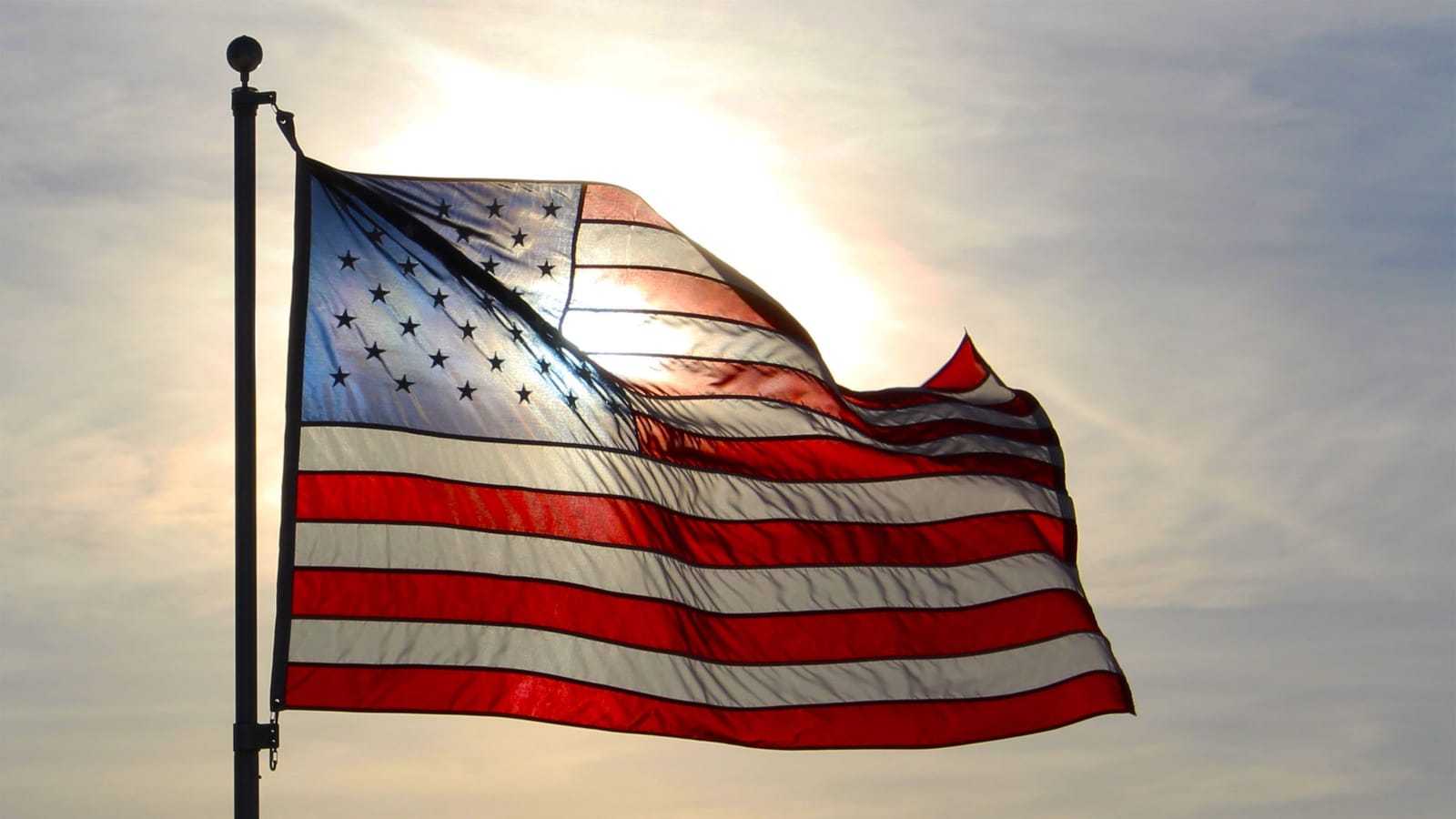
The flag Francis Scott Key saw over Fort McHenry was 30 feet by 42 feet. Mary Pickersgill and her helpers sewed it in Baltimore, big enough that the British would have no trouble reading it from the water. That's the whole point of the song. Key spent the night of September 13, 1814 stuck on a truce ship behind the British fleet, having gone out to negotiate the release of a doctor named William Beanes, and he couldn't see the fort in the dark. He could only hear it. When the shelling stopped, silence meant nothing. Silence could mean the fort had fallen.
Then the sun came up and the flag was still there.
He wrote the verses on the back of a letter. Within days they were printed as "Defence of Fort M'Henry," and the printing carried a note telling people which tune to use: "To Anacreon in Heaven," the club song of a gentlemen's musical society in London. Yes, the British wrote our melody. Congress didn't make it official until 1931, more than a century after Key scribbled it down, which tells you how long America got along fine on habit alone.
A schoolteacher, a mountain, and a man who never knew
Katharine Lee Bates was teaching a summer session in Colorado Springs in 1893 when she rode up Pikes Peak by wagon and mule. She got about twenty minutes at the summit before altitude sickness sent her back down. The lines came on the way home. The poem ran in a Congregationalist magazine on July 4, 1895, and people started setting it to whatever tune fit.
The one that stuck was written eleven years before the poem existed. Samuel Ward, a New Jersey organist and music dealer, worked out a melody on a ferry ride home from Coney Island and reportedly wrote it on his friend's shirt cuff because he had no paper. He called it "Materna" and published it as a setting for a hymn about Jerusalem. The two halves of "America the Beautiful" were matched up around 1910. Ward died in 1903. He never heard the thing he's famous for.
That's worth sitting with for a second. Half the songs a nation sings were built by people who had no idea what they were building.
The song that sat in a trunk for twenty years
Irving Berlin was born Israel Beilin in Russia and arrived in New York as a small boy. In 1918 he was a sergeant at Camp Upton on Long Island, writing a soldier show, and he drafted a number called "God Bless America." He cut it. Too solemn for a comedy revue, he decided, and into the trunk it went.
Twenty years later, with Europe sliding toward war, Kate Smith's people asked him for a peace song. He pulled out the 1918 draft, rewrote the opening, and she sang it on the radio on Armistice Day, November 10, 1938.
Then he did the part nobody remembers. Berlin signed the royalties over to a fund for the Boy Scouts and Girl Scouts. An immigrant kid who'd sold newspapers on the Bowery wrote the country's second anthem and handed the check to American children, in perpetuity.
The argument nobody tells you about
"This Land Is Your Land" started as a response to Berlin. Woody Guthrie was sick of hearing Kate Smith on every radio in America and wrote his own version in 1940, originally titled "God Blessed America for Me," with a sarcastic edge that the school assembly version scrubs clean off. The verses most people never learn include a private property sign and a relief office line, and Guthrie's politics were nowhere near this magazine's.
Sing it anyway, if you like it. But know what you're singing. A man who teaches his kids the real history of a song is doing something better than handing them a jingle, and there's no version of American music where you only get the parts you already agree with. Guthrie could write. He also spent a lifetime arguing with the country he loved, and the argument is in the song.
Twenty-four notes and one persistent myth
"Taps" wasn't found in a dead boy's pocket. The story goes around every Memorial Day: a Union captain discovers his own son among the Confederate dead, finds sheet music on the body, has it played at the funeral. It's a Victorian tearjerker and it isn't true.
What happened is duller and better. In July 1862, camped at Harrison's Landing in Virginia after the Peninsula Campaign, General Daniel Butterfield decided the existing lights-out call was too abrupt for men who had just been through what they'd been through. He wasn't a trained musician. He worked it out with his brigade bugler, lengthening and softening a call already in the books. Other units heard it across the camps and took it. Nobody ordered it into the Army. It spread because men wanted it.
Twenty-four notes. No words, officially. Every set of lyrics you've heard was added later by somebody who couldn't stand the silence.
Country got there its own way
Johnny Cash cut "Ragged Old Flag" in 1974, when the country was chewing itself up over Watergate and Vietnam and a man singing about the flag in plain speech wasn't the safe commercial move. It's barely a song. He talks it, over a simple figure, as an old man on a courthouse bench walking a stranger through every war that flag got torn in. It ends on a line about being in good shape for the shape it's in. Cash understood something most flag songs miss: the point isn't that the flag is pristine. The point is that it's still up.
Lee Greenwood wrote "God Bless the U.S.A." in 1984, and it did fine. Then the Gulf War happened and it did better, and then September 11 happened and it became something closer to a civic ritual. Songs get their second life from events nobody could have scheduled.
If you're going to sing it, sing it right
The anthem defeats people for one reason. The melody covers an octave and a fifth, and almost everyone picks a starting pitch based on how the first phrase feels. "O say can you see" sits low and comfortable. Then you arrive at "land of the free" a twelfth above your starting note and discover you have nowhere to go.
Do this instead. Sing "the land of the free" first, at a pitch you can hold without strain. Find your starting note from that. Military bands usually play it in A-flat or B-flat, and for a group of ordinary voices at a ballfield, A-flat is kinder than B-flat.
On guitar, "America the Beautiful" sits beautifully in G with a capo nowhere. Three chords and a passing one gets you through it. "My Country, 'Tis of Thee" is easier still, and the story behind it's the best bar bet in American music: Samuel Francis Smith, a 22-year-old seminary student in 1831, was handed a stack of German songbooks, liked a tune, and wrote new words in about half an hour. The tune was "God Save the King." We celebrate independence to the melody of the British national anthem.
Teach your kids the second verse of something. Any of them. The first verse is just the part everyone mumbles at the game.
Marcus Vale
Editor-in-Chief
Twenty years in magazines, most of it deciding what to cut. Writes about work, discipline and the decisions that compound.

Watch
Worth an hour of your evening
Picked for this article.
From channels we rate. Plays on YouTube.
Mike RoweJun 30
Mike Rowe: The INCREDIBLE Story Behind the National Anthem | Somebody's Gotta Do It
Dudley RutherfordMay 21
The Accurate Story Behind the Star Spangled Banner
Read next