The Stories Behind the Hymns You Sing Without Thinking
A telegram reading "Saved alone," a slave ship captain, and a father who lost everything in two days. The hymnal is full of people having the worst week of their lives.
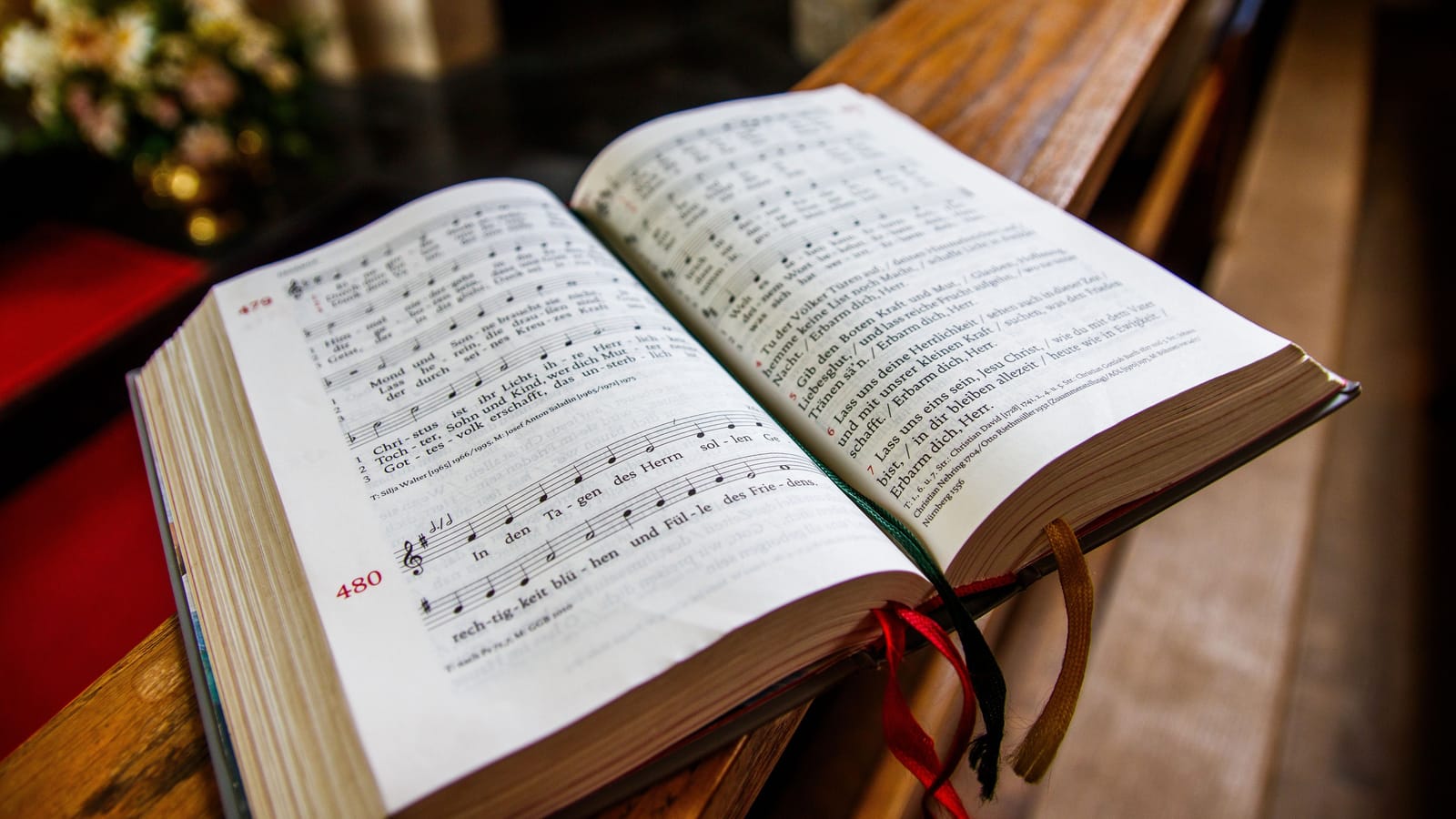
The cable that reached Horatio Spafford in Chicago in December 1873 contained two words everybody remembers: Saved alone.
His wife Anna had sailed for Europe with their four daughters aboard the Ville du Havre. A British ship called the Loch Earn struck it in the North Atlantic. The steamer went down in about twelve minutes. Anna was pulled from the water. Annie, Maggie, Bessie and Tanetta weren't.
Spafford booked passage to go get her. Somewhere over the place where the ship went down, he wrote the words that begin When peace like a river attendeth my way. Then comes the line people sing without hearing it: When sorrows like sea billows roll. He'd already lost most of his money in the Great Chicago Fire two years earlier. His friend Philip Bliss wrote the tune and named it after the ship.
You have sung this in a church service while thinking about lunch. Most of us have.
The hymnal is a book of hard weeks
Sacred music got tame somewhere along the way. We sing these things at a comfortable volume in a comfortable building and treat them as furniture. But a startling number of the standards were written by somebody standing in the wreckage of their own life, and knowing that changes what the words do to you.
Thomas A. Dorsey was a Georgia preacher's son who made his living playing piano in Chicago, and he was good at it. In August 1932 he was in St. Louis for a revival when a telegram found him: his wife Nettie had died in childbirth. He got home. The baby son died the next day. He buried them in the same casket.
A few days after that he sat down at a piano at a friend's place and started working out a melody over an old tune, and out came Precious Lord, take my hand, lead me on, let me stand. Read the rest of that first verse sometime. I am tired, I am weak, I am worn. He isn't being poetic. He's describing Tuesday.
Mahalia Jackson made it famous. Dr. King asked for it constantly and it was sung at his funeral. Elvis cut it. Dorsey went on to more or less invent modern gospel music, and he did it out of a hole in the ground in Chicago.
John Newton knew exactly what he was confessing
"Amazing Grace" gets sung at ballgames and funerals by people who have no idea the man who wrote it captained slave ships.
Newton wrote the text for a New Year's Day service in Olney, England, in 1773, and printed it in 1779 in the Olney Hymns under a title nobody uses now: "Faith's Review and Expectation." He was a parish curate by then. Earlier he had been the master of vessels carrying human beings across the Atlantic as cargo. He didn't write the hymn the week he quit. He kept at the trade for a while after his conversion, which is the uncomfortable part, and he didn't publicly repudiate it until 1788, when he published a pamphlet on the slave trade and threw his weight behind William Wilberforce.
So a wretch like me isn't a figure of speech. It's a man naming the worst thing he ever did, in public, in meter, and asking to be sung about it for the rest of his life.
Two things about that hymn most people don't know. The tune isn't English. "New Britain," the melody we all use, is an American shape-note tune printed in the 1830s and the marriage happened over here. And the verse everybody cries at, When we've been there ten thousand years, isn't Newton's. It came from somewhere else and got attached later. Harriet Beecher Stowe put it in Uncle Tom's Cabin and it stuck.
Go read the verses that got cut
This is the practical part, and it costs you nothing.
Almost every hymn you sing has been trimmed. Hymnals cut verses for time, for tune length, sometimes because a stanza got theologically awkward for whoever was compiling. The originals are public domain and free. Hymnary.org will give you the full text, the publication date, the author, and usually the tune name. Look up three hymns you think you know. You'll find at least one missing stanza that's better than the ones you've been singing.
Try it with "Come Thou Fount of Every Blessing." Robert Robinson wrote it in 1758 when he was barely into his twenties. Second verse: Here I raise mine Ebenezer. Nobody under fifty knows what that means, so a lot of modern versions quietly swap it out. It's from 1 Samuel 7 — Samuel sets up a stone and names it Ebenezer, "stone of help," because hitherto hath the Lord helped us. A marker where God showed up. Once you know that, the line is the best one in the hymn.
Then verse three: Prone to wander, Lord, I feel it; prone to leave the God I love. There's a widely repeated story that Robinson, years later and spiritually cold, ended up in a coach beside a woman humming his own hymn and broke down. It may well be legend. Historians can't nail it down. But the man wrote that line about himself either way, at twenty-two, which is its own kind of honest.
What to do with this on a Sunday afternoon
Learn one on guitar. "Amazing Grace" in the key of G is G, C, and D. That's the whole thing. It's a 3/4 waltz, so count it in threes and don't rush the turnaround. If you can play three chords you can lead a room, and one day somebody's grandmother is going to need that in a hospital room and there won't be a band.
Teach your kids one a month. Not a playlist. One hymn, the words and the story behind it, sung badly in the truck. By the time a kid is twelve that's well over a hundred texts sitting in his head, most of them Scripture set to melody, and they don't leave.
Listen to the old recordings, not just the new ones. Mahalia Jackson on "Precious Lord." George Beverly Shea on "How Great Thou Art" — a Swedish poem from 1885 that a British missionary named Stuart Hine reworked into English, then the Billy Graham crusades carried across America. The Carter Family and Ralph Stanley took a pile of these into country and bluegrass, which is why "Angel Band" and "Will the Circle Be Unbroken" feel like both church and back porch. They are.
Notice who wrote it. Fanny Crosby was blind from infancy and wrote thousands of hymn texts, "Blessed Assurance" among them. Thomas Chisholm was a Kentucky-born insurance man in New Jersey who mailed a poem to a musician friend in 1923, and that poem is "Great Is Thy Faithfulness." It comes straight out of Lamentations — a book named for weeping — where the line lands in the middle of a city burned to the ground. His compassions fail not. They're new every morning.
None of these people were having a nice day.
That's the point, and it's the reason these songs outlive the ones written by people who were. Next Sunday, when the worship leader says "last verse," sing it like Spafford wrote it on a boat over his daughters' grave. Because he did.
Josh Halloran
Christian Bro
Leads a mid-week mens group and has done for eleven years. Writes about faith as a practice rather than a position.

Watch
Worth an hour of your evening
Picked for this article.
From channels we rate. Plays on YouTube.
Osarobo PraiseDec 16
It Is Well With My Soul: The Tragic Story Behind the Hymn | Horatio Spafford
Faith | Family | HeritageJun 24
Great is Thy Faithfulness, Story behind the #hymn #biblestudy #devotional #ThomasChisholm
Read next