Leaving the house in thirty minutes, room by room
What to shut off, move, photograph and leave alone before you lock the door and go, in the order you'd actually walk through it.
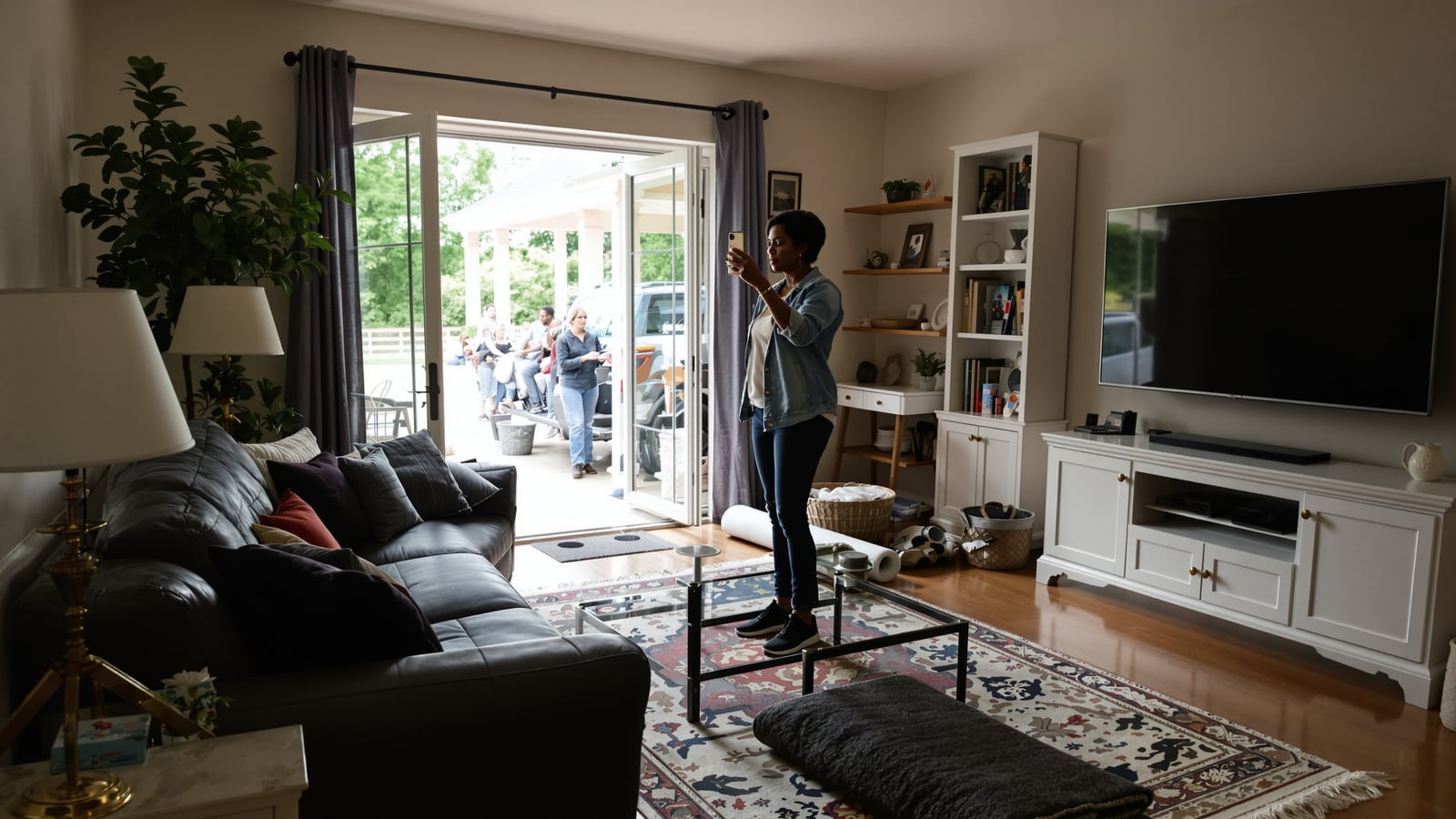
Quick answer: Load your people, pets and go-bag first. Then walk the house once, in a set order, doing only what officials say is safe. Leave the gas on unless you're told otherwise. Photograph every room on your way out.
Print this and tape it inside a closet door. You won't want to invent a plan with sirens going and the kids asking where their shoes are.
Before you touch the house
If officials say go now, go. Nothing in your kitchen is worth the minutes. Everything below is for the time you have, and it's sometimes a day and sometimes an hour.
Your go-bag, medications, documents, phone chargers and cash should already be in the car before you start this walk. If they aren't, build the kit first. The Seventy-Two Hour Kit Your Family Will Actually Use covers it, and Your Emergency Fund and the Cash You Can Actually Reach explains why paper money matters when card readers are down.
Then start at the back of the house and work toward the front door. You'll end where you started your exit, with the car running and no trip back inside.
The utility room and garage
This is where the one big mistake lives. FEMA's Ready.gov guidance says to shut off water and electricity only if you're instructed to. It says to leave natural gas on unless local officials tell you otherwise. Only a professional can restore gas service, and utilities can be swamped for days after a big event. A homeowner who shuts the gas off "to be safe" may come home to a cold house and a long wait.
So the rule is simple. Do what your local officials or utility tell you to do. Don't improvise.
If you've been told to shut things off:
- Electricity: Flip the main breaker. Never touch a panel while standing in water or on a wet floor.
- Water: Turn the main valve clockwise. Know where it is before the storm, not during it.
- Propane: Close the tank valve, and shut the outdoor tank off at the source.
Pull the vehicles out, fuel full. Move anything valuable off the garage floor if flooding is possible. Then close and lock the garage door, which is often the weakest point in a high-wind house. And if you've got a generator, leave it outside and off. It stays put. Twenty Feet From the House and Other Generator Rules says why.
The kitchen
Two choices here, and they depend on how long you'll be gone.
If you'll be out a day or two and power is expected to hold, set the refrigerator and freezer to their coldest settings and leave the doors shut. A full freezer holds its cold longer than a half-empty one, which is a decent argument for filling the gaps with jugs of water.
If you'll be gone a week or more, or the power is certain to fail, empty the fridge. Take what's fresh and trash the rest. Nobody wants to open the door on day nine to find out what a refrigerator smells like after a week without power. Put a few ice cubes in a zip bag in the freezer. A common trick is a frozen cup of water with a coin on top. If you come back and the coin has sunk to the bottom, the freezer thawed and refroze, and the food is suspect.
Then do the small things. Unplug the toaster, the coffee maker and anything else with a heating element. Run the dishwasher or wash the dishes by hand. Take out the trash. It's a courtesy to whoever opens that door next, whether it's you, a neighbor or a firefighter.
Bathrooms and laundry
Unplug the hair dryer and anything else that sits on a counter. Surges after power is restored can fry plugged-in electronics, so a surge protector is better than nothing, and unplugging is better than a surge protector.
Pack medications and glasses now if you haven't. If flooding is a risk, move anything you can't afford to lose to the highest shelf in the house, or better, take it.
Shut off the washing machine's water supply valves if you can reach them. A burst hose while you're gone is a different disaster than the one you evacuated for.
Living room and bedrooms
Move electronics, photo albums and irreplaceable paper up. Second floor beats first. Top shelf beats bottom shelf. Plastic bins beat cardboard.
For high wind, pull valuable items away from windows. For wildfire, Ready.gov says to close all windows, vents and doors, take down flammable curtains, and move flammable furniture to the center of the room, away from glass. Turn the A/C off so it doesn't pull smoke in. Your local fire agency may have specific instructions for your county. If it does, theirs outrank this article.
Firearms are a responsibility on the way out the door too. If you can take them, take them, unloaded and in a locked case, with ammunition stored separately. If you can't, lock them in a safe that's bolted down and sits on the highest floor, away from any window. Know your destination's rules before you cross a state line with them.
Skip the tape. FEMA says taping windows doesn't keep them from breaking and can make the shards worse. Shutters or plywood do the real job.
Take the photos now
Before you leave, spend five minutes walking through with your phone and shooting video. Open the closets and cabinets. Record the garage and the yard. Say the big items out loud as you pass them. Email the file to yourself or upload it somewhere that isn't your house.
You'll want it for an insurance claim. What your policy covers and what documentation your insurer requires are questions for your agent, and it's worth asking before the storm, not after.
The yard and the front door
Bring in or tie down anything the wind can pick up. That's the grill, patio furniture, trash cans, planters and yard toys. Loose objects become projectiles. Prune nothing now. There's no time.
Leave a note on the kitchen counter or in your car's glovebox: where you're headed, who's with you, a phone number. Text the same to one family member out of the area. Then give the neighbor's house a look. If they're older and don't drive, get them in the car. What Your Parents Need Before The Next Three-Day Outage covers the people who'll need that.
Lock the door behind you. In some wildfire cases, local officials ask that gates and doors be left accessible. Follow what your county says.
The last lap
Stand at the front door and run the list once. Pets are in the car. Phone chargers are in the bag. Cash is in your pocket. Fuel tank is full.
Fill the gas tank before the storm if you can. Stations run dry fast, and they can stay dry. Keep a battery radio in the car, because phones lose signal. When the Internet Goes Down, the Radio Still Works will tell you what to tune it to.
A house can be rebuilt. The people in your car can't be replaced. Drive carefully, and when it's over, come back and leave the place better than you found it.
Wes Dunbar
Country & Skills
Grew up on an acreage and never quite left. Covers trucks, trades, land, and how to do the thing yourself.

Watch
Watch how it's done
Picked for this article.
From channels we rate. Plays on YouTube.
County of Santa Barbara — CSBTV20
How to Prepare Your Home for Evacuation
The Provident Prepper
Wildfire Preparedness: The Evacuation Steps That Could Save Your Family's Life
Read next