Walk the foundation before you pay for the inspection
Thirty minutes, a flashlight and a tape measure will tell you which houses deserve a $450 inspection and which ones deserve a polite goodbye.
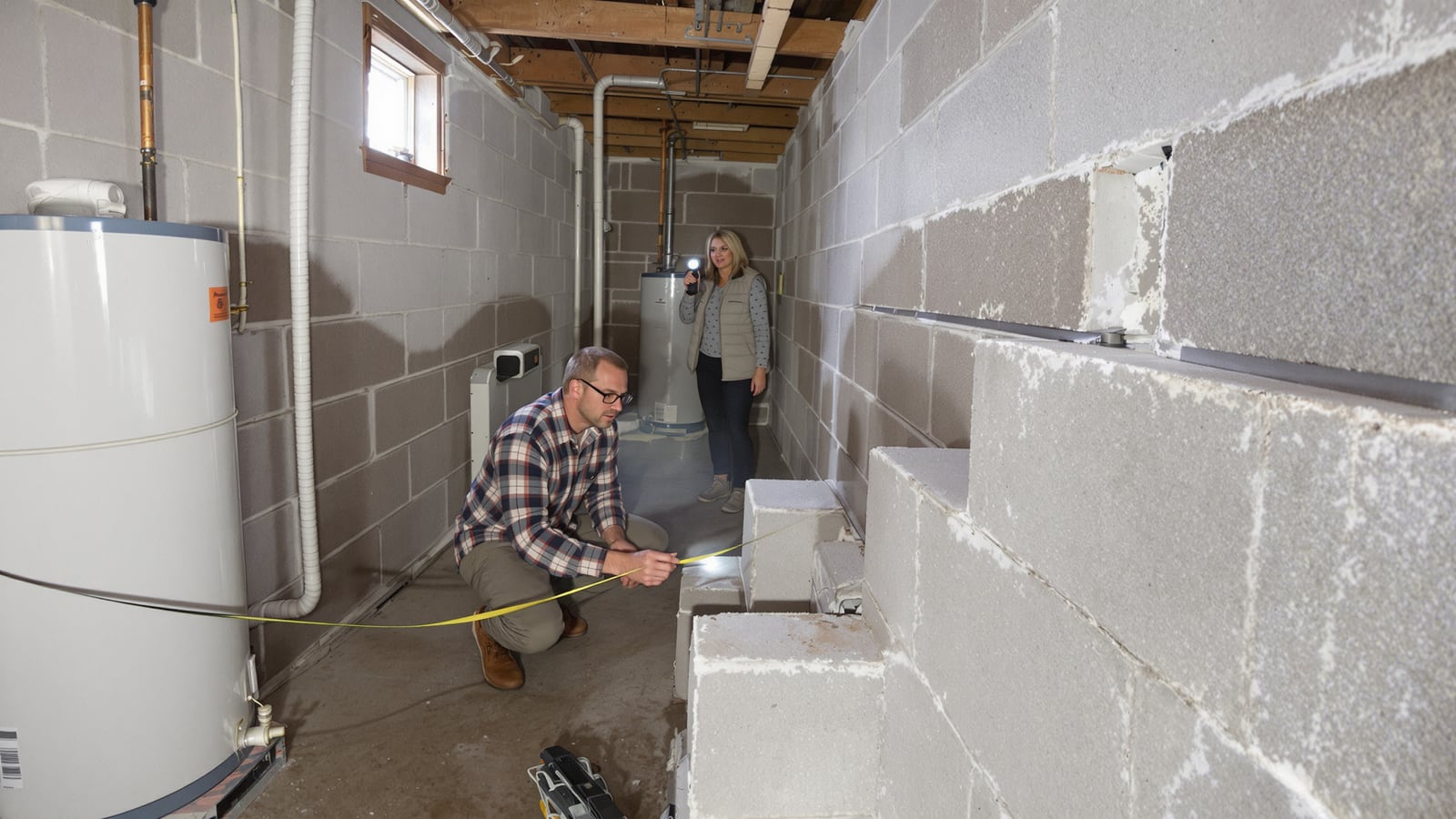
Quick answer: Walk the outside first, then the inside, then the basement or crawl space. You're looking for cracks that are wide, stair-stepped or horizontal, doors that stick, floors that slope, and water that's headed toward the house. Spot two or three of those and you've learned something before spending a dime.
Why do it before the inspector shows up
A licensed inspector costs money. As a worked example only, say $450 for a mid-sized house. Fees vary by state, county and square footage, so check your own market. You don't want to spend that on a house you'd have walked away from after one lap around the yard.
There's a second reason. An inspector gives you a report. It's a long one, and every house gets a long one. The buyer who has already seen the diagonal crack over the garage door knows which page matters and what to ask. The buyer who hasn't just sees forty-one items in a font that looks like a tax form.
This walk doesn't replace the inspection. It decides whether you're ready for one, and it makes you a better client when you get there. If you want the bigger picture on why the inspection is the cheapest door out of a deal, read this.
Know the rules of the walk first
You're a guest. At a showing, your agent is with you and the seller has agreed to let you in. Don't dig, pry, drill, open sealed panels or climb anything unsafe. Don't draw on the seller's walls. Use your phone and take photos, with a coin or tape measure beside the crack for scale.
Wipe your feet. Put things back the way you found them. If you open a crawl space hatch, close it. Leave the place the way you'd want a stranger to leave yours.
Bring four things:
- A flashlight that's brighter than your phone's
- A tape measure
- A 4-foot level, or a marble if that's what you've got
- A notepad, so you write things down rather than trusting your memory at house number five
Start outside, and look at the water
Most foundation trouble starts with water. Soil that stays soaked swells, shrinks, washes out or pushes on a wall. So begin by asking where the water goes.
Stand at each corner and look along the ground. The dirt should fall away from the house, a few inches over the first several feet. If it slopes toward the walls, or there's a low spot hugging the foundation, write it down. That's often a cheap fix with soil and a shovel. It's also the exact condition that causes expensive ones.
Check the gutters and downspouts. Are the downspouts dumping right at the foundation? Do the gutters hang crooked, or have stains below where they overflow? Look for splash marks, mud streaks and bare soil where water pours off the roof.
Then look at the trees. A big tree close to the house is a question mark, not a verdict. Roots pull water out of the soil, and in some regions that matters a lot. Clay soil behaves very differently from sandy soil or rock, which is why your local inspector and a local structural engineer know things I can't tell you from here.
Read the cracks like a skeptic
Here's the part that scares people, so keep your head. Almost every house has cracks. Concrete shrinks as it cures, and a thin vertical line in a poured wall or slab is often just that.
The ones worth worrying about look different:
- Stair-step cracks that follow the mortar joints in brick or block
- Horizontal cracks across a block or masonry basement wall, which can mean soil pressure pushing in
- One side higher than the other, where the crack has shifted and the two edges no longer line up
- Width. A common rule of thumb is that a crack wider than about a quarter inch deserves a professional's eyes. That's a guideline, not a ruling, so ask the engineer.
- Cracks that taper wide at the top and narrow at the bottom, or the reverse
Then ask whether it's moving or old. Old cracks tend to have dust, paint, cobwebs or stains in them. Fresh ones show clean edges and pale powder on the floor beneath. A seller who just painted over one spot on an otherwise weathered wall has handed you a clue. Take a photo of it.
You can't tell active from old with a flashlight. Only monitoring over time, or an engineer, can do that. But you can tell which cracks to put at the top of the list.
Then go inside and let the house tell on itself
Walk through with a skeptic's eye for the way the house sits.
Open and close every door. One that sticks near the top corner and swings freely at the bottom is telling you something moved. Check that windows slide without a fight. Look for gaps between the trim and the wall, or a wedge-shaped opening where a door frame meets the floor.
Look at the drywall above doors and windows for diagonal cracks running off the corners. Hairline ones at the corners of a newly built house can be ordinary settling. Long ones, patched ones and repainted ones are another matter.
Put the level on the floor in a few rooms, or set a marble down and watch what it does. Concede this: old houses are crooked. A 1940s floor that rolls toward the kitchen may have done that for seventy years and be perfectly stable. What you're after is the combination. A sloped floor plus a stair-step crack plus a sticking door is a pattern. One alone is usually just a house.
Finish in the basement or crawl space
If there's a basement, take the flashlight and look at the walls and floor for dampness, white mineral staining, rust at the base of steel posts and any bowing. If there's a crawl space, ask your agent before opening anything, and don't crawl into a space you can't get out of. Standing water, a musty smell, sagging insulation and wet or soft wood are all things the inspector will want to see.
Look for new repairs too. Fresh epoxy lines, bright steel braces or wall anchors on one section tell you someone's had a problem here before. Ask your agent to find out what was done, when, and whether there's paperwork or a transferable warranty. Many states require sellers to disclose known defects on a written form. What that form covers varies by state and county, and some states hold sellers to very little. Read it, and then trust the walk over the paperwork.
What to do with what you found
If you saw nothing alarming, schedule the inspection as normal and give the inspector your list.
If you saw something, you have options, in this order:
- Tell the inspector what you saw and ask them to look closely at it.
- If the report flags it, ask for a structural engineer's evaluation. That's a licensed professional who doesn't sell repairs, which matters because a repair company has a reason to find a repair.
- Ask your agent or real estate attorney what your contract's inspection contingency allows. Deadlines are short, often a week or so, and miss one and you may lose your exit.
- Decide among a price reduction, a repair credit, a seller-completed repair with receipts, or walking away.
As an example only, if an engineer's letter recommended a repair estimated at a few thousand dollars, a credit at closing is a reasonable ask. If the letter said "further monitoring and a major stabilization plan," you're negotiating a different house. How to win a bidding war without waiving your inspection covers staying competitive without giving up your protection.
Your wallet isn't the only thing at stake. A cheap house with a sinking corner can cost you more than a fair house with a clean slab. It also costs you sleep.
Before you act on any of this, check with a licensed home inspector, a structural engineer where needed, a real estate attorney and your agent. Contingency rules, disclosure forms and repair customs vary by state and county, and this is general education, not individual legal or financial advice. If you're ready for the next step in the order of things, the twelve steps from preapproval to keys shows where the inspection falls.
The house will tell you plenty if you walk it slowly. Most buyers are too busy admiring the kitchen to listen.
Ray Okonkwo
Money & Business
Former commercial banker turned small-business owner. Covers salary, credit, margins and the arithmetic nobody does before signing.

Watch
Worth an hour of your evening
More from Real Estate.
From channels we rate. Plays on YouTube.
Read next