Cast Iron Steak With a Butter Baste That Builds a Golden Crust
A dry steak, a hot pan and butter added at the right moment. That's the whole trick, and it works on a weeknight budget.
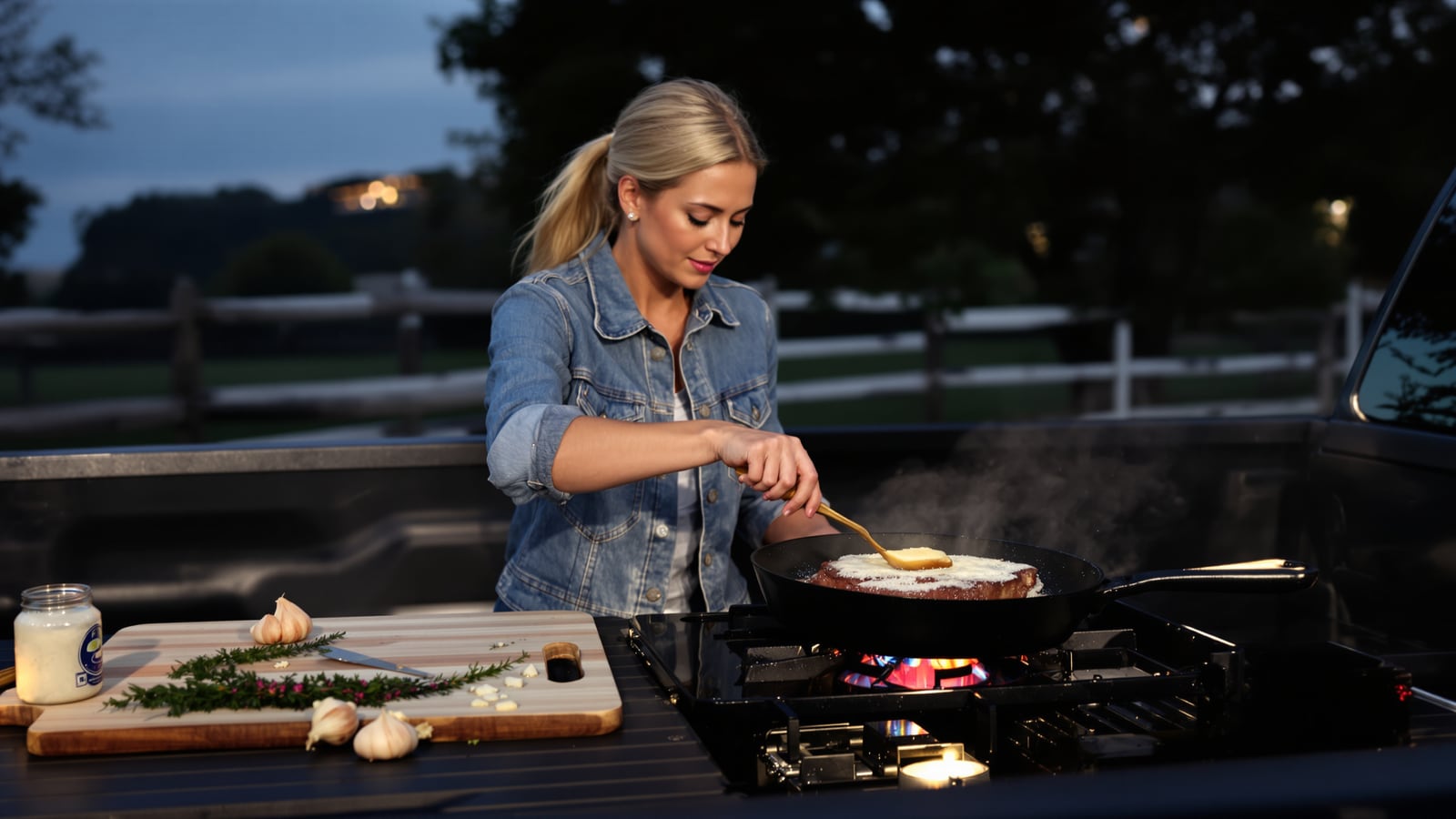
Quick answer: Salt the steak at least 40 minutes ahead and pat it bone dry. Sear it in a screaming-hot cast iron skillet, flip it once, then drop the heat and add the butter. Baste for two minutes, rest it for five.
Serves: 2 (or 4 if you slice it and serve it with sides) Prep: 10 minutes hands-on, plus 40 minutes of salting Cook: 10 minutes Total: about 1 hour, only 20 minutes of it work
Most steak failures happen before the pan is hot. A wet, cold steak steams instead of searing, and you end up with a gray, sad exterior and a middle that's overdone by the time anything browns. The fix costs nothing. It's patience and a paper towel.
The butter baste is the finishing move. It carries garlic and thyme flavor over the surface and gives you that deep, even, mahogany-gold crust. But butter burns fast at searing heat, so it goes in late. Add it at the start and you'll be fanning a smoke detector with a dish towel.
Ingredients
- 2 boneless ribeye or New York strip steaks, 1 to 1¼ inches thick, about 12 ounces each
- 1½ teaspoons kosher salt (use 1 teaspoon if it's Morton, which is denser than Diamond Crystal)
- 1 teaspoon coarsely ground black pepper
- 1 tablespoon avocado or vegetable oil
- 3 tablespoons unsalted butter
- 4 garlic cloves, smashed with the side of a knife, skins off
- 3 sprigs fresh thyme (or 1 teaspoon dried, added with the butter)
- Flaky salt, for finishing
You'll also need a 10- or 12-inch cast iron skillet, tongs, paper towels and an instant-read thermometer. A thermometer costs less than one steak. Buy it.
Steps
- Dry and salt. Pat both steaks with paper towels until the surface feels tacky, not slick. Sprinkle the kosher salt evenly over every side, edges included. Set them on a plate or wire rack, uncovered, at room temperature for 40 minutes. You can also do this on a rack in the fridge, uncovered, for up to 24 hours. The salt pulls moisture out, then the steak reabsorbs it as brine, and the surface dries out. Dry surface, better crust.
- Heat the pan. Set the skillet over medium-high heat for a full 5 minutes. Don't rush it. Add the oil and let it shimmer. A faint wisp of smoke is your cue. Open a window and turn on the vent fan now, not later.
- Pepper and sear. Pat the steaks once more if they've beaded up. Add the pepper. Lay them in the pan away from you, so oil doesn't splash toward your arm. Don't touch them. Don't nudge them. Sear for 2 minutes, until the underside is deep brown and the steaks release easily when you lift a corner with tongs.
- Flip and sear again. Turn the steaks and sear the second side for 2 minutes. Use the tongs to stand each steak on its fat edge for 20 to 30 seconds, which renders the fat and crisps the rim.
- Drop the heat, add the butter. Turn the burner down to medium. Add the butter, garlic and thyme. The butter will foam within seconds. Tilt the skillet toward you, gently, with an oven mitt on the handle. It's hot, and everybody grabs it bare-handed exactly once.
- Baste. With a large spoon, scoop the foaming butter and pour it over the tops of the steaks, again and again, for 1 to 2 minutes. The butter should smell nutty and turn light brown. If it goes dark brown and smells sharp, pull the pan off the heat right away.
- Check the temperature. Slide the thermometer in sideways through the edge, into the thickest part. Pull the steaks when they hit your number (below).
- Rest. Move the steaks to a cutting board. Spoon the garlic butter over the top. Rest for 5 minutes, which also covers the USDA's three-minute rest for whole cuts. Slice against the grain, sprinkle with flaky salt, and pour the board juices over the slices.
Doneness: pull early, because the steak keeps cooking
The temperature climbs 5 to 10 degrees while it rests. Pull accordingly:
- Medium-rare: pull at 125°F, finishes around 130 to 135°F
- Medium: pull at 135°F, finishes around 140 to 145°F
- USDA safe minimum: 145°F, followed by a three-minute rest. If you're feeding kids, older relatives, or anyone you'd rather not gamble with, pull at 140°F and let the rest carry it to 145°F.
Medium-rare is what most steak lovers aim for. It's your table, though, and a steak cooked to the temperature your family actually likes is a better steak than a perfect one nobody finishes.
With a 1¼-inch steak, the timing above lands close to medium-rare. A thinner steak cooks faster, and a thicker one takes longer. Trust the thermometer more than the clock.
What usually goes wrong
The crust is pale. The steak was wet, the pan was too cold, or you crowded it. Two steaks fit a 10-inch skillet. Four don't. Cook in batches and keep the first pair resting under foil.
The kitchen fills with smoke. Some smoke is the cost of a real sear. A lot of smoke means the pan is too hot for the oil you chose. Olive oil is a poor choice here. Avocado, canola or vegetable oil will tolerate the heat. And if the butter went in too early, that's your culprit.
The butter burned. It went in at searing heat, or you let it sit too long. Turn the burner down before it goes in, and baste constantly. If it's black, wipe the pan out and start a fresh tablespoon.
The center is gray and tough. You went by time instead of temperature, or you skipped the rest. A steak sliced right off the heat bleeds its juices across the board.
The steak is chewy even when cooked right. You sliced with the grain. Look for the lines running through the meat and cut across them.
Make ahead, storage and swaps
Make ahead. The overnight dry brine is the best make-ahead step you have. Salt the steaks on a rack in the fridge the night before and cook them straight from the fridge after 30 minutes on the counter. You can also mash the butter with the minced garlic and thyme ahead of time, roll it in plastic wrap and slice off a few pats when the steaks come off the heat.
Storage. Wrap leftover steak tightly and keep it in the fridge for up to 3 days. Eat it cold over a salad or on a sandwich. If you reheat it, do it gently, in a low skillet with a splash of water, or it'll turn to leather.
Swaps.
- Cheaper cut: top sirloin, about 1 inch thick, works fine. It's leaner, so pull it at 125°F and slice it thin.
- Pricier cut: filet mignon is tender but mild. Baste it a little longer.
- Herbs: rosemary works in place of thyme. Use one sprig, since it's stronger.
- Fat: ghee in place of the oil takes high heat with less smoke.
- No fresh herbs: skip them. Garlic and butter carry it.
The same hot-pan logic is behind smash burgers with crispy lace edges, so the skill carries over. For a side, the green beans in the lemon garlic skillet chicken are a natural match. If steak night is out of the budget this week, slow cooker pot roast uses a far cheaper cut and rewards the same patience.
Want more sides, sauces or desserts? Our sister site delicious.com (https://delicious.com) has thousands more recipes.
Wipe the skillet out while it's still warm. Then sit down, because the steak's already resting and you'd better not make it wait on the people.
Wes Dunbar
Country & Skills
Grew up on an acreage and never quite left. Covers trucks, trades, land, and how to do the thing yourself.

Watch
Worth an hour of your evening
More from Recipes.
From channels we rate. Plays on YouTube.
Read next