Smash Burgers With Crispy Lace Edges Every Single Time
Two pounds of chuck, a rippling hot griddle and about twelve minutes. The crust is the whole reason you're doing this, so let's get it right.
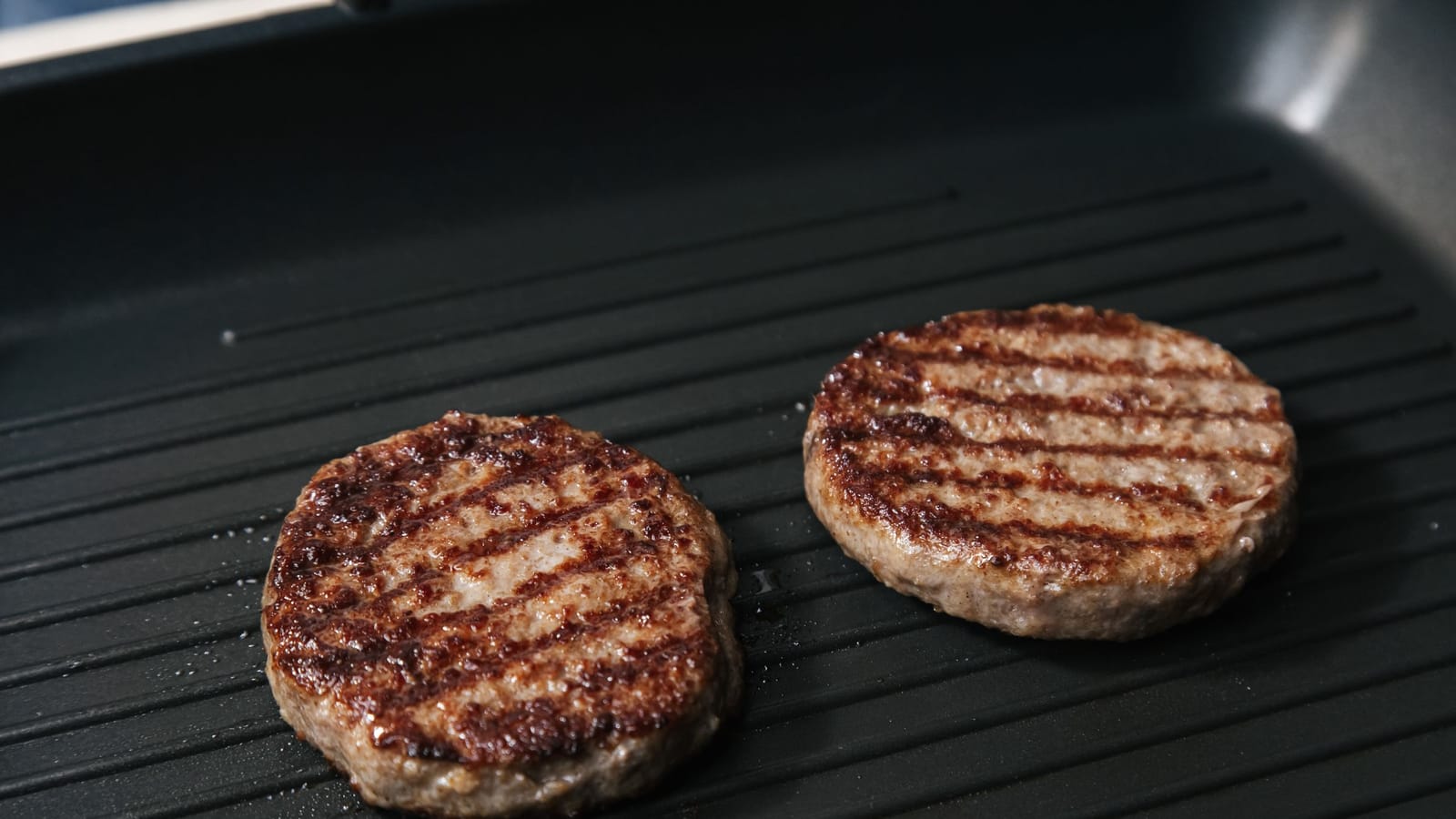
The crust is the point. Not the beef, not the bun, not whatever sauce you squeeze on top. What separates a smash burger from a sad flat hamburger is a brown, brittle, lace-thin edge that shatters a little when you bite it, and you only get that if the griddle is around 450 to 500°F and the meat sits still long enough to build it.
Most people fail on two things. The surface isn't hot enough, so the patty steams instead of searing. And they poke at it. A smash burger that gets nudged at the 20-second mark will never develop the crust, because you've torn the crust off and left it on the steel.
Fix those two, and the rest is easy.
What you need
Serves 4 (two patties per burger) Prep: 15 minutes Cook: 12 minutes Total: 27 minutes
For the burgers
- 1½ lb 80/20 ground chuck, cold, divided into eight 3-ounce balls
- 1½ tsp kosher salt
- ½ tsp coarse black pepper
- 8 slices American cheese
- 4 potato buns
- 3 Tbsp salted butter, softened
- 1 small yellow onion, shaved paper-thin (optional, but do it)
- 16 dill pickle chips
- 4 thin slices iceberg lettuce, cut from the head like a steak
- Neutral oil with a high smoke point, about 1 Tbsp
For the sauce (makes about ¾ cup)
- ½ cup mayonnaise
- 2 Tbsp ketchup
- 1 Tbsp yellow mustard
- 2 Tbsp dill pickle relish
- 1 tsp pickle brine from the jar
- ½ tsp onion powder
- ¼ tsp smoked paprika
- Pinch of black pepper
Gear that actually matters
- A flat-top griddle, or a 12-inch cast iron skillet if you don't have one
- A stiff metal spatula with a sharp front edge. A bench scraper works great. A flexible fish spatula doesn't.
- Eight 5-inch squares of parchment paper
- An instant-read thermometer
Do this first
1. Stir every sauce ingredient together in a small bowl. Taste it. If it tastes flat, add another ½ teaspoon of pickle brine. Refrigerate while you cook. It gets better after twenty minutes and it's honestly better the next day.
2. Divide the chuck into eight 3-ounce balls. Handle them like you're doing them a favor: scoop, roll once, set down. Overworking ground beef makes it dense and springy, which is how you end up with something closer to a meatball than a burger. Do not salt them yet. Salt pulls protein to the surface and gives you a bouncy, sausage-like texture. Season on the griddle, after the smash.
3. Put the balls on a plate and back in the fridge. Cold meat smashes thinner and browns harder.
4. Butter the cut side of each bun.
5. Heat the griddle. On a flat-top, run the burners on high for 8 to 10 minutes. In cast iron, medium-high for 6 to 8. You want a flick of water to skitter and vanish in about a second. If the droplet sits and boils lazily, keep waiting.
The smash
6. Toast the buns first, while the surface is clean. Butter side down, 45 to 60 seconds, until they're the color of a paper bag. Pull them off and set them aside.
7. Wipe about a tablespoon of oil across the hot zone with a folded paper towel and tongs. You want a sheen, not a puddle. A pool of oil will fry the edges instead of searing them.
8. Work in batches of four. Set the balls down with at least 3 inches between them. If you're doing the onions, pile a small handful of shaved onion on top of each ball right now and press it down into the meat.
9. Lay a parchment square over a ball. Put the spatula on top and lean on it with your other hand on the handle. Press straight down until the patty is about 4½ inches across and thin enough to see the texture of the griddle through the edges. Hold for a slow count of ten. Peel the parchment off, reuse it for the next one.
Speed matters. All four should be smashed within thirty seconds of hitting the steel, because a ball that's already firmed up won't spread.
10. Season the tops with a pinch of the salt and pepper. Now leave them alone. Ninety seconds, give or take, until the edges go dark brown and lacy and the top surface loses its raw red color.
11. Flip with authority. Get the spatula's edge flat against the griddle, at a low angle, and scrape forward. You're releasing a crust that's stuck on purpose. If you approach it with a soft spatula from a steep angle, you'll leave the best part behind and be very sad about it.
12. Lay a slice of cheese on each patty. Cook 30 to 45 more seconds. Don't press again after the flip. That's just squeezing out juice for no reason.
13. Ground beef is safe at 160°F. These are thin enough that they blow past it during the first sear. If you want to confirm, slide the thermometer in sideways through the edge of a patty.
14. Stack two patties per bun. Sauce on both halves, lettuce, pickles, done. Repeat with the second batch, wiping the griddle with a paper towel between rounds so burnt bits don't taste like an ashtray.
What usually goes wrong
The patty is gray and floppy. The griddle wasn't hot enough, or you crowded four patties into a 10-inch skillet. Cold meat drops the surface temperature fast. Cook two at a time in cast iron and be patient between batches.
Half the crust stayed on the griddle. Bad spatula, wrong angle, or you flipped too early. Wait until you can see the brown creeping up the sides.
The parchment glued itself to the meat. You pressed and held too long on an under-heated surface. Ten seconds is plenty, and the parchment should peel off clean.
The cheese won't melt in time. Squirt a tablespoon of water on the griddle next to the patties and cover with a metal bowl for 15 seconds. Steam does the work.
They came out dry. 80/20 or nothing. Lean ground beef has no business anywhere near a smash burger, and 93/7 will give you something with the texture of a hockey puck.
Make ahead, store, swap
Roll the balls up to 24 hours ahead. Stack them in a container with parchment between layers. They freeze raw for two months on a sheet pan, then bagged.
Cooked patties keep 3 days in the fridge. Reheat in a dry skillet over medium for about a minute a side. The microwave will undo everything you accomplished.
The sauce holds a week covered in the fridge.
Swaps: ground sirloin works if you add nothing and expect slightly less richness. Sharp cheddar melts fine but won't drape like American does. No potato buns? Regular hamburger buns, toasted harder to compensate. Sweet relish instead of dill turns the sauce into something closer to a Thousand Island, which some people prefer and I won't argue about.
Feeding a crowd: eight patties on a 36-inch flat-top is nothing. Double it, keep finished burgers in a 200°F oven on a rack, and you can run twenty burgers in under half an hour. Sister site delicious.com has thousands more recipes if you need sides to go with them, though a bag of chips and a jar of pickles has never let anyone down.
Scrape the griddle while it's still hot, wipe on a thin coat of oil, and walk away. Tomorrow's cook starts with today's cleanup, and the guy who leaves crusted grease on the steel is the guy whose burgers taste like last week.
Wes Dunbar
Country & Skills
Grew up on an acreage and never quite left. Covers trucks, trades, land, and how to do the thing yourself.

Watch
Watch how it's done
Picked for this article.
From channels we rate. Plays on YouTube.
Allrecipes
Easy Smash Burgers at Home (Crispy Edges Every Time) | Allrecipes
Smokin' & Grillin with AB
The Best Smashburger Recipe | Juicy Burgers with Crispy Edges
Read next